
National Cookies of the World: The Most Iconic Cookie From 20 Countries (I’ve Made Them All)
Europe’s Most Iconic National Cookies
Scotland: Shortbread
Scottish shortbread dates to the 12th century and uses a precise 3:1:2 ratio of butter, sugar, and flour. Rice flour or cornstarch creates the signature crumbly, melt-in-your-mouth texture.
Add 25% cornstarch for authentic texture—all-purpose flour alone yields tough cookies. Use cold butter and resist overmixing.
France: Sablé Breton
The sablé Breton comes from the Brittany region and represents everything elegant about French baking philosophy—maximum flavor from minimal ingredients, executed with absolute precision. These butter cookies are slightly chewier than Scottish shortbread, enriched with egg yolk, and often featuring a light egg white wash that creates their characteristic glossy, crackled surface. The national cookie of France perfectly captures the French approach to dessert: simple, refined, utterly satisfying.
Chill sablé dough at least 2 hours (ideally overnight) to make it manageable. Egg yolk requires gentle handling; overmixing toughens the cookies.
Italy: Biscotti
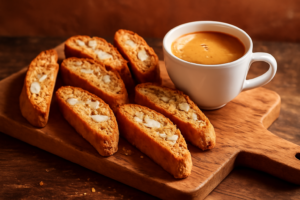
Italian biscotti literally means “twice-baked,” and this national cookie of Italy has been dunked into wine and coffee for centuries, particularly in Tuscany. Originally created as a practical cookie for sailors and travelers (they last for months), biscotti developed into an art form with countless regional variations featuring almonds, hazelnuts, anise seeds, and dried fruit. Their hard, crunchy texture makes them ideal for dunking, but modern biscotti can be softer and more cake-like depending on the baker’s preference.
Cool biscotti completely after the first bake before slicing. Second bake at 325°F dries them gradually; higher heat hardens the outside before the interior dries, trapping moisture.
Germany: Springerle
Springerle are 15th-century German cookies with intricate embossed designs, flavored with anise and traditionally given as Christmas and Easter gifts.
Use a special mold or roller for designs. The crucial step: let pressed cookies rest uncovered at room temperature 24–48 hours before baking. This forms a skin that keeps embossing sharp.
Greece: Kourabiedes
Kourabiedes are delicate Greek butter cookies, flavored with brandy, rose water, or mastiha, covered in powdered sugar and topped with a clove. Traditionally made for Christmas and weddings.
Cream butter for 5–7 minutes until pale and fluffy. Roll warm baked cookies in powdered sugar, then again when cool for a thick coating.
Sweden: Pepparkakor
Swedish pepparkakor are thin, crispy gingerbread cookies spiced with ginger, cinnamon, and cloves, decorated with white royal icing and traditionally made into gingerbread houses during Christmas.
Make dough at least a week before baking; resting develops the spices. Roll thin (about 1/8 inch) and work quickly. The thin profile creates their characteristic snap.
Latin America’s Most Iconic Cookies
Mexico: Polvorones (Mexican Wedding Cookies)
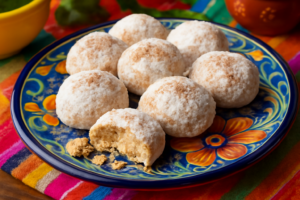
Mexican polvorones are buttery rounds rolled in powdered sugar. They combine Spanish colonial influences with Mexican ingredients like pecans or almonds, and practically dissolve on the tongue.
Use a high fat-to-flour ratio; the dough is sandy and difficult to handle. Form while very cold, working quickly. Roll enthusiastically in powdered sugar once cooled.
Argentina: Alfajores
Argentine alfajores are two tender, crumbly cookies sandwiched with dulce de leche and rolled in coconut. They're soft, melt-in-your-mouth, and deeply indulgent.
Use a 1:1 ratio of cornstarch to flour for tender crumb. Chill baked cookies at least 2 hours before filling. Fill just before serving, as moisture from dulce de leche softens the cookies.
Peru: Alfajores de Penco
Peruvian alfajores de penco are thinner and crispier than Argentine versions, with a chocolate coating. The name refers to the agave plant historically used in the region.
These use less cornstarch than Argentine alfajores. Slightly underbake them—remove when edges are golden but centers still pale. Residual heat continues cooking on the sheet.
Middle East and North Africa’s National Cookies
Morocco: Fekkas
Moroccan fekkas are twice-baked almond cookies with sesame seeds and anise, representing North Africa's spice-trade heritage. Traditionally served with mint tea.
My testing tip: I’ve written in detail about Moroccan fekkas before, and my primary discovery is that the sesame seeds should be toasted before adding to the dough—this deepens their nutty flavor considerably. The anise content is crucial too; don’t reduce it in hopes of making the cookie milder. These cookies are meant to have assertive flavor that pairs with strong mint tea. Toast the finished cookies at a lower second temperature than Italian biscotti; 300°F works better than 325°F.
Lebanon: Ma’amoul
Lebanese ma'amoul are shortbread-style cookies filled with dates, pistachios, or walnuts, pressed in decorative wooden molds. Traditionally made for Christian and Muslim holidays.
Use a combination of butter and semolina flour for dough that's tender but sturdy enough to hold intricate shapes. The filling should be finely ground; chunky nuts prevent proper pressing.
Turkey: Acıbadem Kurabiyesi
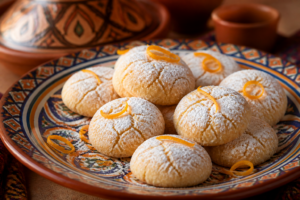
Turkish acıbadem kurabiyesi are light, nearly flourless almond cookies from the Acıbadem district of Istanbul, with a characteristic almond on top and sometimes rose water.
Cream butter and sugar for 7–10 minutes until extremely pale and fluffy. Fold in ground almonds gently to preserve airiness. Bake at 325°F; they should be light golden at edges, nearly white in center.
Asia’s National Cookies and Iconic Regional Treats
China: Almond Cookies
Chinese almond cookies are crispy and subtly sweet with a whole almond pressed on top. Authentic homemade versions taste significantly better than commercial ones. Some use rice flour for crispier texture.
Use just 1/4 teaspoon almond extract plus a touch of vanilla. Press the blanched almond proudly on the surface. A pinch of rice flour mimics traditional Chinese bakery texture.
Japan: Senbei and Matcha Cookies
Japanese senbei are crispy rice crackers often flavored with soy sauce, seaweed, or sesame, while matcha cookies celebrate Japan's famous green tea. Together they represent utilitarian tradition and contemporary sophistication.
My testing tip: For senbei, achieving the right crispness requires understanding your specific oven’s behavior; too hot and they brown before crisping, too cool and they remain chewy. I’ve written about matcha cookies in detail before, and the key finding is that ceremonial-grade matcha produces far superior results to culinary-grade—the difference in flavor is dramatic. Never use boiling water to dissolve matcha; use water around 150-160°F to prevent bitterness.
India: Nankhatai
Indian nankhatai are spiced butter cookies infused with cardamom and rose water, with a tender, cake-like crumb and graininess from gram flour. They appear in celebrations across the subcontinent.
Gram flour is essential and available at Indian markets. Toast cardamom pods and grind fresh rather than using pre-ground. The dough should be softer than typical butter cookie dough and baked until edges are golden but center remains pale.
Korea: Yakgwa
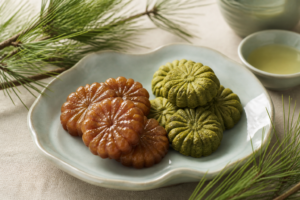
Korean yakgwa are jewel-like cookies made from crispy pastry dough filled with honey, sesame seeds, and sometimes ginger, then folded into decorative shapes. Traditional celebration treats.
Use soft wheat flour and a small amount of cornstarch, keeping the dough cool during folding. The filling should be warm (not hot) when folded in. Bake at 350°F for 12–14 minutes.
North American Regional Cookies
United States: Chocolate Chip Cookie as De Facto National Cookie
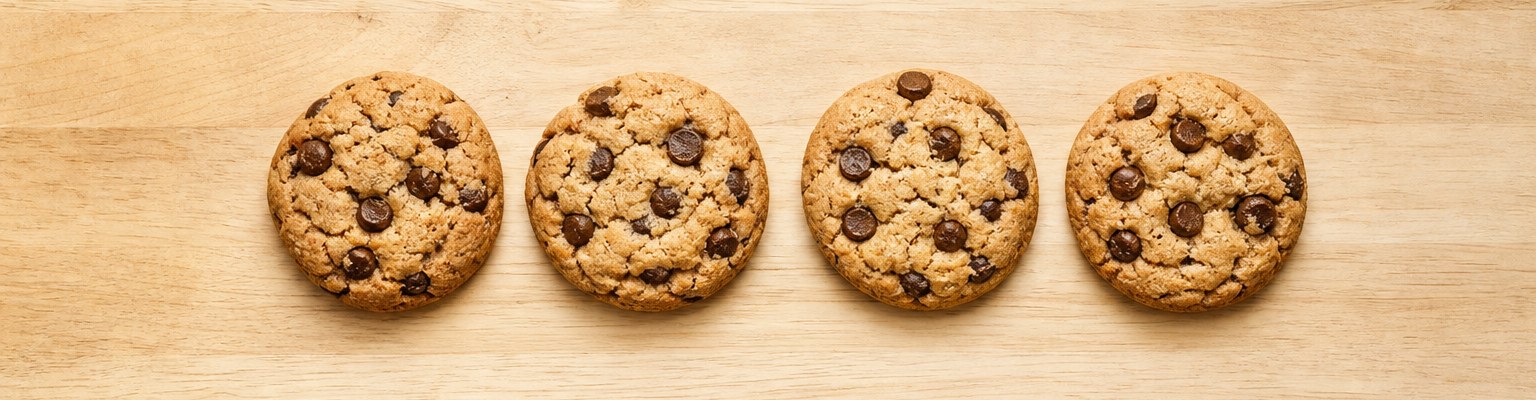
The chocolate chip cookie, invented in 1938 at the Toll House Inn in Massachusetts, has become the unofficial American national cookie. Every baker has preferences for texture and chocolate type.
Dough benefits from at least 30 minutes rest (ideally overnight). Use a combination of semi-sweet and dark chocolate, chopped rather than chipped. Use slightly less flour than traditional recipes for chewier texture.
United States: Southern Tea Cakes
Southern tea cakes are tender, subtly spiced sugar cookies with roots in American Southern tradition, particularly at Christmas. They're simpler than gingerbread but more interesting than plain sugar cookies.
Add a small amount of buttermilk or sour cream for softness. Dust unbaked cookies with cinnamon sugar before baking for a crackled surface. Don't overbake; these should remain pale and slightly soft in the center.
Canada: Nanaimo Bars
Canadian Nanaimo bars are a three-layer confection: chocolate base, custard center, and chocolate top. Named after Nanaimo, British Columbia, they're uniquely Canadian with no exact equivalents worldwide.
The middle custard layer must be thick enough to support the top chocolate. Pipe the custard layer with a pastry bag for height and stability. Let the top chocolate set at room temperature or briefly in the refrigerator.
What These National Cookies Have in Common
Nearly every national cookie relies on high-quality fat—butter or other fats carry flavor and create desirable texture. The fat-to-flour ratio is typically higher than in utilitarian baked goods.
Most iconic cookies incorporate historically significant local ingredients: Italian biscotti include almonds and anise, Lebanese ma'amoul feature pistachios and dates, Japanese matcha celebrates an ingredient uniquely important to Japanese culture. These patterns reveal evolved recipes suited to specific geographic and cultural contexts.
Most traditional cookies are made for specific times: Christmas, weddings, religious festivals. This connection to celebration makes them special—markers of important moments rather than everyday treats. This is why many have precise traditional recipes; families want continuity and comfort.
The Reference That Finally Helped Me Stop Guessing Which Cookie Represents Each Country
When I started this project, I realized I couldn’t just rely on scattered blog posts and half-remembered family recipes—I needed a single, trusted source that explained the *why* behind each cookie, not just the *how*. Regional variations and misattributions had burned me before, and I wasn’t about to serve readers the wrong cookie under a country’s flag.
What works
- It actually traces the historical origins of cookies I’d only ever known by their modern versions—I discovered that what I thought was the “true” version of a Polish cookie was actually a 20th-century adaptation, and this book caught it.
- The recipe testing notes from the authors showed me which techniques vary by region, so I could make informed choices about which version to feature instead of just picking the first recipe I found online.
- Having one beautifully organized reference meant I could cross-check my own test batches against trusted formulas, which gave me the confidence to write about these cookies authentically rather than speculatively.
What doesn’t
- It’s not a step-by-step baking guide for every recipe—some entries are more historical essay than detailed instructions, so you still need foundational baking skills to execute the recipes successfully.
- A few of the regional cookies are harder to source ingredients for in the US, and the book doesn’t always offer substitutions, which meant extra research on my end for some of the more obscure entries.
I’ll admit I second-guessed whether spending money on another cookbook was worth it—I already have dozens gathering dust—but this one earned its shelf space in my first week of project planning. The International Cookie Cookbook is the reference I reached for throughout this entire 20-country series.
About This Article

Written by Margaret Chen. Margaret Chen is a home baker and recipe developer with over 15 years of experience perfecting cookie recipes through rigorous testing and detailed experimentation. She tests every recipe multiple times, documents every variable, and applies the same rigor professional bakers use, with the warmth and accessibility of home baking. More about this site.
Scope and limits. Margaret is a home baker and recipe developer with no formal culinary training. Follow current food safety guidance for egg handling, storage, and anything you are serving to other people.
Verify this against a primary source
Specifics change, and your situation may differ from the one described here. These are the authorities worth checking directly:
- USDA FoodData Central — ingredient composition and nutrition data
- FoodSafety.gov — safe handling, storage and egg safety