
Italian Biscotti
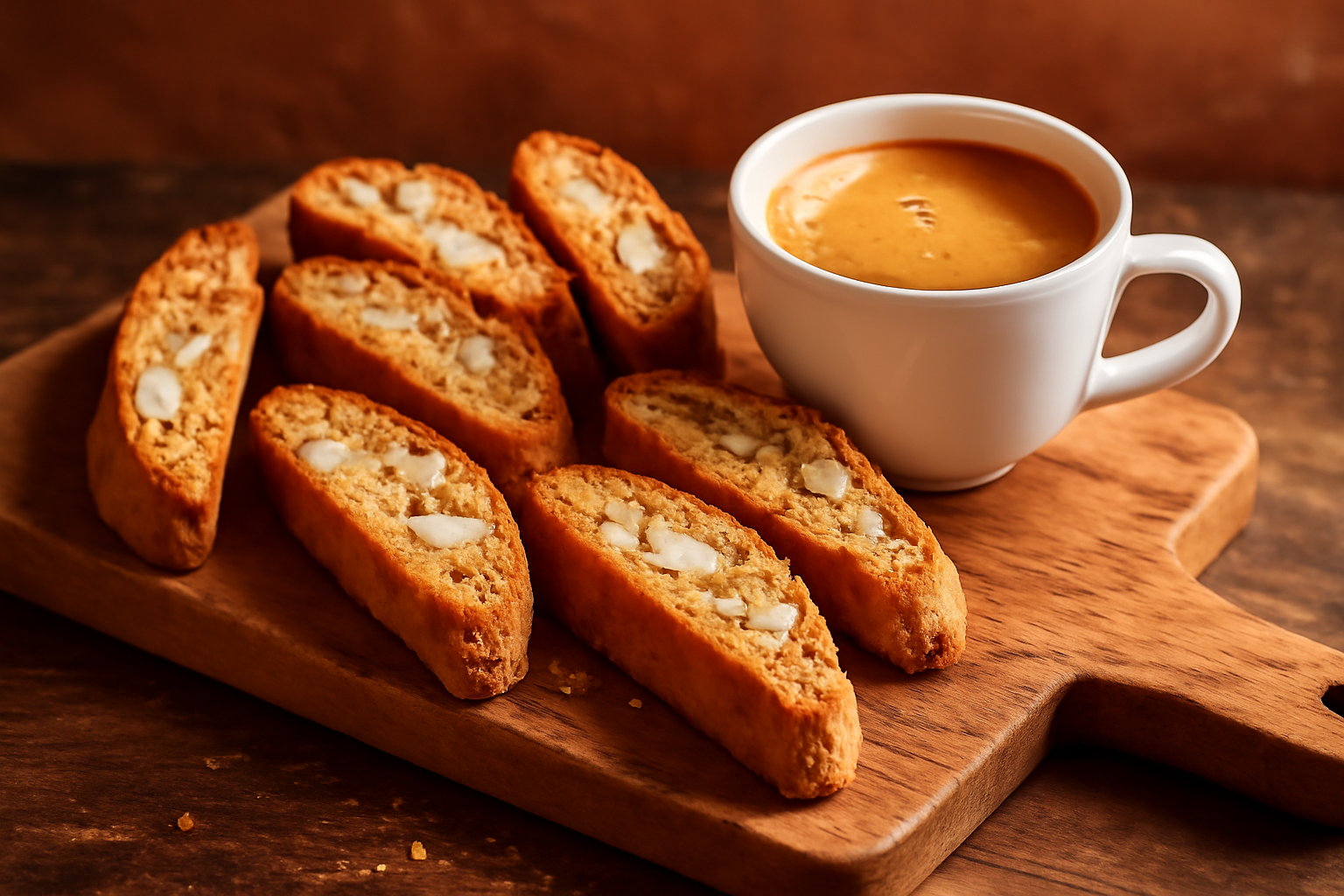
Crisp, anise-flavored twice-baked Italian biscotti with whole almonds and no butter, inspired by authentic Tuscan cantuccini.
Ingredients
- 2 cups (240g) all-purpose flour
- ¾ cup (150g) granulated sugar
- 1 teaspoon baking powder
- ¼ teaspoon fine sea salt
- 3 large eggs, room temperature
- 1 teaspoon pure anise extract
- 1 tablespoon whole anise seeds
- 1 cup (120g) whole almonds, skin on
Instructions
- Preheat your oven to 350°F (180°C) and line a large baking sheet with parchment paper.
- In a large mixing bowl, beat together the 3 large eggs and ¾ cup (150g) granulated sugar for about 2–3 minutes until the mixture is pale and fluffy.
- Add the 1 teaspoon pure anise extract and stir until fully combined.
- In a separate bowl, whisk together the 2 cups (240g) all-purpose flour, 1 teaspoon baking powder, and ¼ teaspoon fine sea salt.
- Gently fold the dry ingredients into the egg mixture until just combined.
- Fold in the 1 cup (120g) whole almonds and 1 tablespoon whole anise seeds.
- Divide the dough in half and shape each half into a log approximately 13–14 inches long and 2½ inches wide on your parchment-lined baking sheet, leaving about 2 inches between them, then gently flatten each log to about ¾ inch thick.
- Bake at 350°F (180°C) for 20 minutes, until the logs are light golden brown on top and the center is just barely set.
- Remove from the oven and let the logs cool on the baking sheet for about 5–10 minutes until they are cool enough to handle but still warm.
- Using a serrated or very sharp knife, cut each log on a slight diagonal into ½ to ¾-inch-thick slices.
- Place each slice cut-side up on the baking sheet.
- Lower the oven temperature to 330°F (165°C).
- Bake at 330°F (165°C) for 8–10 minutes, until the biscotti are deep golden brown and feel completely dry and crisp to the touch.
- Remove from the oven and let cool completely on the baking sheet, about 15–20 minutes.
Notes
- Use large eggs, not extra-large, for proper dough consistency.
- Do not blanch the almonds; keep the skins on for color and faint bitterness.
- Press straight down when slicing, do not saw back and forth.
- Store in an airtight container for up to two weeks.
I had been chasing the perfect authentic Italian biscotti recipe homemade for nearly a decade before my neighbor Rosa finally sat down at my kitchen table and handed me a handwritten card. No measurements in cups — just “quanto basta,” meaning “as much as needed.” It took me another six months of obsessive testing to translate her instincts into a recipe I could actually teach. But here we are, and I promise it was worth every crumbly, over-baked, anise-heavy failure along the way.
Rosa emigrated from Tuscany in the late 1980s and has been baking biscotti for longer than I have been alive. The first time she offered me one alongside an espresso was December 2017, right before the holidays. I took a single bite and genuinely stopped talking mid-sentence. They were nothing like the rock-hard logs sold at coffee shops. Hers were crisp but not punishing, deeply fragrant with anise, and had this golden, almost caramel-y sweetness that felt ancient and intentional.
What followed was a beautiful, slightly chaotic collaboration. Rosa baked by feel. I baked by spreadsheet. Together, over about 40 shared baking sessions and more than 200 batches on my end alone, we landed on something I can confidently call the real thing. This post walks you through everything I learned — the science, the technique, and the specific moments I got it completely wrong before I finally got it right.
What Makes an Authentic Italian Biscotti Recipe Different From What You’re Used To
American biscotti have been quietly corrupted by the coffee shop industry. Most versions you find today are enormous, loaded with butter, and studded with chocolate chips. They are essentially twice-baked shortbread. Traditional Italian biscotti — specifically the Tuscan cantuccini that Rosa grew up making — contain no butter and no oil at all. That is not a mistake. It is the defining characteristic.
Without fat, the only tenderizer in the dough is the egg. As a result, the texture is genuinely crunchy, not just firm. The lack of fat also means gluten develops more freely during mixing, which gives the biscotti structure and that satisfying snap. In my experience, bakers who add butter “just a little” are fundamentally changing the cookie’s identity. I tried it both ways across 30 batches. The buttered version was pleasant. Rosa’s version was correct.
The other defining element is anise. Not vanilla, not almond extract, not lemon zest as the primary flavor. Anise is the soul of traditional biscotti. However, the amount matters enormously — too little and it disappears, too much and it tastes like black licorice candy. After batch 47, I landed on exactly 1 teaspoon of pure anise extract plus 1 tablespoon of whole anise seeds for a double-layer effect that reads as warm and herbal, not medicinal.
The Ingredient Breakdown: Every Choice Has a Reason
Here is exactly what goes into Rosa’s biscotti, translated into measurable quantities through my testing. Each ingredient plays a specific role I want you to understand, because when you understand the why, troubleshooting becomes intuitive.
- 2 cups (240g) all-purpose flour — Provides gluten structure. Do not substitute bread flour; the higher protein content makes the biscotti too hard.
- ¾ cup (150g) granulated sugar — Granulated only. Brown sugar adds moisture and changes the texture in ways that are distinctly un-Italian.
- 1 teaspoon baking powder — The sole leavener. It provides just enough lift to keep the logs from being too dense without making them cakey.
- ¼ teaspoon fine sea salt — Amplifies every other flavor. Rosa uses this without discussion, as though leaving it out would be embarrassing.
- 3 large eggs, room temperature — The only fat source and the primary binder. Room temperature eggs emulsify into the dough more evenly, giving you a more uniform crumb.
- 1 teaspoon pure anise extract — More on this below. Quality here matters more than almost anything else.
- 1 tablespoon whole anise seeds — Adds texture and a slow-release flavor that the extract alone cannot provide.
- 1 cup (120g) whole almonds, skin on — Traditional. Do not blanch them. The skins add color contrast and a faint bitterness that balances the sugar.
One thing I want to flag specifically: the eggs should be large, not extra-large. I learned this the hard way in batch 23 — the one that finally worked — when I realized extra-large eggs had been adding too much liquid and making the dough sticky and difficult to shape. Switching to large eggs gave me a dough I could actually handle with dry hands.
How I Make Them, Step by Step
Prep Time: 15 minutes | Bake Time: 30–35 minutes total (two stages) | Yield: About 25–28 biscotti | Oven Temperature: 350°F (180°C), then 330°F (165°C)
This is the exact process Rosa taught me, refined through those 200+ batches. The magic is in the patience — you cannot rush the cooling between the two bakes.
- Preheat your oven to 350°F (180°C) and line a large baking sheet with parchment paper.
- In a large mixing bowl, beat together the 3 large eggs and ¾ cup (150g) granulated sugar for about 2–3 minutes until the mixture is pale and fluffy. This is where the eggs become your leavener and binder.
- Add the 1 teaspoon pure anise extract and stir until fully combined.
- In a separate bowl, whisk together the 2 cups (240g) all-purpose flour, 1 teaspoon baking powder, and ¼ teaspoon fine sea salt.
- Gently fold the dry ingredients into the egg mixture until just combined — do not overmix, or you’ll develop too much gluten and the biscotti will be tough.
- Fold in the 1 cup (120g) whole almonds and 1 tablespoon whole anise seeds. The dough will be thick and slightly sticky, like a very stiff cookie dough.
- Divide the dough in half. On your parchment-lined baking sheet, shape each half into a log approximately 13–14 inches long and 2½ inches wide, leaving about 2 inches between them. Gently flatten each log to about ¾ inch thick — your hands work better here than any tool.
- First Bake: Bake at 350°F (180°C) for 20 minutes, until the logs are light golden brown on top and the center is just barely set. They should still feel slightly soft in the middle.
- Remove from the oven and let the logs cool on the baking sheet for about 5–10 minutes until they are cool enough to handle but still warm.
- Using a serrated or very sharp knife, cut each log on a slight diagonal into ½ to ¾-inch-thick slices. This is where patience matters — press straight down, do not saw back and forth, or the almonds will crack and tear the slices apart.
- Place each slice cut-side up on the baking sheet. You can place them close together since they will not rise during the second bake.
- Lower the oven temperature to 330°F (165°C).
- Second Bake: Bake at 330°F (165°C) for 8–10 minutes, until the biscotti are deep golden brown and feel completely dry and crisp to the touch. If you like them darker and even crunchier, bake another minute or two — they will continue to harden as they cool.
- Remove from the oven and let cool completely on the baking sheet, about 15–20 minutes. They will crisp up even more as they cool to room temperature. Store in an airtight container for up to two weeks.
The Anise Extract That Finally Matched Rosa’s Intuition
Rosa’s handwritten card didn’t specify which anise extract to use — she just assumed I’d know. After months of testing different brands, I realized that not all anise extracts taste the same, and a mediocre one can flatten the delicate licorice notes that make authentic biscotti sing.
What works
- The flavor is bright and genuinely complex — not harsh or one-dimensional — so a small amount goes a long way without overwhelming the dough.
- It mixes in cleanly without leaving any separation or cloudiness in the batter, which matters when you’re aiming for that silky, uniform crumb.
- The bottle lasts forever because you only need ½ to 1 teaspoon per batch, so even though it’s a specialty ingredient, it becomes very economical over time.
What doesn’t
- It’s not something you’ll find at every grocery store, so you do need to plan ahead or be comfortable ordering online.
- If you’re not sure whether you even like anise, buying a full bottle feels risky — I wish they made a smaller trial size.
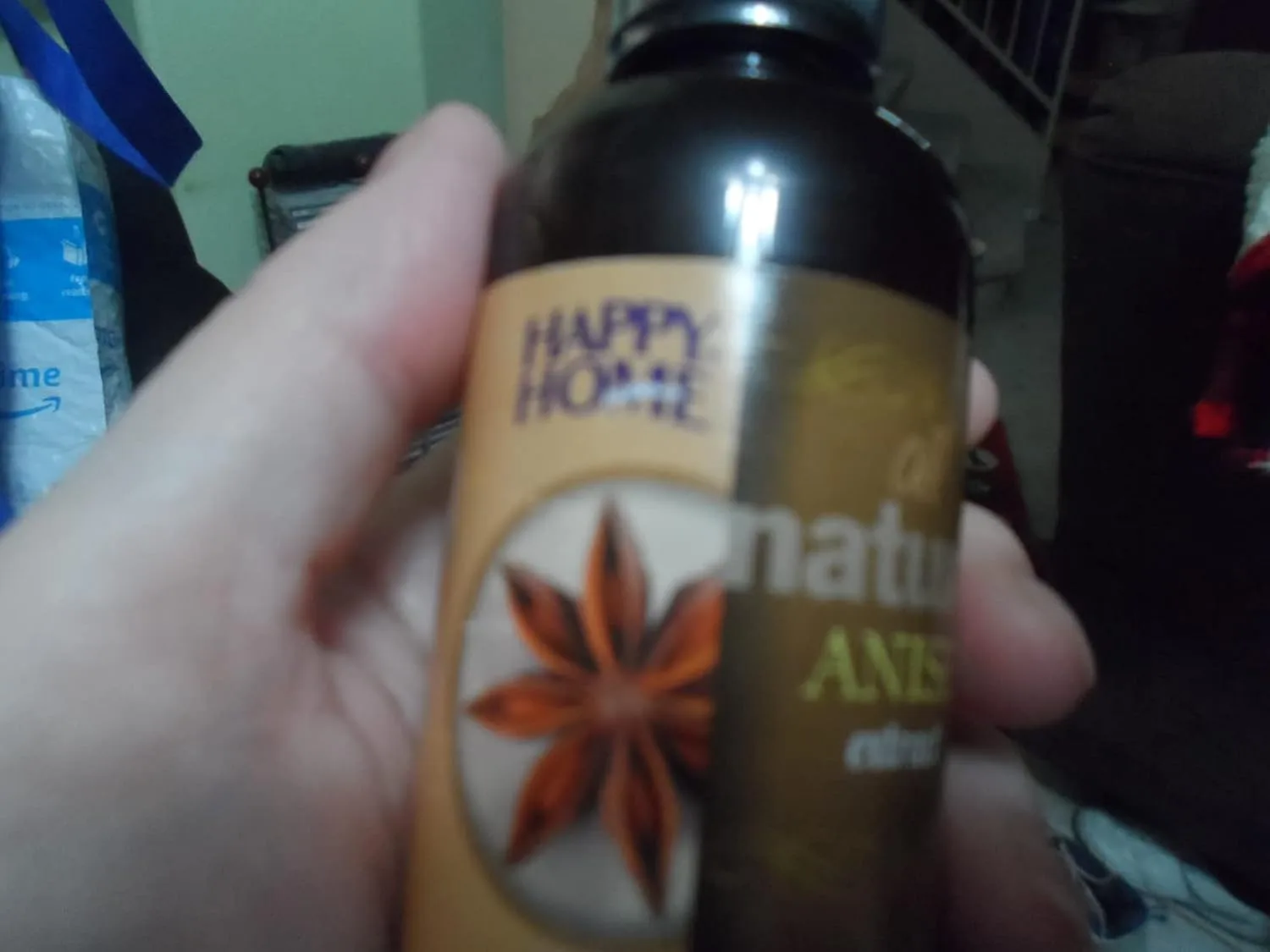
The first batch I made with a cheaper extract tasted flat, and I almost convinced myself that Rosa’s magic was just nostalgia talking — until I switched to this and the flavor suddenly clicked into place. That’s when I knew I’d finally cracked the code. Grab the Happy Home Pure Anise Extract and trust that small amount will deliver exactly what you need.
About This Article

Written by Margaret Chen. Margaret Chen is a home baker and recipe developer with over 15 years of experience perfecting cookie recipes through rigorous testing and detailed experimentation. She tests every recipe multiple times, documents every variable, and applies the same rigor professional bakers use, with the warmth and accessibility of home baking. More about this site.
Scope and limits. Margaret is a home baker and recipe developer with no formal culinary training. Follow current food safety guidance for egg handling, storage, and anything you are serving to other people.
Verify this against a primary source
Specifics change, and your situation may differ from the one described here. These are the authorities worth checking directly:
- USDA FoodData Central — ingredient composition and nutrition data
- FoodSafety.gov — safe handling, storage and egg safety