
Korean Cookies: The Recipes I Found After Falling Down a Very Delicious Rabbit Hole
I discovered yakgwa—deep-fried honey cookies infused with sesame oil, ginger, and cinnamon—at a Korean bakery near my neighborhood. That single bite sparked six months of research into hangwa, the umbrella term for traditional Korean confections.
“These are yakgwa,” the baker told me with a knowing smile. “Traditional. My grandmother’s recipe.”
What I discovered is that Korean cookies aren’t just cookies—they’re vessels for history, culture, and an entirely different approach to sweetness than what we see in Western baking. They’re often less sweet than their American counterparts, more nuanced in flavor, and deeply connected to tea culture, medicinal traditions, and centuries of court confectionery practices.
This guide covers the traditional styles—yakgwa, dasik, and yugwa—and how they differ from modern Korean bakery cookies, so you can explore the full range of Korean cookie traditions.
What Are Hangwa? Understanding Traditional Korean Cookie Confections
Hangwa (한과), meaning 'Korean confection,' dates back to Korea's Three Kingdoms period and was reserved for royal courts, temple offerings, and ceremonies. Unlike Western confectionery, which prioritizes maximum sweetness, hangwa embraces subtlety through honey or grain syrups, layered flavors like ginger and sesame, and preparation methods rooted in Korean medicine.
Hangwa encompasses several subcategories, and while not all are technically “cookies” in the Western sense, they share a philosophical family tree. Let me break down the main styles you’ll encounter:
Yakgwa (약과) — These are the honey cookies I fell in love with. Deep-fried pastries soaked in honey, infused with sesame oil, ginger, and cinnamon. They’re perhaps the most recognizable form of Korean cookies to Western palates.
Dasik (다식) — Delicate pressed cookies made from flour (often rice flour), sesame, and a binding agent, formed using decorative wooden molds. They’re less sweet, more sophisticated, and deeply connected to Korean tea culture.
Yugwa (유과) — Puffed or fried grain cookies, sometimes honey-glazed, with a lighter, crispier texture than yakgwa. These often feature sesame seeds and can be quite addictive.
Jeonggwa (정과) — Candied fruits and roots, technically not cookies but often grouped in the same category. Think candied ginger, jujubes, and citrus.
Understanding hangwa helps you appreciate Korean cookie recipes as deliberate expressions of a coherent tradition. Two key ingredients: toast pine nuts and walnuts lightly before grinding for better flavor, and soak tough dried jujubes in warm water for 10–15 minutes before mincing so they distribute evenly.
A quick note on two ingredients you’ll see again and again in hangwa: nuts and jujubes. Pine nuts and walnuts benefit enormously from a light toasting before grinding—skip it and the finished cookies taste noticeably flatter. Dried jujubes (Korean dates) bring a subtle sweetness and chew; if yours are tough, soak them in warm water for 10–15 minutes before mincing so they distribute evenly through doughs and pastes.
Types of Korean Cookies: Traditional vs. Modern
Here’s a breakdown of the main types of Korean cookies you’ll encounter:
Traditional Hangwa Styles
- Yakgwa — The honey-soaked, deep-fried cookie infused with sesame oil, ginger, and cinnamon. Dense, fragrant, and intensely flavored.
- Dasik — The pressed rice flour cookie, elegant and subtle, available in varieties like black sesame (검은깨 다식) and pine nut (잣 다식). Often dusted with additional sesame or powdered ingredients.
- Yugwa — The lighter, crispier puffed grain cookie, sometimes with honey glaze and sesame seeds. Think of it as the airier cousin of yakgwa.
- Gangjeong — A sweet snack of puffed grains bound with honey or syrup, often coated in sesame seeds. Technically more of a candy than a cookie, but delicious nonetheless.
Modern Korean Bakery Cookies
- Korean Butter Cookies — Influenced by European baking but adapted with Korean flavors. Often thinner and crispier than traditional American butter cookies, sometimes infused with sesame oil or black sesame.
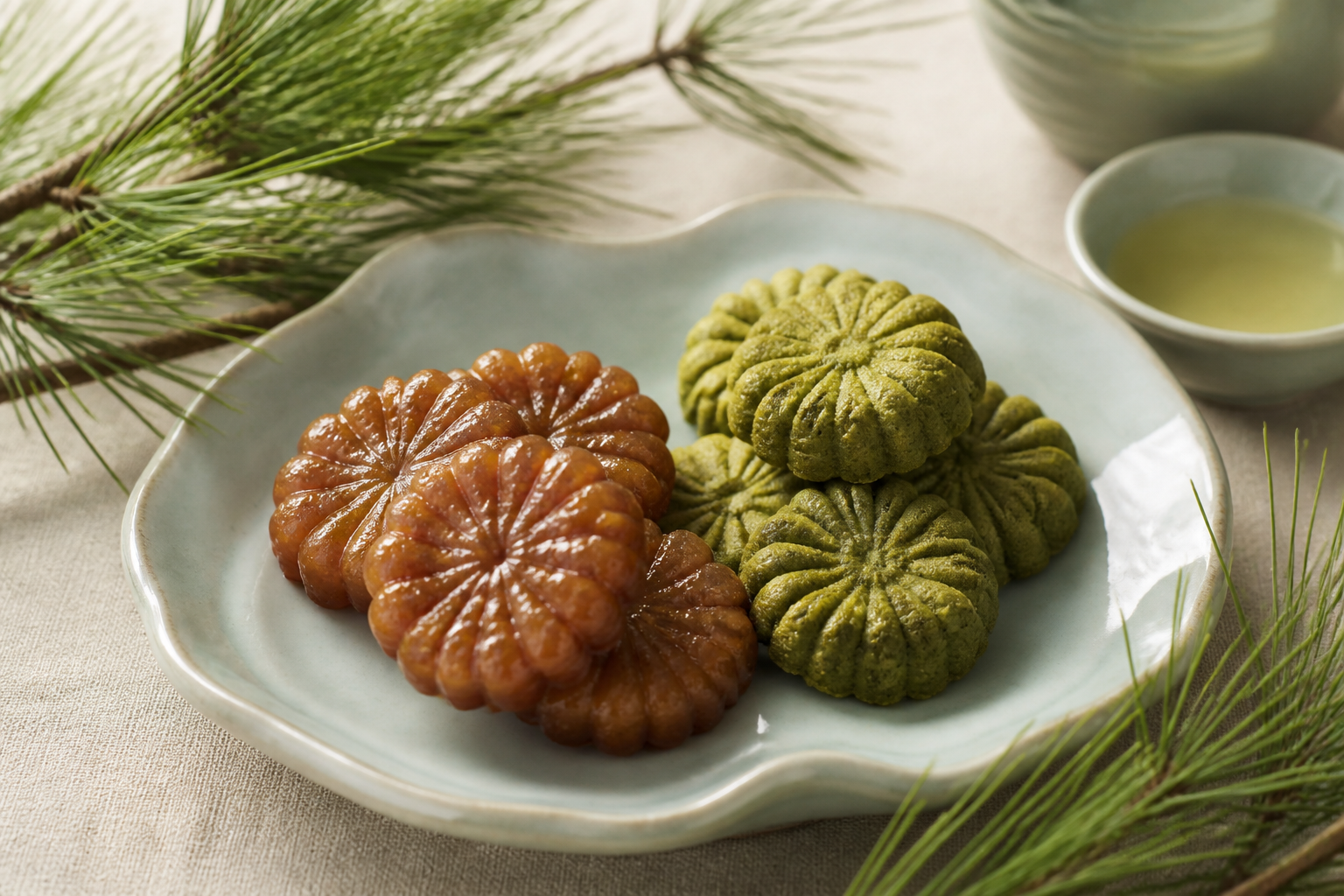
- Matcha Fusion Cookies — Modern innovations blending Korean honey cookie traditions with Japanese matcha powder. These represent contemporary cross-cultural baking.
- Cream-Filled Korean Cookies — A more recent invention, especially popular in Korean cafes, featuring two thin cookies sandwiched with cream, often in flavors like red bean or injeolmi (roasted soybean powder).
- Honey Butter Cookies — A commercial phenomenon in Korea, featuring a butter cookie base with honey and sometimes a crunchy texture. Brands like Lotte have made these wildly popular internationally.
If you’d like to see how these styles compare with Japan’s cookie traditions, I’ve also written a guide to Japanese and Korean cookies that walks through the two countries’ flavors side by side.
Yakgwa: The Original Korean Honey Cookie Recipe
Yakgwa is the heart of traditional Korean cookies—deep-fried pastries that absorb honey while still warm, creating a crispy exterior and slightly dense interior. The flavor profile combines warm spices (ginger, cinnamon), nutty sesame oil, subtle honey sweetness, and a slight warmth from rice wine or sake. This recipe is adapted from traditional Korean temple cuisine and court confectionery practices.
This recipe requires careful attention to temperature control during frying.
Traditional Yakgwa (Korean Honey Cookies)
Ingredients
For the Dough:
- 2 cups (240g) all-purpose flour, plus more for dusting
- ½ teaspoon salt
- ⅓ cup (80ml) sesame oil (toasted, Korean variety preferred)
- 3 tablespoons honey
- 2 tablespoons rice wine (mirin or sake will work)
- 1 teaspoon ground ginger
- ½ teaspoon ground cinnamon
- ¼ teaspoon ground nutmeg (optional, but adds depth)
- 2-3 tablespoons warm water (if needed for dough consistency)
For the Honey Soaking Liquid:
- 1 cup honey
- ¼ cup water
- 2 tablespoons rice wine or sake
- 3-4 dried ginger slices (or 1 teaspoon powdered ginger)
- 2-3 cinnamon sticks broken into pieces
- 3-4 whole cloves (optional)
For Frying and Garnish:
- Oil for deep frying (vegetable or peanut oil, 2-3 quarts)
- 2-3 tablespoons sesame seeds (toasted)
- Pinch of coarse sea salt (optional but traditional)
Instructions
- Prepare the Dough. In a medium bowl, whisk together flour, salt, ginger, cinnamon, and nutmeg. In another bowl, combine sesame oil, honey, and rice wine. The mixture will look slightly separated—this is normal.
- Add the wet ingredients to the dry ingredients and stir gently with a wooden spoon until a shaggy dough forms. If the mixture seems too dry (which it might, since sesame oil can be less hydrating than other fats), add warm water a tablespoon at a time until the dough comes together. You want it slightly stiffer than a standard pie dough.
- Knead the dough for 2-3 minutes by hand until it’s smooth and cohesive. Wrap it in plastic wrap and let it rest at room temperature for 30 minutes. This rest period is crucial—it allows the flour to fully hydrate and makes the dough easier to work with.
- Prepare the Honey Soaking Liquid. While the dough rests, prepare your soaking liquid. In a saucepan, combine honey, water, rice wine, ginger slices, cinnamon sticks, and cloves if using. Heat gently over medium-low heat, stirring occasionally, until the mixture reaches about 150-160°F (65-70°C). You want it warm, aromatic, and ready to receive the hot fried yakgwa. Don’t let it boil—we’re infusing flavors, not reducing the mixture.
- Shape the Yakgwa. After the dough has rested, place it on a floured surface and roll it out to about ⅛-inch thickness. This should take just a few minutes—the dough should be quite pliable at this point.
- Using a small cookie cutter (I prefer a 1½-inch diamond or square shape, which is traditional), cut out shapes. You can also cut small rectangles about 1½ inches long and ¾ inch wide. Place cut pieces on parchment paper as you work.
- If you have time, let the cut dough pieces rest on parchment for another 15-20 minutes. This helps them hold their shape when frying. You should have 20-24 cookies depending on your cutter size.
- Fry the Yakgwa. Heat oil to 320-330°F (160-165°C) in a deep, heavy-bottomed pot or Dutch oven. A candy thermometer is essential here—yakgwa are fried at a lower temperature than most fried cookies, which keeps them from browning too quickly and burning before they cook through.
- Working in small batches (4-6 cookies at a time), carefully place yakgwa into the hot oil. They should sink slightly then gently float. Fry for 1½ to 2 minutes, then gently turn them over with a slotted spoon. Fry for another 1½ to 2 minutes on the second side until they’re a light golden-brown color. The cookies will continue to darken slightly as they cool, so don’t over-fry.
- Remove with a slotted spoon and drain briefly on a wire rack set over paper towels. They’ll be soft at this stage—don’t panic. This is correct.
- Soak in Honey. This is where the magic happens. While the cookies are still warm, gently place them into your warm honey soaking liquid. You can use your slotted spoon or a small strainer to gently submerge them—they should spend about 10-15 seconds in the honey, enough to absorb the liquid without becoming soggy. I recommend batching this process to match your frying pace: fry a batch, soak them, then fry the next batch while the previous batch soaks.
- Remove cookies with a slotted spoon and arrange them on a wire rack or parchment paper to cool and set. The honey will firm up as the cookies cool, creating that distinctive crispy-outside, dense-inside texture.
- Garnish and Storage. Once the cookies have cooled to room temperature (about 30 minutes), you can garnish with toasted sesame seeds and a light sprinkle of sea salt if desired. This is optional but traditional.
- Store yakgwa in an airtight container at room temperature for up to 5 days. They’ll stay crispy because the honey acts as a preservative. I’ve found they actually taste better after a day or two, as the flavors continue to meld.
Margaret’s Notes on Yakgwa
The lower frying temperature (300°F) is key—yakgwa are denser than donuts and need gentle, slower cooking. I learned this when my first batches at 350°F burned before cooking through.
Always soak yakgwa in warm honey; the heat opens the structure of the fried cookie, allowing it to absorb the honey and spice infusion. Cold honey creates a gummy mess.
Use toasted sesame oil—it gives yakgwa their distinctive aroma and nutty undertone. Korean or Japanese varieties both work; don't substitute regular oil or you'll lose what makes these specifically Korean.
Serve yakgwa with hot tea. The original context is ceremonial; the subtle sweetness and warm spices complement rather than overwhelm, especially with light green tea or barley tea.
Modern Korean Matcha Honey Cookies
Matcha honey cookies aren't traditional—yakgwa with matcha breaks from the historical recipe. But the hybrid approach keeps the honey soaking method and warm spices while adding matcha to the dough, representing how Korean cookie traditions evolve.
Modern Korean Matcha Honey Cookies
Ingredients
For the Dough:
- 1¾ cups (210g) all-purpose flour
- 3 tablespoons high-quality matcha powder (ceremonial grade preferred)
- ½ teaspoon salt
- 6 tablespoons (85g) unsalted butter, softened
- 3 tablespoons (45ml) sesame oil (toasted)
- 2 tablespoons honey
- 2 tablespoons rice wine or sake
- ¼ teaspoon ground ginger
- ⅛ teaspoon cinnamon
- 2-3 tablespoons warm water (if needed)
For the Honey Soaking Liquid:
- ¾ cup honey
- ¼ cup water
- 1 tablespoon rice wine or sake
- 2 tablespoons matcha powder mixed into a paste with 1 tablespoon water
- 2-3 cinnamon sticks (optional but adds warmth)
For Frying and Garnish:
- Oil for deep frying (2-3 quarts)
- 2 tablespoons sesame seeds (toasted)
- 1 teaspoon matcha powder for dusting (optional, for visual appeal)
Instructions
- Prepare the Dough. Sift together flour and matcha powder 2-3 times. This is important because matcha powder can clump, and sifting ensures it’s evenly distributed. Add salt.
- In another bowl, cream together softened butter and sesame oil using a wooden spoon or electric mixer. Beat for about 1 minute until combined—it won’t fluff up like traditional butter, which is fine. Add honey and rice wine and mix until smooth.
- Add the matcha flour mixture to the butter mixture and stir gently until a dough forms. Add ginger and cinnamon. If the dough seems dry, add warm water a teaspoon at a time. The dough should be slightly softer than traditional yakgwa dough but not sticky.
- Knead briefly (just 1-2 minutes) until smooth. Wrap in plastic wrap and refrigerate for 1 hour. This rest period is more important here than with traditional yakgwa because the butter needs to firm up, making the dough easier to handle.
- Prepare the Honey Soaking Liquid. In a small saucepan, gently warm the honey and water over medium-low heat. When it reaches about 140°F (60°C), remove from heat and whisk in the matcha paste until smooth. Add rice wine and cinnamon sticks if using. The mixture should be warm, aromatic, and ready to receive hot cookies.
- Shape and Rest. Remove dough from refrigerator and let it sit at room temperature for 5-10 minutes. Roll out to ⅛-inch thickness on a floured surface. Cut into small shapes using a cookie cutter (1½-inch diamonds or rectangles are traditional). You should get 18-20 cookies.
- Let the cut pieces rest on parchment for 15-20 minutes before frying.
- Fry. Heat oil to 320-330°F (160-165°C). Fry in small batches for 1½ to 2 minutes per side until light golden-brown. Don’t overdo it—matcha cookies can look darker than they should be cooked when they’re still raw on the inside, so err on the side of undercooking slightly.
- Drain briefly on a wire rack.
- Soak and Cool. While still warm, gently submerge cookies in the matcha-honey liquid for about 10-15 seconds each. The honey and matcha will give them a lovely pale green color as it sets.
- Arrange on a wire rack to cool. Once completely cool, you can dust with a tiny bit of matcha powder for visual appeal, and garnish with toasted sesame seeds.
- Storage. Store in an airtight container at room temperature for up to 4 days. The matcha flavor is most vibrant in the first 24-48 hours.
Margaret’s Notes on Matcha Honey Cookies
Use high-quality matcha powder; cheap matcha tastes grassy and bitter. I added butter to this version (unlike traditional yakgwa) because matcha works better with butter's richer profile, creating slightly more tender cookies.
The matcha in the honey soaking liquid is my favorite part. It gives the finished cookies that pale green tint while adding an earthy note that balances the sweetness. Serve these with matcha tea for a complete experience.
Dasik: Korean Tea Cookies Made With Rice Flour and Sesame
If yakgwa represents the opulent side of Korean cookies, dasik represents restraint, elegance, and sophistication.
Dasik (다식) are pressed cookies made from rice flour and sesame, bound with minimal honey, then formed in decorative wooden molds. Barely sweet, they crumble slightly on the tongue and come in varieties: black sesame dasik, white sesame dasik, pine nut dasik, and ginger dasik. Serve at formal tea ceremonies.
What fascinated me about dasik is their simplicity: just rice flour, sesame or nuts, honey, and pressure. No butter, no leavening, no moisture beyond the honey. Yet they're utterly delicious.
Black Sesame Dasik (검은깨 다식)
Why Rice Flour Changed How I Approach Korean Cookie Texture
Korean cookies rely on rice flour to achieve their delicate crumb structure. All-purpose flour produces dense, gritty results. Switching to 100% rice flour gave my cookies that tender, melt-in-your-mouth quality I'd been chasing.
What works
- Creates that signature tender crumb without the chewiness you’d get from wheat flour—cookies practically dissolve on your tongue
- Produces a more delicate, refined cookie texture that actually tastes like what I’d eaten at the Korean bakery, not my usual American-style shortbread
- The organic, pure version means no hidden starches or additives that can throw off your ratio and cause spreading issues
What doesn’t
- Rice flour absorbs liquids differently than wheat flour, so you can’t use a 1:1 swap without adjusting your wet ingredients slightly
- It’s pricier than all-purpose, and you’ll need to source it intentionally rather than grabbing it off the shelf at your regular grocery store
I almost gave up on Korean cookies entirely after my first three batches turned out disappointingly dense and bland—I was ready to assume the recipes just didn’t translate to my kitchen. But when I finally tracked down authentic Korean 100% Pure Organic Rice Flour, everything clicked into place.
About This Article

Written by Margaret Chen. Margaret Chen is a home baker and recipe developer with over 15 years of experience perfecting cookie recipes through rigorous testing and detailed experimentation. She tests every recipe multiple times, documents every variable, and applies the same rigor professional bakers use, with the warmth and accessibility of home baking. More about this site.
Scope and limits. Margaret is a home baker and recipe developer with no formal culinary training. Follow current food safety guidance for egg handling, storage, and anything you are serving to other people.
Verify this against a primary source
Specifics change, and your situation may differ from the one described here. These are the authorities worth checking directly:
- USDA FoodData Central — ingredient composition and nutrition data
- FoodSafety.gov — safe handling, storage and egg safety