
Classic Soft Molasses Ginger Cookies
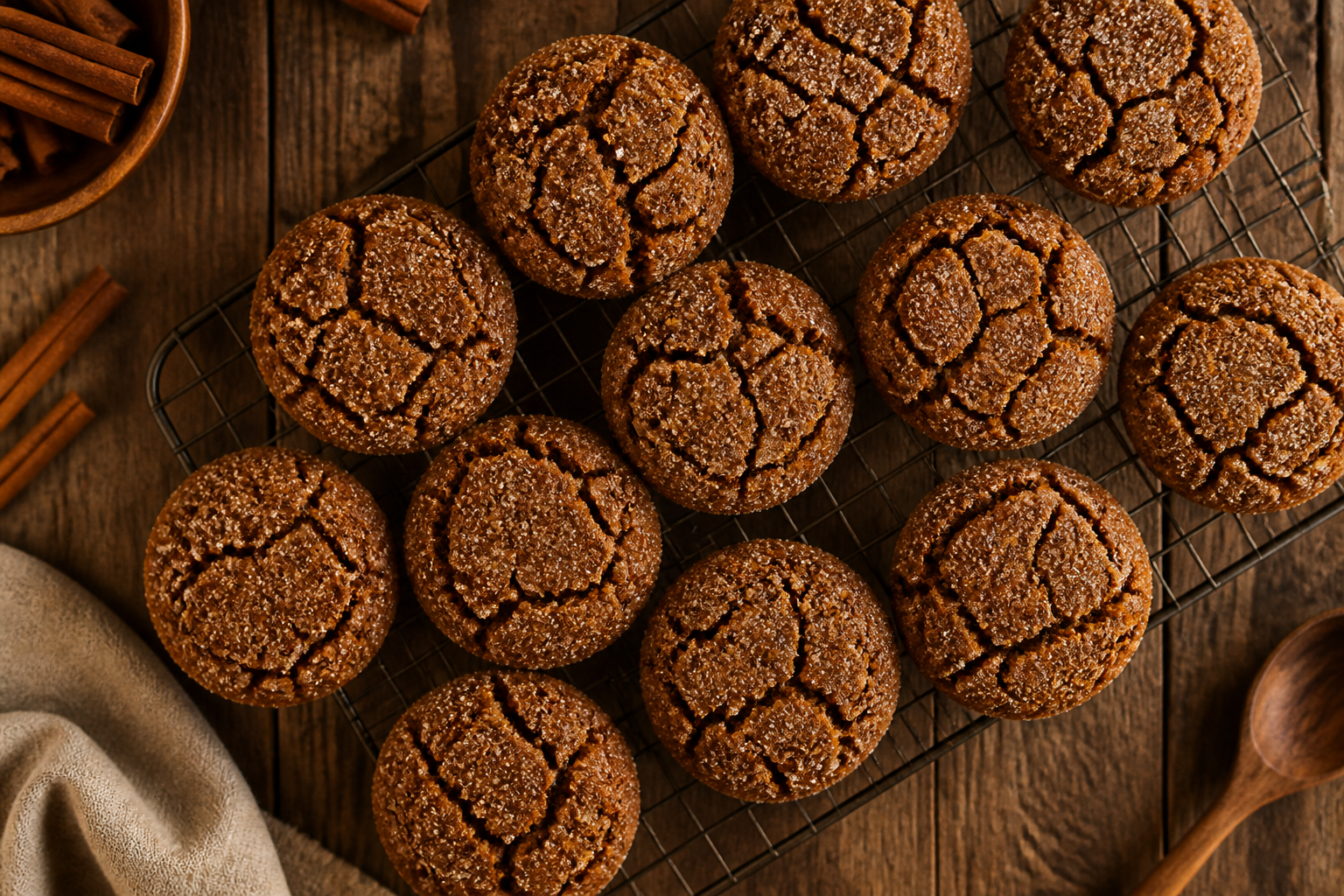
Thick, chewy ginger molasses cookies with a crackled sugar top and deeply spiced flavor.
Ingredients
- 6 ounces (170 g) unsalted butter, room temperature
- ¾ cup (150 g) granulated sugar
- ¾ cup (165 g) packed light or dark brown sugar
- 3 ounces (85 g) unsulfured molasses
- 2 cups (240 g) all-purpose flour
- 2 teaspoons baking soda
- 1½ teaspoons ground ginger
- 1 teaspoon ground cinnamon
- ¼ teaspoon ground cloves
- ½ teaspoon fine sea salt
- 2–3 tablespoons granulated sugar for rolling
Instructions
- In a medium bowl, cream together butter, ¾ cup granulated sugar, and brown sugar until light and fluffy, about 2–3 minutes.
- Add molasses and mix until fully incorporated.
- In a separate bowl, whisk together flour, baking soda, ginger, cinnamon, cloves, and salt.
- Fold the dry ingredients into the wet mixture until the dough just comes together.
- Chill the dough for at least 30 minutes, until it's firm enough to roll easily.
- Preheat the oven to 350°F and line baking sheets with parchment paper.
- Roll dough into 1-inch balls and roll each ball in 2–3 tablespoons granulated sugar until fully coated.
- Place sugar-coated balls 2 inches apart on prepared baking sheets.
- Bake for 10–12 minutes, until edges are set but the centers still look slightly soft and underdone.
- Let cookies rest on the baking sheet for 5 minutes, then transfer to a cooling rack.
Notes
- Use unsulfured molasses, not blackstrap, for balanced flavor.
- Measure molasses by weight (3 ounces) rather than volume for consistency.
- Use fresh ground spices for maximum ginger flavor.
- Store in an airtight container for up to 5 days.
I have a confession to make. After fifteen years of developing and testing cookie recipes—after publishing dozens of variations, twists, and deep dives into cookie science on this site—I realized something embarrassing last month: I have never, not once, posted a classic ginger molasses cookie recipe.
Not a classic version. Not a creative riff. Not even a passing mention in a roundup. Nothing. This despite the fact that soft molasses cookies rank among the most requested recipes I get via email, and despite the fact that old fashioned ginger cookies have been a staple of American baking for generations. The gap felt impossible once I noticed it.
So here we are. Rather than launch straight into a creative interpretation or a flavor twist—the way I tend to work with other classics on The Cookie Diaries—I’m giving this one the foundational treatment it deserves. This is my classic soft molasses ginger cookies recipe, tested and refined through dozens of batches, stripped back to what actually matters, and ready to become your go-to version.
Why “Soft” Molasses Cookies Are Different From Gingersnaps
Before we get into the recipe itself, let’s clarify what we’re actually making. The phrase “soft molasses cookies” gets used loosely, and it’s worth understanding how this style differs from the thin, crisp gingersnap that many people grew up eating.
A gingersnap is thin and snappy—hence the name. It cracks when you bite it. It has a lot of spice and sometimes a subtle tart note from baking soda. A soft molasses ginger cookie, by contrast, is thick, chewy, and deeply spiced. The surface crazes and cracks as it bakes, creating a beautiful crackled top, but the interior stays tender all the way through. You can bite it cleanly without it shattering.
The difference comes down to moisture and brown sugar. Molasses is an invert sugar—a byproduct of refining cane sugar that contains more water than granulated sugar alone. When you combine molasses with brown sugar (which already contains molasses), you’re adding significant moisture to the dough. That moisture, paired with a slightly shorter bake time, keeps these cookies soft even as they cool.
Gingersnaps, by contrast, use less molasses or more granulated sugar, and they bake longer. As a result, they dry out slightly and develop that signature snap. Both styles are delicious—they’re just different animals, and this recipe is unapologetically in the soft camp.
The Molasses That Actually Belongs in This Recipe
Here’s where I learned something important—and somewhat painfully. In my early testing of this molasses ginger cookies recipe, I reached for blackstrap molasses without thinking much about it. Blackstrap is nutrient-dense and has a deep, almost metallic intensity that works beautifully in certain applications. But in a classic, delicate spiced cookie? It was overwhelming.
Those first batches tasted bitter. The spice got lost. The molasses flavor became almost medicinal, drowning out the warm notes of cinnamon and ginger I was trying to build. I made the mistake of assuming that “darker” meant “better,” when in reality, the wrong type of molasses can completely sabotage a recipe.
For this classic ginger molasses cookie recipe, you want unsulfured molasses—either the regular light/medium version or unsulfured dark molasses. Both work. Light molasses is slightly milder and lets the spice shine a bit more. Dark unsulfured molasses has a richer, deeper note without the bitter edge of blackstrap.
Specifically, I use Wholesome Organic Unsulfured Molasses, which has a clean, warm sweetness and the right balance for this cookie. If you’re on a budget or buying in bulk, the Golden Barrel Unsulfured line offers a larger format at a lower per-ounce cost.
Pro tip: measure your molasses on a kitchen scale if you have one. Molasses is dense and sticky, and measuring by volume can lead to inconsistency. Three ounces by weight is much more reliable than “¼ cup” when you’re aiming for precision.
The Spice Balance That Makes This Taste “Classic”
The spice blend is where a classic soft molasses ginger cookies recipe either sings or falls flat. Too heavy on any one spice, and the cookie tastes medicinal or one-dimensional. Too timid, and it tastes like plain sugar cookies with a faint memory of spice.
In my testing, I found that ground ginger should be the dominant note—about 1½ teaspoons per 30 cookies. That’s enough to give you a real ginger presence without tipping into harshness. Then, cinnamon at 1 teaspoon provides warmth and roundness. Finally, a small pinch of ground cloves—just ¼ teaspoon—adds subtle depth and that sense of old-fashioned, grandmotherly comfort that makes these cookies feel classic.
The cloves deserve special attention. Clove is powerful. Half a teaspoon would make these cookies taste like you’re biting into a dental office. A quarter teaspoon is almost invisible—you won’t taste “clove” specifically—but you’ll feel a subtle warmth and complexity that you might not be able to name. That’s exactly what you want.
Importantly, these spices should be fresh. Ground spices lose potency over time. If your ginger or cinnamon has been sitting in the back of your cabinet for three years, buy new. The difference in a cookie this spice-forward is genuinely noticeable.
My Method Step by Step
The method for soft molasses cookies is straightforward, but a few details matter. This isn’t a no-mixer recipe—creaming butter with sugars and molasses creates the structure you need to get that tender crumb and crackled top.
Start by creaming 6 ounces of room-temperature butter with ¾ cup granulated sugar and ¾ cup packed brown sugar. Beat this for 2–3 minutes until it’s light and fluffy. The air you’re whipping in helps the cookies rise and creates a slightly open crumb structure. Then add ¼ cup molasses (or 3 ounces by weight) and mix until fully combined.
In a separate bowl, whisk together 2 cups all-purpose flour, 2 teaspoons baking soda, 1 teaspoon ground ginger, 1 teaspoon cinnamon, ¼ teaspoon ground cloves, and ½ teaspoon fine sea salt. Then fold the dry ingredients into the wet until the dough just comes together. It should be soft but hold its shape when rolled.
At this point, chill the dough for at least 30 minutes. Cold dough is much easier to roll into even balls. It also gives the flour time to fully hydrate, which keeps the cookies from spreading too aggressively in the oven.
When you’re ready to bake, roll walnut-sized portions of dough into balls—about 1 inch in diameter. Pour 2–3 tablespoons of granulated sugar into a small bowl and roll each ball in it until fully coated. That sugar coating is crucial. As the cookies bake, the sugar dissolves slightly, then recrystallizes, creating the signature crackled, sparkly surface. This is what makes soft molasses cookies visually distinctive.
Place the sugar-coated balls 2 inches apart on a parchment-lined baking sheet. Bake at 350°F for 10–12 minutes. This is a tight window, and it matters. The cookies are done when the edges are set but the very center still looks slightly underbaked—almost soft to the touch. They’ll continue to cook on the pan as they cool, firming up to the perfect tender-chewy texture.
Let them rest on the baking sheet for 5 minutes before transferring to a cooling rack. This resting period is when the carryover cooking happens. Too long on the pan and they’ll overcook; too short and they’ll break when you move them.
The Classic Soft Molasses Ginger Cookie Recipe
Yield: 30 cookies | Prep Time: 15 minutes | Chill Time: 30 minutes | Bake Time: 10–12 minutes per batch
Common Mistakes to Avoid
In my years of testing, I’ve seen—and made—several mistakes that pull this cookie away from what makes it special. Let me save you the trouble.
Mistake #1: Using blackstrap molasses. I learned this the hard way, as mentioned above. Blackstrap has its place, but a classic soft molasses ginger cookies recipe isn’t it. Stick with unsulfured molasses—either light or dark—and your cookies will taste warm and balanced instead of bitter and medicinal.
Mistake #2: Overbaking. This is the most common issue I see when people report that their old fashioned ginger cookies came out dry and cakey. That 10–12 minute window is real. If your oven runs hot, check them at 10 minutes. The centers should still look slightly underdone. They firm up as they cool, and that’s where the magic happens. Pulling them too early means they’ll be gummy; pulling them too late means they’ll be tough.
Mistake #3: Skipping the sugar roll. Some home bakers skip this step thinking it’s purely decorative. It’s not. The granulated sugar coating serves a functional purpose. It creates texture, adds sweetness to the edges, and most importantly, it creates that distinctive crackled surface that says “classic cookie” immediately. Without it, you get a flat-topped, plain-looking cookie, even if it tastes good.
Mistake #4: Using old spices. Ground ginger loses its punch over time. If your spice jar has been in your cabinet for years, the cookies won’t have the warm, forward ginger flavor they should. Invest in fresh spices, especially ginger. The difference is dramatic.
What’s Next for This Classic
Now that this foundational classic ginger molasses cookie recipe is finally on The Cookie Diaries—where it honestly should have been years ago—I’m already thinking about what comes next. Once you have a solid classic, the riffs become obvious: a molasses ginger sandwich cookie with cream cheese frosting, a brown butter version with candied ginger, a chocolate-dipped variation for holiday gifting.
But first, make these. Bake a batch this week. Let them cool completely, then taste one. Notice the soft chew, the crackled sugar top, the way the spice warms your mouth without overwhelming it. This is the cookie that your grandmother probably made, or the one you wish she had. Now you can make it whenever you want.
That’s what The Cookie Diaries is really about—not chasing trends, but honoring the classics that have earned their place in our kitchens and our memories. This one waited long enough.
—