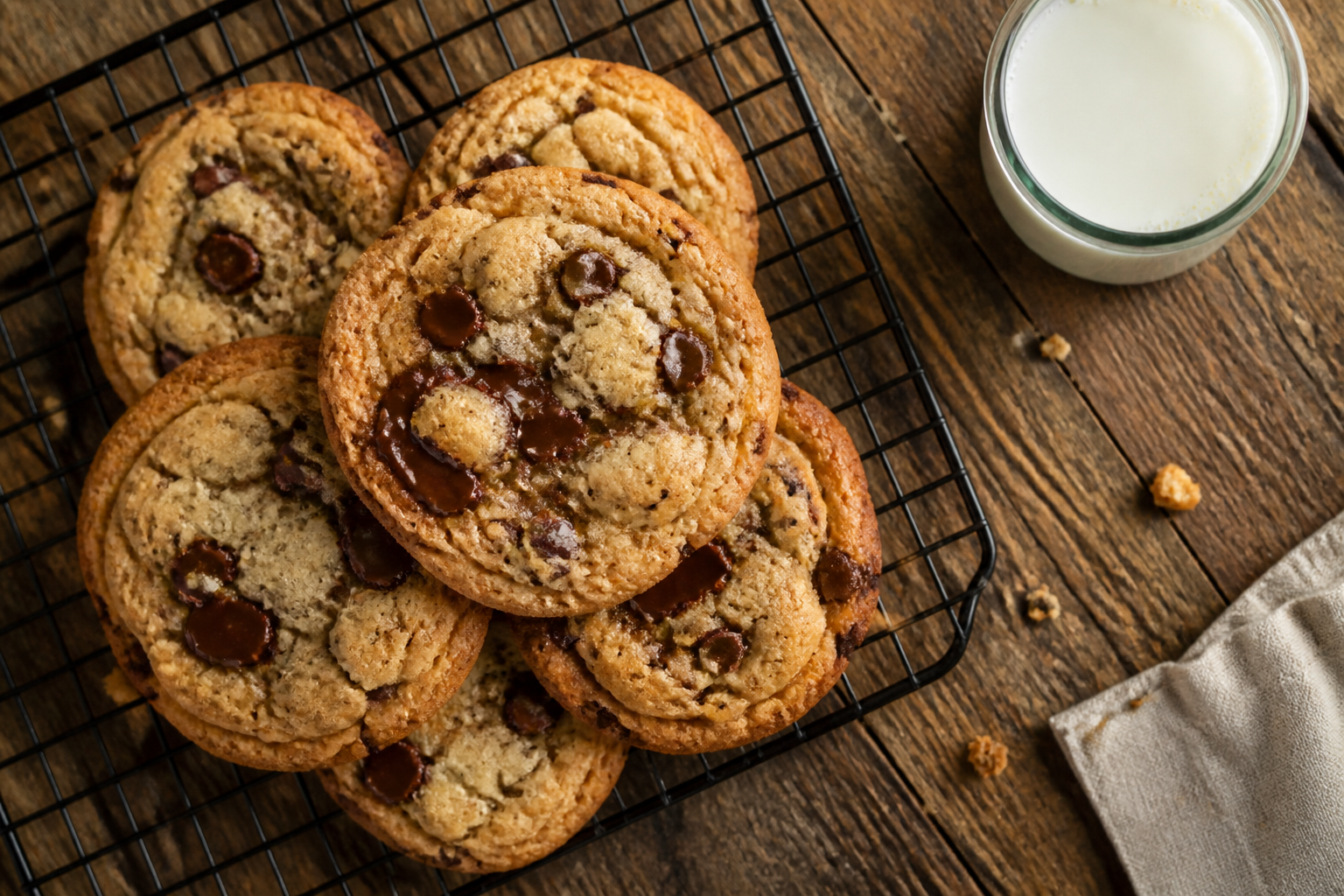

Classic Chocolate Chip Cookies
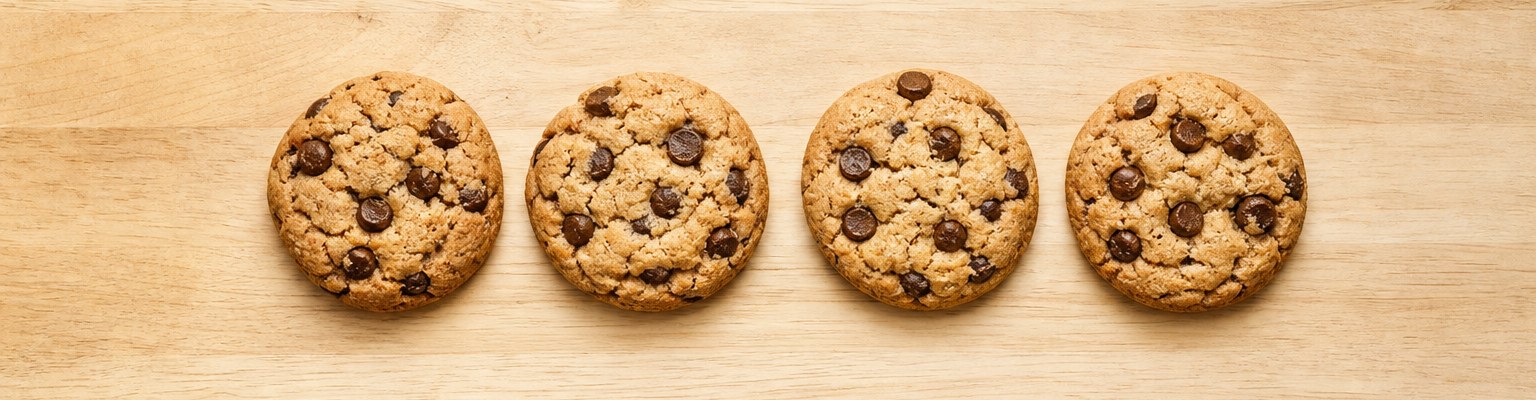
Soft-centered chocolate chip cookies with crisp edges, built on a balanced brown sugar-to-white sugar ratio and perfectly timed baking.
Ingredients
- 225 grams (8 ounces or 1 cup) unsalted butter, room temperature
- 150 grams (packed, or about 3/4 cup) brown sugar
- 75 grams (or about 1/3 cup) white granulated sugar
- 1 whole large egg, room temperature
- 1 large egg yolk, room temperature
- 2 teaspoons vanilla extract
- 280 grams (or 2 1/4 cups) all-purpose flour
- 1 teaspoon baking soda
- 1 teaspoon kosher salt
- 170 grams (or about 1 cup) semi-sweet chocolate chips
Instructions
- In a large bowl or the bowl of a stand mixer, combine room-temperature butter, brown sugar, and white sugar.
- Cream on medium speed for 2–3 minutes (with a stand mixer) or 3–4 minutes (with a hand mixer) until the mixture is light and fluffy with visible texture.
- Add the whole egg and egg yolk, one at a time, beating well after each addition.
- Add vanilla extract and mix until just combined.
- In a separate bowl, whisk together flour, baking soda, and kosher salt.
- Add the dry ingredients to the butter mixture and fold or mix on low speed until just combined. Do not overmix.
- Fold in chocolate chips by hand.
- Cover the dough and refrigerate for at least 30 minutes (ideally up to 24 hours).
- Preheat oven to 375°F.
- Using a 2-tablespoon cookie scoop, portion dough onto a half-sheet pan lined with parchment paper, spacing cookies about 2 inches apart.
- Bake for 9–11 minutes, until the edges are set and golden-brown but the centers still look slightly underdone.
- Remove from the oven and let cookies rest on the baking sheet for 2–3 minutes.
- Transfer to a cooling rack and cool completely.
Notes
- Bake at exactly 375°F for best results.
- Use room-temperature eggs and butter for proper incorporation.
- Centers should look slightly wet when removed from oven; residual heat finishes cooking on the pan.
- Do not overmix after adding flour to avoid developing gluten.
I’ve spent the last fifteen years developing cookie recipes, and I’ve published dozens of them on this site. Brown butter chocolate chip. Vegan chocolate chip. Gluten-free chocolate chip. Matcha white chocolate. Nutella-stuffed. Each one has its moment, its reason to exist.
But every single week, readers ask me the same question: “Where is your classic chocolate chip cookie recipe?”
The answer, until now, has been embarrassing: I never wrote it down as its own post. I’ve been so busy chasing creative twists that I overlooked the foundation everything else is built on. This is that recipe. Not a variation. Not a reinvention. Just the plain classic chocolate chip cookie recipe I’ve tested hundreds of times, refined through trial and error, and honestly never stopped reaching for, even when I’m experimenting with something wild.
This is the recipe that lives in my mental index first. The one I could make with my eyes closed at midnight. The one I want you to have, exactly as I make it.
Why This Is the Recipe Behind Every Twist on This Site
Every creative version I’ve published—the brown butter, the vegan, the gluten-free—starts from this exact ratio of ingredients. The brown sugar-to-white sugar ratio. The creaming method. The chill time. The bake temperature of 375°F.
When I develop a twist, I change one element: the butter, the eggs, the flour. Everything else stays the same because this classic chocolate chip cookie recipe is the control. It’s the baseline. It’s the map I navigate by.
I’m writing this post now because you deserve to know the foundation. Not as a stepping stone to something fancier, but as a complete thing unto itself. This is the recipe I circle back to most often. The one that, if I had to choose only one cookie to bake for the rest of my life, would be it.
The Ingredients That Actually Matter
A classic chocolate chip cookie recipe lives or dies on three decisions: the sugar ratio, the butter temperature, and the egg count. Miss any of these, and you get a different cookie entirely.
Brown Sugar vs. White Sugar: The Texture Pivot
I learned this the hard way. When I first started baking, I used equal parts white and brown sugar in my classic chocolate chip cookie recipe. The results? Flat, uniformly crisp cookies with zero soft center. No chew. Just crunch.
Brown sugar holds more moisture than white sugar because of the molasses it contains. Here’s the science: molasses is hygroscopic, meaning it attracts and holds water. When you increase the ratio of brown sugar in your dough, you’re literally adding more moisture that stays in the baked cookie longer.
In this classic chocolate chip cookie recipe, I use roughly a 2:1 ratio of brown to white sugar. That’s about 150 grams of packed brown sugar to 75 grams of white sugar (or in cups: roughly 3/4 cup brown, 1/3 cup white). This ratio gives you that signature contrast: crisp, caramelized edges with a genuinely soft, chewy center.
Butter: Room Temperature, Creamed Until Light
Room-temperature butter is non-negotiable. Cold butter from the fridge won’t cream properly with your sugar. Melted butter skips the creaming process entirely and changes your texture profile completely.
When you cream room-temperature butter and sugar together, you’re incorporating tiny air bubbles into the fat. Those bubbles expand slightly in the oven, helping your cookies rise gently and stay tender. Use a stand mixer or electric hand mixer on medium speed for 2–3 minutes until the mixture looks genuinely light and fluffy, almost like frosting.
Eggs: One Whole Egg, One Yolk
Two whole eggs would make this cookie too cakey. One whole egg would leave it slightly dry. One whole egg plus one yolk is the sweet spot for this classic chocolate chip cookie recipe.
The extra yolk adds richness and fat without adding the extra white, which contains proteins that encourage structure and cake-like crumb. You want tenderness and richness, not a cake-like rise.
Vanilla, Baking Soda, and Salt
Use real vanilla extract, not imitation. The flavor difference is subtle but real, especially in a plain classic chocolate chip cookie recipe where vanilla is one of the few flavor layers.
Baking soda (not baking powder) is your spread agent. It also promotes browning by raising the pH of the dough. In this recipe, 1 teaspoon of baking soda is the right amount to encourage gentle spread and caramelization without loss of structure. Too much and your cookies spread flat; too little and they stay puffy and cake-like.
Salt—kosher salt, specifically—balances the sweetness and amplifies the vanilla and chocolate flavors. Use 1 teaspoon per batch.
My Method for Soft Centers and Crisp Edges
The texture contrast in a great soft chocolate chip cookie recipe isn’t accidental. It’s engineered through four specific technique steps.
Step One: Cream Properly (2–3 Minutes)
Cream your room-temperature butter with both sugars on medium speed for a full 2–3 minutes using a stand mixer, or 3–4 minutes with a hand mixer. You’re not looking for it to be perfectly smooth. You want to see visible texture, almost grainy with tiny sugar crystals still visible. This is the aeration stage.
Step Two: Chill the Dough (Minimum 30 Minutes, Ideally Longer)
This is the step that separates okay chocolate chip cookies from excellent ones. After mixing your dough, wrap it and refrigerate for at least 30 minutes. In my experience, 24 hours produces the most developed flavor and best spread control.
Chilling does several things: it allows the flour to fully hydrate, it lets the flavors meld and deepen, and it firms the fat so the dough spreads more slowly and evenly in the oven. This slower spread means your centers stay thick enough to be genuinely soft rather than thin and crisp all the way through.
Step Three: Scoop and Bake at 375°F for 9–11 Minutes
Bake at exactly 375°F. I use a light-colored metal cookie scoop (the 2-tablespoon size) to portion dough evenly onto a half-sheet pan lined with parchment. Even scoops mean even baking. The Fayomir set I use has three sizes, but for this classic chocolate chip cookie recipe, the medium (2-tablespoon) scoop is perfect.
Bake for 9–11 minutes. Watch carefully starting at minute 8. You’re looking for cookies where the edges are set and golden-brown but the centers still look slightly underdone—almost wet-looking in a small circle in the very middle.
Step Four: Rest on the Hot Pan (2–3 Minutes)
This is the finishing move. After pulling the cookies from the oven, leave them on the hot baking sheet for 2–3 minutes. The residual heat continues cooking the centers gently without drying them out. The cookies firm up slightly but stay wonderfully soft.
Then transfer to a cooling rack. This contrast—the soft center paired with crisp edges—is the signature of a perfect soft chocolate chip cookie recipe.
Common Mistakes That Ruin This Recipe
I’ve made every mistake below at least once. Usually twice.
Overmixing After the Flour Goes In
Once you add flour to a classic chocolate chip cookie recipe, you want to stop mixing as soon as the dry ingredients are incorporated. Continuing to beat the dough develops gluten, which makes cookies tough and dense instead of tender.
Fold the flour mixture in gently. Use the lowest speed on your mixer, or finish by hand with a spatula. You should see streaks of flour disappearing, then you stop.
Skipping the Chill Step
This is the shortcut that ruins the texture. Skipping the chill means your dough spreads too fast in the oven. You end up with thin, crisp cookies with no soft center—not the chewy chocolate chip cookie recipe you’re after.
Chill for at least 30 minutes. Longer is better.
Using Cold Eggs Straight From the Fridge
Cold eggs won’t blend smoothly into the butter and sugar. They can cause the dough to separate or become lumpy. Let your eggs sit on the counter for 15–20 minutes before baking.
Overbaking by Even 1–2 Minutes
The difference between soft chocolate chip cookies and dry, cakey ones is sometimes just 60 seconds. In my experience, people overbake by habit because they expect cookies to look fully cooked when they come out of the oven.
With this classic chocolate chip cookie recipe, the centers should look slightly wet in the very middle when you pull them out. Trust the process. The residual heat finishes them while they rest on the pan.
How I Use This Base for Every Twist I Make
When I developed the brown butter version on this site, I changed the butter step: I browned the butter first, let it cool, then proceeded with the creaming method. Everything else stayed the same—the sugar ratio, the egg count, the chill time of 30 minutes to 24 hours, the bake temperature of 375°F.
For the vegan version, I swapped the whole egg, egg yolk, and butter with plant-based alternatives. Again, the sugar ratio, chill time, and bake temperature stayed locked in place.
The gluten-free version swaps only the flour. The brown sugar-to-white sugar ratio (roughly 2:1) is the same. The bake time at 375°F for 9–11 minutes is the same.
This classic chocolate chip cookie recipe is the skeleton. Once you understand it, you can build variations that actually work because you know what each element does. That’s what makes it worth mastering.
The Equipment That Makes a Difference
Two small investments matter for this recipe: a good cookie scoop and a half-sheet baking pan.
I use a 2-tablespoon cookie scoop (often called a size #40 scoop) in my kitchen. It ensures every cookie is the same size, which means even baking across the batch. The Fayomir Cookie Scoop Set has three sizes—small, medium, and large—so you have options for future recipes. At $17.99, it’s a one-time investment that lasts years.
If you prefer a budget option, the Saebye Medium Cookie Scoop is reliable and affordable, made from the same heavy-duty stainless steel.
A half-sheet baking pan (13 x 18 inches) is standard and essential. Use it with parchment paper for even heat distribution and easy cleanup. Light-colored pans brown cookies more evenly than dark ones.
Why This Recipe Still Wins
After fifteen years and hundreds of batches, I haven’t found a classic chocolate chip cookie recipe I like better than this one. I’ve tasted plenty of famous versions—the high-ratio cookies with extra yolks, the ones with brown butter from the start, the ones with sea salt sprinkled on top.
But when I want to bake something simple, when I need a cookie I trust completely, when someone asks me for “the one recipe” I’d choose forever—it’s this one. The soft center paired with crisp edges. The vanilla and caramel notes from the brown sugar. The richness of real butter and an extra yolk. The restraint of not adding anything else.
This classic chocolate chip cookie recipe doesn’t need gimmicks. It just needs the right ratio, the right technique, and patience. Now you have all three.
—