The first time I attempted a ma’amoul date filled cookies recipe was the winter of 2018, right before Eid al-Adha. A neighbor had gifted me a tin of homemade ma’amoul, and I ate three before I even reached my kitchen. The shell was crumbly in the most delicate way — somewhere between shortbread and semolina cake — and the date filling inside was fragrant with rose water and warm spice. I remember thinking, “I can make these.” Reader, I could not. Not that first time, anyway.
My initial batch crumbled apart the second I pressed the mold. The filling leaked. The dough was simultaneously too dry and too sticky. I stood over my kitchen counter, surrounded by 36 misshapen lumps, feeling thoroughly humbled. That moment sent me down a two-year rabbit hole of recipe research, family interviews, and obsessive testing. By batch 47, something finally clicked. By batch 112, I understood why it clicked. Today, I want to give you every hard-won lesson so your first real batch lands closer to batch 112 than batch 1.
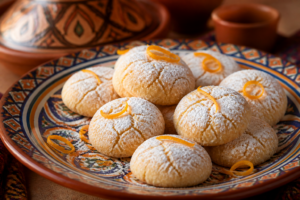
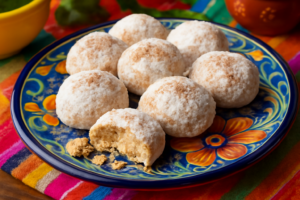
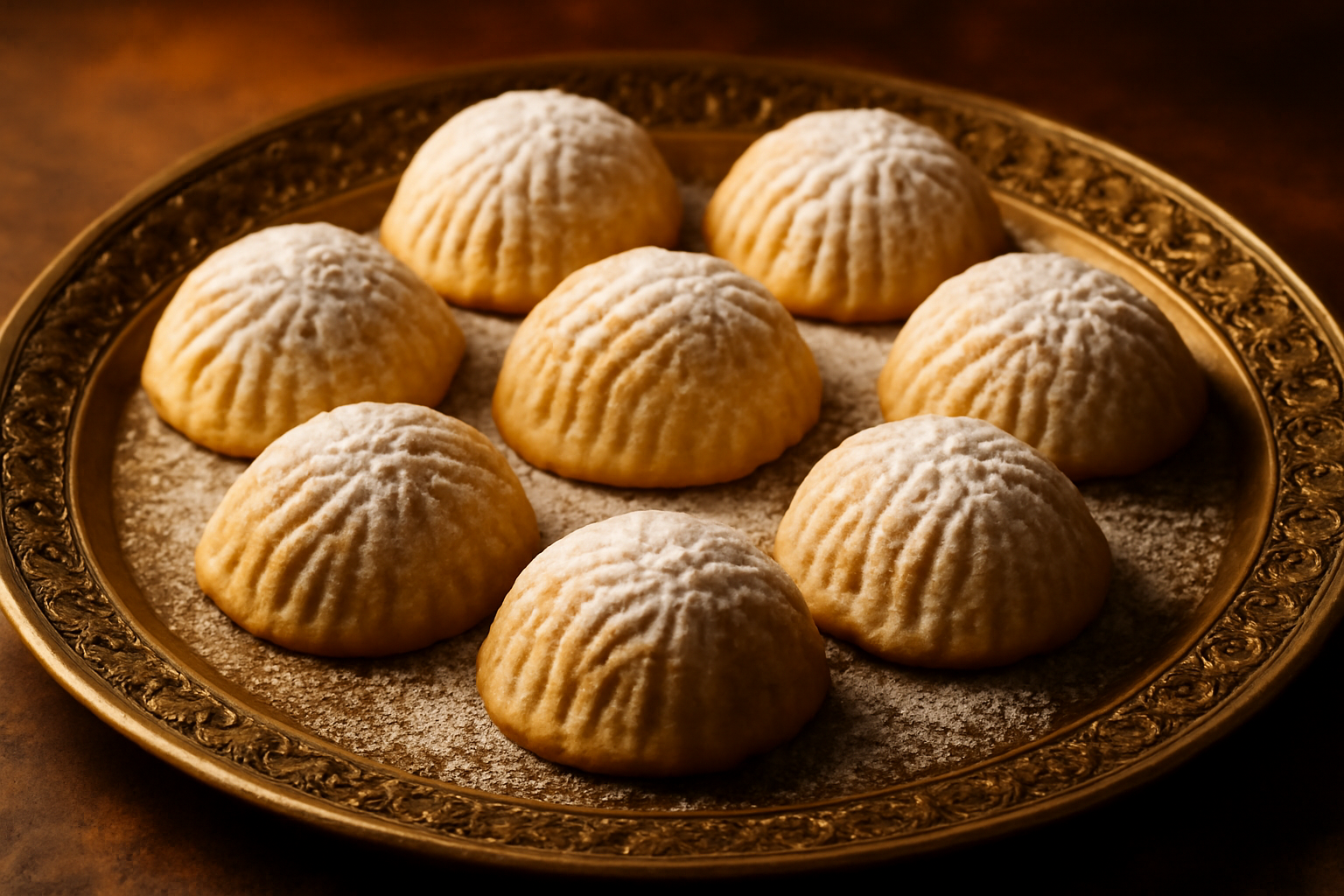
Ma’amoul are traditional Levantine shortbread cookies filled with dates, nuts, or figs, shaped in carved wooden molds called tabi. They appear at Eid, Easter, and countless family celebrations across Lebanon, Syria, Palestine, Jordan, and beyond. Making them is genuinely an act of patience. However, that patience pays dividends so rich that once you succeed, you will wonder why you ever baked anything else for the holidays.
Understanding the Ma’amoul Dough: Semolina, Fat, and Time
Ma’amoul dough is unlike any other cookie dough I have worked with in 15 years of baking. It relies on a specific ratio of fine semolina to all-purpose flour, bound with a generous amount of fat — traditionally clarified butter, or samn. The semolina is not just a texture choice. It fundamentally changes the protein structure. Semolina is made from durum wheat, which has a higher gluten-forming protein content than all-purpose flour. However, because the semolina particles are coarser, they absorb liquid slowly and resist gluten network formation in the short term.
This is exactly why ma’amoul dough requires a rest period of at least one hour — and ideally overnight. During that rest, the semolina fully hydrates, the fat coats the proteins to limit gluten development, and the dough transforms from a crumbly, unworkable mass into something pliable and cooperative. Skipping this step was the mistake I made in batches 1 through 11. Every single time, my dough cracked when molded. The science is straightforward: under-hydrated semolina cannot hold a clean impression.
My tested ratio is 2 cups fine semolina, ¾ cup all-purpose flour, 1 cup clarified butter (or good unsalted butter, melted and cooled), 2 tablespoons rose water, 1 tablespoon orange blossom water, and ¼ cup warm whole milk. That milk is critical. Whole milk provides both liquid and fat, and the proteins in it support a tender final texture. I add a pinch — exactly ⅛ teaspoon — of active dry yeast. Not enough to leaven, but enough to relax the gluten network slightly, a technique I learned from a Lebanese baker in a community baking class in 2020.
Making the Date Filling: Spice Balance Is Everything
The filling is where ma’amoul expresses its personality. Date filling — ajweh — is the most traditional, and in my opinion, the most rewarding to get right. Start with 2 cups Medjool dates, pitted and roughly chopped. Medjool dates are worth every penny here; their moisture content is ideal and their caramel depth is unmatched. Deglet Noor dates work in a budget pinch, but you will need to add an extra tablespoon of butter to compensate for their dryness.
Warm 1 tablespoon of unsalted butter in a skillet over medium-low heat and add the chopped dates. Stir constantly for about 4 to 5 minutes until the dates soften and begin to form a cohesive paste. Remove from heat. Now comes the flavor layering: add 1 teaspoon cinnamon, ½ teaspoon cardamom, ¼ teaspoon nutmeg, and ¼ teaspoon ground cloves. These warm spices are the backbone of the filling’s aroma. That said, the ingredient that truly elevates it is anise.
I add ½ teaspoon of pure anise extract to the date paste. Anise in ma’amoul is traditional in many Syrian and Palestinian recipes, adding a subtle licorice warmth that you cannot quite identify but would sorely miss if absent. Let the paste cool completely before rolling into balls of approximately 15 grams each — I use a small kitchen scale for consistency. Uneven filling balls are one of the top reasons cookies crack during molding, so that kitchen scale earns its counter space here.
The Recipe: Date-Filled Ma’amoul
Ingredients
For the Dough:
- 2 cups fine semolina (240g)
- ¾ cup all-purpose flour (90g)
- 1 cup clarified butter or unsalted butter, melted and cooled (225g)
- ¼ cup warm whole milk (60ml)
- 2 tablespoons rose water (30ml)
- 1 tablespoon orange blossom water (15ml)
- ⅛ teaspoon active dry yeast
For the Date Filling:
- 2 cups Medjool dates, pitted and roughly chopped (320g)
- 1 tablespoon unsalted butter (14g)
- 1 teaspoon ground cinnamon
- ½ teaspoon ground cardamom
- ¼ teaspoon ground nutmeg
- ¼ teaspoon ground cloves
- ½ teaspoon pure anise extract
Method
Prep time: 30 minutes (plus 1 hour or overnight rest for dough)
Bake time: 12–15 minutes
Yield: About 25–30 cookies
Oven temperature: 325°F (165°C)
- Make the date filling first. Warm the butter in a skillet over medium-low heat and add the chopped dates. Stir constantly for 4 to 5 minutes until the dates soften and begin to form a cohesive paste. Remove from heat. Stir in the cinnamon, cardamom, nutmeg, cloves, and anise extract. Let the paste cool completely, then divide into 15-gram balls (about ½ ounce each) and set aside.
- Combine the dry ingredients for the dough. In a large bowl, whisk together the fine semolina, all-purpose flour, and yeast.
- Add the fat and wet ingredients. Pour in the cooled melted butter, rose water, orange blossom water, and warm milk. Using your hands or the palm method, work the mixture until it resembles damp sand and just begins to hold together when pressed. Do not overmix.
- Rest the dough. Cover the bowl tightly with plastic wrap and let the dough rest at room temperature for at least 1 hour, or preferably overnight (up to 8 hours). This is not optional — the semolina must fully hydrate, or your cookies will crack when molded.
- Shape the ma’amoul. Once rested, the dough should be pliable and soft. Preheat your oven to 325°F (165°C). Lightly oil your wooden mold (or use a silicone mold). Pinch off a piece of dough about the size of a walnut (roughly 20–25 grams). Press it gently into the mold, create a small well in the center with your thumb, place one date filling ball inside, and cover with a thin layer of dough. Press down firmly on the mold to seal and imprint. Tap the mold sharply on a parchment-lined baking sheet to release the cookie. Repeat with the remaining dough and filling.
- Bake the cookies. Bake on the middle rack for 12 to 15 minutes, until the edges are light golden but the tops remain pale. These cookies should not brown — that’s a sign you’ve overworked or overbaked them. Remove from the oven and let cool on the baking sheet for 5 minutes, then transfer to a wire rack.
- Store and enjoy. Once completely cooled, store in an airtight container with parchment between layers. These keep beautifully for up to two weeks, and the flavors continue to deepen as they sit. They also freeze wonderfully for up to three months.
The Anise Extract That Finally Balanced My Date Filling’s Fragrance
Ma’amoul’s date filling walks a delicate line — you want warm spices and floral notes, but too much of anything turns the filling cloying or medicinal. Pure anise extract became my secret for adding that subtle licorice warmth that rounds out rose water without overpowering the dates.
What works
- It’s genuinely pure — no bitter aftertaste that some grocery store extracts leave behind, which matters when you’re using just a quarter teaspoon in an entire batch of filling.
- The bottle’s small size means I’m not buying a huge container for an ingredient I use sparingly; one bottle lasts through multiple batches of ma’amoul across seasons.
- Certified Kosher labeling gave me confidence I was working with an ingredient trusted across different baking traditions, which felt right for a recipe with such deep cultural roots.
What doesn’t
- The dropper cap can be finicky when you’re trying to measure out a quarter teaspoon — I’ve had to use an actual measuring spoon more than once rather than count drops.
- It’s pricier than the generic supermarket versions, which stings a little when you’re only using a tiny amount per recipe.
I second-guessed myself the first time I added anise to the filling—was I overcomplicating a traditional recipe?—but the moment I bit into a finished ma’amoul and tasted how the anise threaded through the date without announcing itself, I knew I’d found my formula. Happy Home Pure Anise Extract (4 oz., Certified Kosher)
This post contains affiliate links. As an Amazon Associate, I earn from qualifying purchases at no extra cost to you.