
I still remember the Christmas I ruined four dozen cookies in a single afternoon. I had been baking for nearly a decade at that point, and I genuinely thought I knew what I was doing. Every batch came out of the oven looking like sad, lacy puddles — flat, greasy, and barely recognizable as cookies. My family was kind about it. I was not kind to myself. That disaster was the moment I started obsessively researching why cookies spread too thin, and honestly, it changed everything about how I bake. What I discovered was not a simple fix. It was an entire chain of interconnected science that nobody had ever laid out clearly for me.
Over the next three years, I ran more than 200 test batches specifically focused on spread control. I changed one variable at a time — butter temperature, flour weight, sugar ratios, chilling time, oven temperature. I filled notebook after notebook with results. Some batches were triumphant. Batch 23, for instance, was the first time I got a chewy chocolate chip cookie to hold its dome all the way through cooling. However, most of the early batches taught me far more through failure than success ever could. This post is the guide I desperately needed back then.
Why Cookies Spread Too Thin: The Real Science Behind It
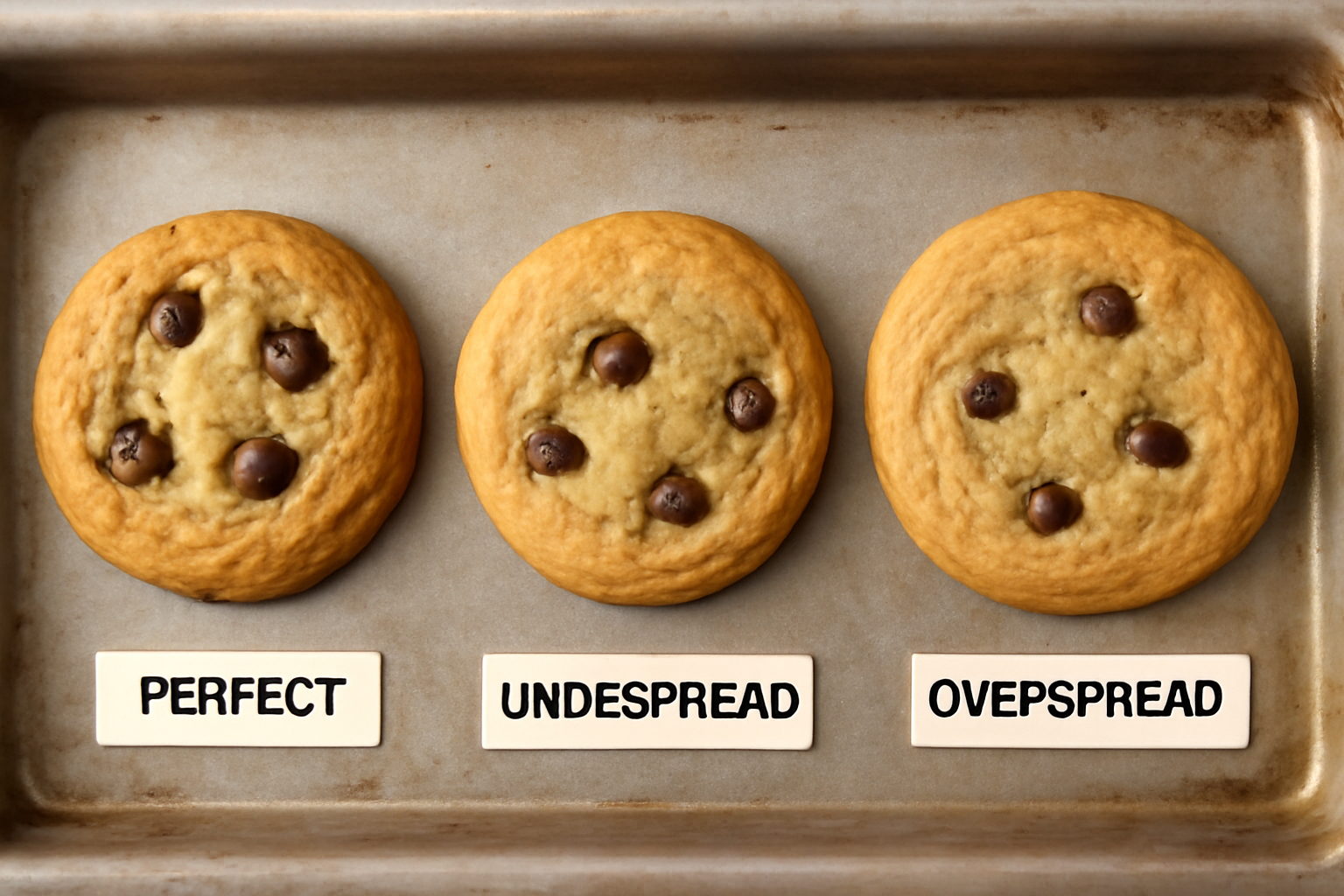
Here is the fundamental truth: cookies spread because fat melts before the structure sets. That is the core of it. When butter liquefies in the oven, it carries the dough outward. If your flour, eggs, and leavening have not created enough structure to hold the shape, the cookie flows flat. The race between melting and setting determines everything about your final cookie’s thickness.
Sugar plays a massive role here that most bakers underestimate. Granulated white sugar is hygroscopic — it draws in moisture and actually encourages spread. It also melts relatively quickly in heat, thinning the dough before proteins have a chance to set. Brown sugar, by contrast, contains molasses, which adds moisture but also slightly slows spread because of its acidity and density. In my testing, swapping just two tablespoons of white sugar for brown sugar in a standard recipe noticeably reduced spread without sacrificing flavor.
Gluten development is the other half of the equation. Gluten is the protein network that gives baked goods their structure. Too little gluten means the dough has nothing to hold it in place as fat melts. Overmixing, however, creates so much gluten that cookies turn tough. The sweet spot is mixing just until combined — which, in my experience, means stopping even when the dough looks slightly uneven.
Butter Temperature Is Probably Your Biggest Problem
I learned this the hard way during a summer baking session in 2018. My kitchen was warm — around 78°F — and I had left my butter out for two hours. It was soft but still held its shape, which I thought was fine. It was not fine. Every single cookie spread into a thin, crispy disk. The butter was too warm, and it separated the fat from the other ingredients during creaming, destroying the emulsification that gives cookies their lift.
Properly tempered butter should be around 65°F to 68°F. At this temperature, it is pliable but waxy — you can press your finger in and leave an indent, but the butter does not feel greasy or shiny. When you cream butter at this temperature with sugar, you trap air bubbles in a stable fat matrix. Those bubbles expand in the oven, giving your cookie lift before the structure sets. Warm, greasy butter cannot hold those bubbles.
Specifically, I now use a quick-read thermometer to check my butter before I start. Sixty-six degrees Fahrenheit is my personal target. If it is warmer than 70°F, I put it back in the refrigerator for 10 minutes and test again. This one habit eliminated probably 40% of my spreading problems. It sounds overly precise, but baking rewards precision far more than cooking does.
What About Melted Butter Recipes?
Some recipes intentionally call for melted butter — brown butter chocolate chip cookies, for example. These recipes are designed around spread. They compensate by using more flour, more brown sugar, or extra egg yolk to create structure another way. Do not try to use melted butter in a recipe written for creamed butter. The entire formula changes, and you will end up with flat cookies every time.
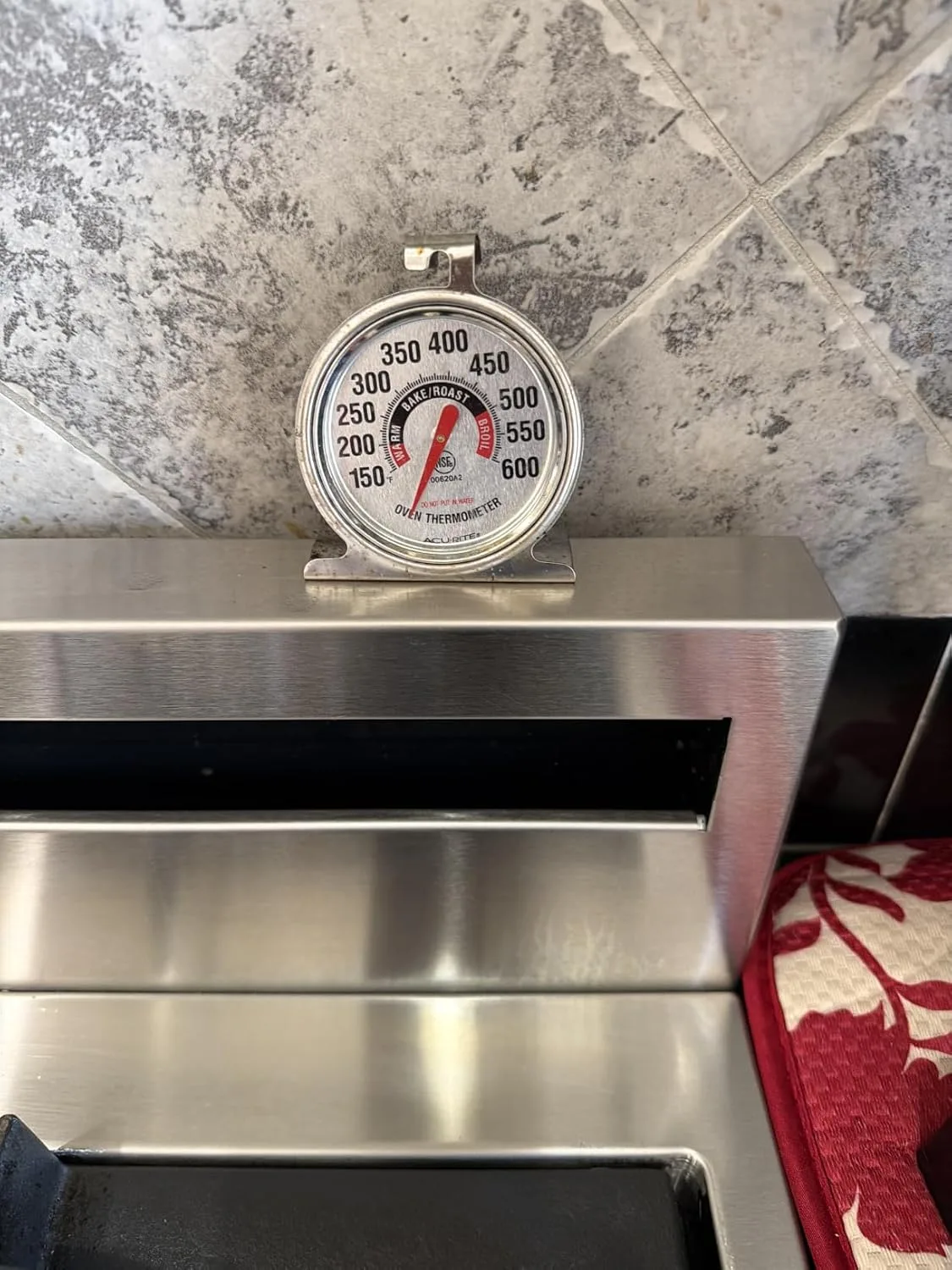
The Oven Thermometer That Finally Proved My Temperature Wasn’t the Problem (But Sometimes It Was)
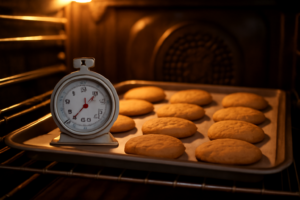
One of the hardest things to accept when your cookies are spreading too thin is that your oven might be lying to you. I spent months adjusting my technique, my ingredients, my everything — until I realized my oven was running 25 degrees hotter than the dial said, and that was sabotaging every batch.
What works
- Reads accurately enough that I caught my temperature problem within two batches — no more guessing whether my oven was the culprit.
- The hook hangs easily on the center rack so it’s always visible without blocking cookies, and I can see the temperature at a glance through the oven window.
- Stainless steel construction means it actually survives years of cookie seasons without rust or wear, unlike the cheap dial thermometer I kept replacing.
What doesn’t
- It takes a few minutes to stabilize and show the true oven temperature, so you can’t just glance at it — you need to actually wait and verify.
- The numbers are small enough that I have to open the oven door or get close to read them, which lets heat escape right when I’m trying to monitor temperature.
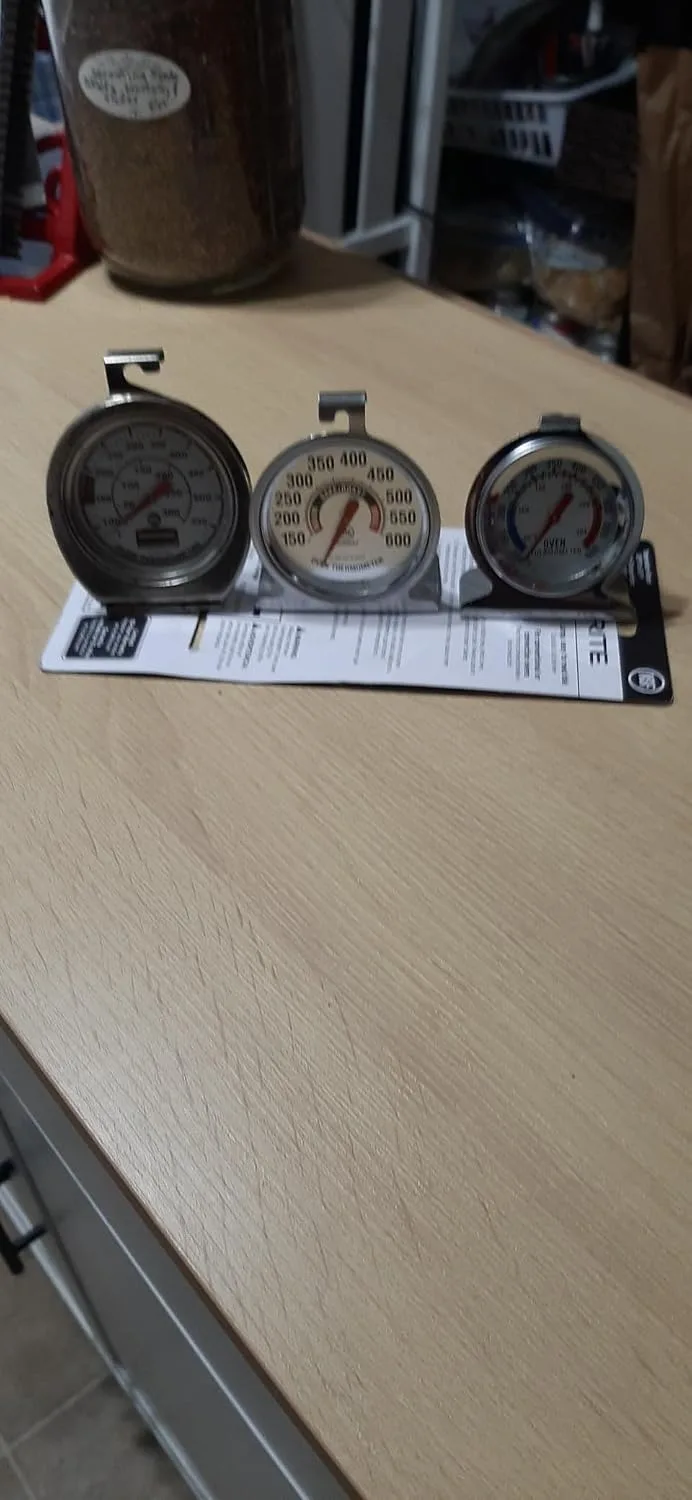
I was skeptical at first — I thought my oven was fine and the problem was me — but the moment I placed this thermometer on my rack and watched it climb 25 degrees higher than my dial, everything clicked into place. Grab the AcuRite 00620A2 Stainless Steel Oven Thermometer and test your oven before you blame your technique.
Is a Chunky Cookie Different From a Normal Cookie?
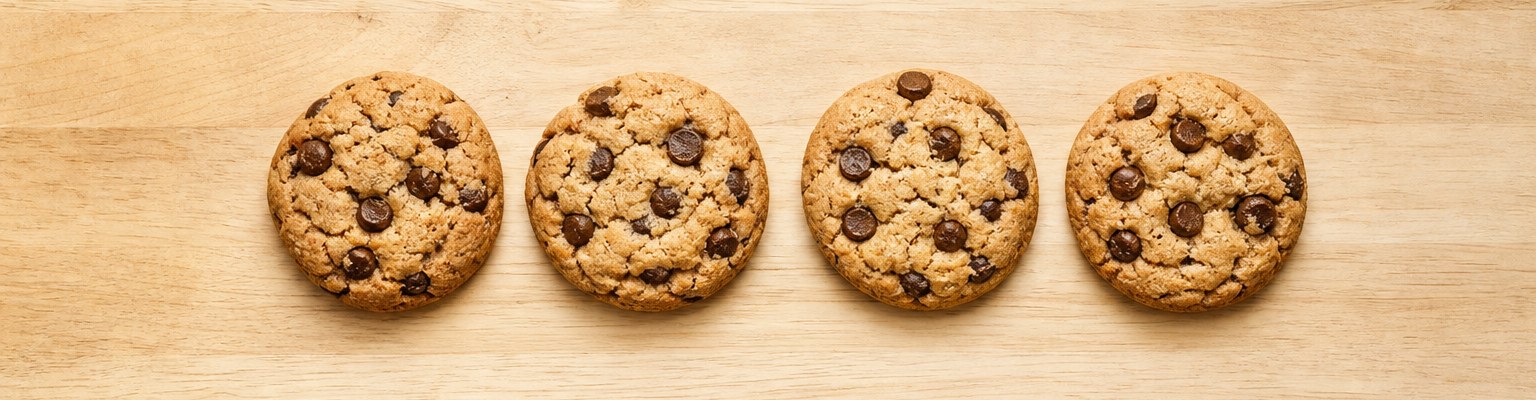
I get this question a lot, usually from someone staring at two cookie recipes side by side wondering why one turns out thick and craggy while the other spreads thin and crisp. The honest answer: “chunky” isn’t a separate category of cookie, it’s a result of the same spread mechanics I walked through above, pushed deliberately in the opposite direction.
A normal cookie spreads because the fat melts and the sugar dissolves before the structure — the flour and egg proteins — has a chance to set. A chunky cookie interrupts that process. Colder dough, a higher flour-to-fat ratio, and a hotter oven all set the outside of the cookie before it has time to spread, which is exactly why bakery-style cookies look so different from the thin, lacy ones you get from a straight-off-the-shelf recipe.
In practice, that means three things separate a chunky cookie from a normal one: dough temperature (chilled dough spreads less), fat ratio (more flour relative to butter holds shape better), and bake temperature (a hot oven sets the edges before the center melts through). Change any one of those and you’ll shift a recipe from “normal” to “chunky” without touching a single ingredient.
About This Article

Written by Margaret Chen. Margaret Chen is a home baker and recipe developer with over 15 years of experience perfecting cookie recipes through rigorous testing and detailed experimentation. She tests every recipe multiple times, documents every variable, and applies the same rigor professional bakers use, with the warmth and accessibility of home baking. More about this site.
Scope and limits. Margaret is a home baker and recipe developer with no formal culinary training. Follow current food safety guidance for egg handling, storage, and anything you are serving to other people.
Verify this against a primary source
Specifics change, and your situation may differ from the one described here. These are the authorities worth checking directly:
- USDA FoodData Central — ingredient composition and nutrition data
- FoodSafety.gov — safe handling, storage and egg safety