
Salted Caramel Apple Pie: Caramel That Does Not Flood the Crust
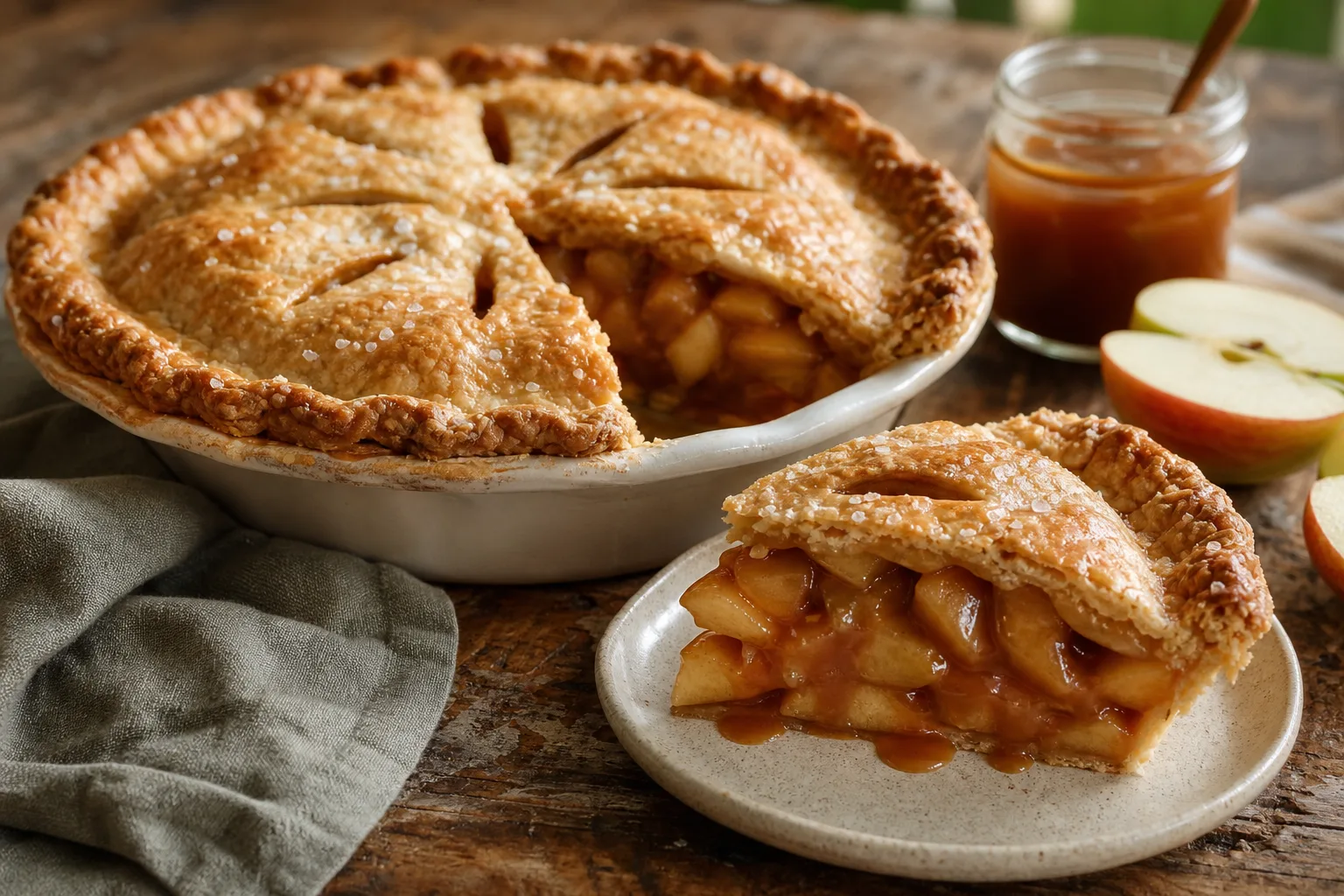
Salted caramel apple pie with a thick, sliceable filling. Reduce the caramel past where it looks done and cut the added sugar so nothing floods the crust.
Ingredients
- 2 1/2 cups all-purpose flour
- 1 tablespoon granulated sugar
- 1 teaspoon fine sea salt
- 1 cup (2 sticks) cold unsalted butter, cubed
- 6 to 8 tablespoons ice water
- 3/4 cup granulated sugar
- 3 tablespoons water
- 1/2 cup heavy cream, warmed
- 3 tablespoons unsalted butter
- 3/4 teaspoon fine sea salt
- 3 pounds apples (half Granny Smith, half Honeycrisp), peeled, cored and sliced 1/4 inch thick
- 1/4 cup granulated sugar
- 3 tablespoons cornstarch
- 1 tablespoon lemon juice
- 1/2 teaspoon ground cinnamon
- 1/4 teaspoon fine sea salt
- 1 egg beaten with 1 tablespoon heavy cream
- 1 tablespoon coarse sugar
- Flaky sea salt, for sprinkling
Instructions
- Make the dough. Whisk the flour, sugar and salt together. Cut in the cold butter until it is in pea-sized pieces and some flat flakes, then stir in ice water a tablespoon at a time until the dough just holds when squeezed. Divide into two discs, wrap and refrigerate for at least 1 hour.
- Start the caramel. Stir the sugar and water in a heavy medium saucepan over medium heat only until the sugar dissolves, then stop stirring. Cook for 8 to 10 minutes, swirling the pan now and then, until the syrup turns a deep amber, the color of an old copper penny, with a faint wisp of smoke at the edges.
- Add the cream. Take the pan off the heat and pour in the warm cream, standing back because it will boil up hard. Whisk until smooth, then whisk in the butter and salt.
- Cook it down. Return the pan to low heat and simmer for 3 to 4 minutes, until it is visibly thicker and the bubbles turn slow and heavy. Spoon a teaspoon onto a plate you have chilled in the freezer. After a minute it should hold a round shape and barely creep when you tilt the plate. If it runs, simmer another minute and test again. Scrape into a bowl and cool for 15 to 20 minutes, until it is about the thickness of cold honey.
- Build the filling. Toss the apple slices with the lemon juice, sugar, cornstarch, cinnamon and salt. Gently fold in the cooled caramel. It will stay in clumps and ribbons instead of coating every slice, and that is what you want. It melts and spreads in the oven.
- Assemble. Set a rack in the lower third of the oven with a rimmed baking sheet on it and heat to 425°F. Roll one disc to a 12-inch round and fit it into a deep 9-inch pie dish, leaving a 1/2-inch overhang. Pile in the filling, mounding it in the center. Roll the second disc, lay it over the top, trim, fold the edges under and crimp. Cut five vents, including one in the very center. Refrigerate for 20 minutes, then brush with the egg wash and sprinkle with coarse sugar and flaky salt.
- Bake. Set the pie on the hot baking sheet and bake for 20 minutes at 425°F. Reduce the oven to 375°F and bake 50 to 55 minutes more, until the crust is deep golden and thick, slow bubbles are coming up through the center vent. Tent with foil if the edges darken before then. The bubbling in the center, not the color of the crust, is the doneness cue.
- Cool completely. Move the pie to a wire rack and let it cool for at least 4 hours before slicing. The filling finishes thickening as it cools, and a warm slice will run no matter how well you did everything else.
Notes
- Makes one deep 9-inch double-crust pie. Three pounds of apples is about 6 medium; weigh them after peeling and coring if you can.
The first salted caramel apple pie I made looked perfect and sliced like a landslide. The top crust held its shape and the apples were tender, but the moment the knife went in, a pool of thin brown syrup ran across the plate and turned the bottom crust to paste.
I had done what the recipe said: made a caramel, folded it in, baked until golden. What the recipe had not mentioned is that caramel is not a flavoring. It is a sauce, which means water and cream and a lot of dissolved sugar, and every one of those thins a filling as it heats. A standard apple pie carries just enough starch to handle the juice the apples release on their own. Add a cup of sauce on top of that and the math stops working.
This pie fixes it in two places. The caramel gets cooked down further than looks right, and the added sugar in the filling drops to a quarter cup. Everything else is a normal double-crust apple pie. The deep flavor, the salt and the clean slices all come from those two changes, and the rest of this post explains the reasoning so you can adjust it for your own apples and your own stove.
Why This Works
Caramel thins an apple filling in two separate ways. It adds liquid (the cream, plus whatever water is left in the sauce), and it adds sugar, which holds onto water and keeps cornstarch from gelling until the filling gets hotter. Cooking the caramel down removes the first problem before it ever goes in the pie, and cutting the added sugar removes most of the second. The starch is then left with only the apples’ own juice to deal with.
Ingredients
Makes one deep 9-inch double-crust pie. Three pounds of apples is about 6 medium; weigh them after peeling and coring if you can.
For the Crust
- 2 1/2 cups all-purpose flour
- 1 tablespoon granulated sugar
- 1 teaspoon fine sea salt
- 1 cup (2 sticks) cold unsalted butter, cubed
- 6 to 8 tablespoons ice water
For the Caramel
- 3/4 cup granulated sugar
- 3 tablespoons water
- 1/2 cup heavy cream, warmed
- 3 tablespoons unsalted butter
- 3/4 teaspoon fine sea salt
For the Filling
- 3 pounds apples (half Granny Smith, half Honeycrisp), peeled, cored and sliced 1/4 inch thick
- 1/4 cup granulated sugar
- 3 tablespoons cornstarch
- 1 tablespoon lemon juice
- 1/2 teaspoon ground cinnamon
- 1/4 teaspoon fine sea salt
To Finish
- 1 egg beaten with 1 tablespoon heavy cream
- 1 tablespoon coarse sugar
- Flaky sea salt, for sprinkling
Easy Swap
No heavy cream? Use full-fat canned coconut cream in the same amount. The caramel picks up a faint coconut flavor and reduces the same way, so use the same cold plate test.
How to Make It
Prep: 50 minutes | Bake: 75 minutes | Cool or chill: 4 hours | Serves: 8 slices
- Make the dough. Whisk the flour, sugar and salt together. Cut in the cold butter until it is in pea-sized pieces and some flat flakes, then stir in ice water a tablespoon at a time until the dough just holds when squeezed. Divide into two discs, wrap and refrigerate for at least 1 hour.
- Start the caramel. Stir the sugar and water in a heavy medium saucepan over medium heat only until the sugar dissolves, then stop stirring. Cook for 8 to 10 minutes, swirling the pan now and then, until the syrup turns a deep amber, the color of an old copper penny, with a faint wisp of smoke at the edges.
- Add the cream. Take the pan off the heat and pour in the warm cream, standing back because it will boil up hard. Whisk until smooth, then whisk in the butter and salt.
- Cook it down. Return the pan to low heat and simmer for 3 to 4 minutes, until it is visibly thicker and the bubbles turn slow and heavy. Spoon a teaspoon onto a plate you have chilled in the freezer. After a minute it should hold a round shape and barely creep when you tilt the plate. If it runs, simmer another minute and test again. Scrape into a bowl and cool for 15 to 20 minutes, until it is about the thickness of cold honey.
- Build the filling. Toss the apple slices with the lemon juice, sugar, cornstarch, cinnamon and salt. Gently fold in the cooled caramel. It will stay in clumps and ribbons instead of coating every slice, and that is what you want. It melts and spreads in the oven.
- Assemble. Set a rack in the lower third of the oven with a rimmed baking sheet on it and heat to 425°F. Roll one disc to a 12-inch round and fit it into a deep 9-inch pie dish, leaving a 1/2-inch overhang. Pile in the filling, mounding it in the center. Roll the second disc, lay it over the top, trim, fold the edges under and crimp. Cut five vents, including one in the very center. Refrigerate for 20 minutes, then brush with the egg wash and sprinkle with coarse sugar and flaky salt.
- Bake. Set the pie on the hot baking sheet and bake for 20 minutes at 425°F. Reduce the oven to 375°F and bake 50 to 55 minutes more, until the crust is deep golden and thick, slow bubbles are coming up through the center vent. Tent with foil if the edges darken before then. The bubbling in the center, not the color of the crust, is the doneness cue.
- Cool completely. Move the pie to a wire rack and let it cool for at least 4 hours before slicing. The filling finishes thickening as it cools, and a warm slice will run no matter how well you did everything else.
Don’t Do This
Do not fold in caramel that is still hot and loose and hope the oven will sort it out. The oven only makes it thinner. If it pours easily off a spoon, it is not ready for this pie.
Can You Make This Pie Ahead?
Yes — Here Is the Timeline
Bake the whole pie up to a day ahead and keep it loosely covered at room temperature. It needs four hours to set anyway, and it slices better after a night. The caramel alone keeps for up to five days in the refrigerator.
The caramel is the part to do first. Make it up to five days ahead, store it in a jar in the refrigerator, and let it sit at room temperature for 20 to 30 minutes before you fold it in, until it is stiff but spoonable. The dough keeps in the refrigerator for two days, or in the freezer for a month.
Do not assemble the pie and hold it unbaked. Sugared apples release juice quickly, and the filling starts to loosen before it ever sees the oven. Bake it fresh, cool it fully, and cover loosely. It holds at room temperature for a day, or in the refrigerator for up to three days, though the bottom crust softens a little in the cold. To serve, bring slices to room temperature or warm them for 10 minutes at 325°F.
How Far to Cook the Caramel Down
This is the step where it is easiest to stop too early, and it is the one that matters most. Hot caramel always looks thinner than it will be once cool, so the instinct is to pull it the moment it pours nicely. Do not. You want it to look slightly overdone: thicker than any sauce you would drizzle over ice cream.
Cook the sugar and water to a deep amber, then add warm cream, butter and salt off the heat. Put the pan back on low heat and simmer for three or four minutes. The bubbles should turn slow and heavy, and the sauce should thicken as you watch. Then test a drop on a plate chilled in the freezer. After a minute it should hold a rounded shape and creep only slowly when you tilt the plate, like soft fudge.
Let the pan cool for 15 to 20 minutes before it goes anywhere near the apples. You are aiming for something close to cold honey, thick enough that it falls from a spoon in a ribbon that sits on the surface. In the bowl it looks like too much. In the oven, with apple juice diluting it, it comes out right. If you overshoot and it sets hard, that is the better mistake, and it is easy to fix with a spoonful of cream and a little gentle heat.
Cutting the Sugar and Reading the Bubble
The caramel is the sweetener here. A standard apple pie takes about 3/4 cup of sugar for three pounds of apples. This one takes 1/4 cup and lets the sauce supply the rest. Cutting the added sugar does two jobs at once. It lets the starch gel sooner, and it keeps the pie from tasting like candy, so the apples and the salt stay audible.
Three tablespoons of cornstarch handles three pounds of apples. That is a little more than a plain apple pie would use and a good deal less than the volume of added sauce would tempt you to use. Tart apples help, since their acid pushes back against the sweetness. I use half Granny Smith, which holds its shape, and half Honeycrisp, which brings juice and some sweetness of its own.
The doneness cue is the bubble, not the crust. Cornstarch only reaches full thickness once the filling itself comes to a bubble, and in a sugary filling that takes a while. Look for thick, slow bubbles breaking through the vents, closer to a pot of oatmeal than a quick foamy simmer. Then comes the hardest part, which is waiting. The filling keeps thickening as it cools, and four hours at room temperature is the minimum.
Check the Center Vent
Judge the bubbling through the vent nearest the center of the pie, not at the edge. The edges always bubble first, and the center is the last place to catch up. If the center is still quiet, the pie is not done.
Margaret’s Tip
Make the caramel the day before and chill it. Cold caramel is far easier to judge than hot caramel, and you can fix a batch that is too loose by warming it and simmering a few more minutes before you assemble.
Questions People Ask
What if my caramel hardens or turns grainy?
If it sets hard in the bowl, it is over-reduced, which is the safer direction to be wrong. Warm it over low heat with a tablespoon of cream until it loosens. If it turns grainy, sugar crystals got into the pan, usually from stirring early or from sugar stuck to the sides. Swirl rather than stir, and brush the sides down with a wet pastry brush as it cooks.
The filling was still runny after four hours. What went wrong?
Almost always one of two things: the pie came out before slow bubbles reached the center vent, or the caramel was not cooked down enough. You cannot fix it after baking, but refrigerating the pie overnight firms the filling, and you can warm cold slices briefly. Next time, bake longer under foil if the crust is already dark.
Can I add more caramel for an extra-gooey pie?
Not inside the filling. More caramel means more liquid and more sugar, and the starch is sized for this amount. For extra sauce, make a second batch, cook it down so it is thick but still pourable, and spoon it over slices at the table.
About This Article

Written by Margaret Chen. Margaret Chen is a home baker and recipe developer with over 15 years of experience perfecting cookie recipes through rigorous testing and detailed experimentation. She tests every recipe multiple times, documents every variable, and applies the same rigor professional bakers use, with the warmth and accessibility of home baking. More about this site.
Scope and limits. Margaret is a home baker and recipe developer with no formal culinary training. Follow current food safety guidance for egg handling, storage, and anything you are serving to other people.
Verify this against a primary source
Specifics change, and your situation may differ from the one described here. These are the authorities worth checking directly:
- USDA FoodData Central — ingredient composition and nutrition data
- FoodSafety.gov — safe handling, storage and egg safety