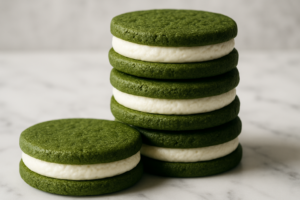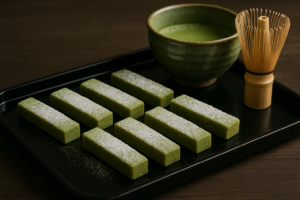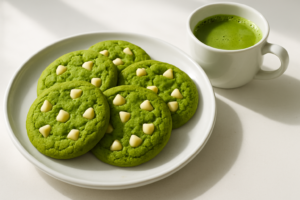
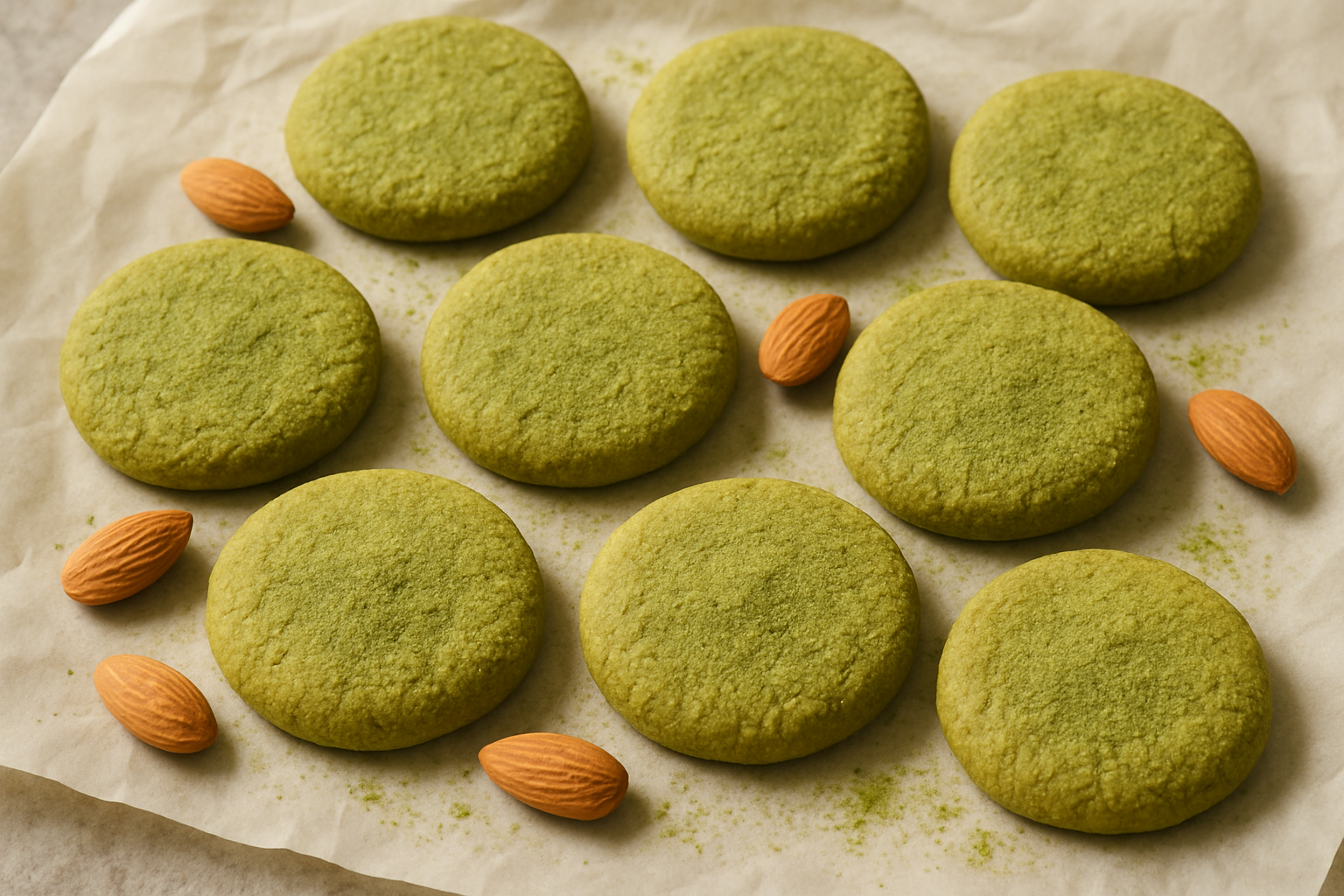

Matcha Almond Flour Cookies
Tender, chewy gluten-free cookies with matcha earthiness and buttery almond flour richness.
Ingredients
- 1 1/2 cups blanched almond flour (165 grams)
- 2 tablespoons matcha green tea powder (12 grams)
- 1/2 cup unsalted butter, softened (115 grams)
- 1/2 cup granulated sugar (100 grams)
- 1 large egg
- 1/2 teaspoon vanilla extract
- 1/4 teaspoon salt
- 1/4 teaspoon baking soda (optional, but helps with spread)
Instructions
- In a small bowl, whisk together the almond flour, matcha powder, salt, and baking soda.
- In a large bowl, cream together the softened butter and granulated sugar until light and fluffy, about 2-3 minutes with an electric mixer.
- Add the egg and vanilla extract to the butter mixture, and beat until fully incorporated and the mixture looks pale and slightly increased in volume, about 1 minute.
- Gently fold the dry ingredients into the wet mixture using a spatula, stirring until just combined.
- Cover the bowl and refrigerate the dough for at least 30 minutes.
- Preheat your oven to 325°F (163°C).
- Line a baking sheet with parchment paper and drop rounded tablespoon-sized portions of dough onto the sheet, spacing them about 2 inches apart.
- Bake for 12-15 minutes, until the edges are just barely golden but the centers still look slightly soft and underdone.
- Let the cookies cool on the baking sheet for 5 minutes, then transfer them to a wire rack to cool completely.
Notes
- Use blanched, finely ground almond flour for best results.
- Matcha can clump, so whisking the dry ingredients prevents dark green pockets.
- Do not overmix the dough.
- Cookies keep in an airtight container for up to 4 days.
I almost cried in my kitchen on a Tuesday afternoon. Not from onions — from a crumbled, greasy, oddly gray pile of what was supposed to be my daughter’s birthday cookies. She had just been diagnosed with celiac disease three months prior, and I had promised her matcha almond flour cookies gluten free of any cross-contamination, decorated with little sprinkles and everything. These almond flour matcha cookies were meant to be the centerpiece of her whole celebration. Instead, I had a baking sheet full of flat, oily disasters and exactly forty minutes before her school friends arrived. That moment broke something in me — and then, slowly, put it back together in the best possible way.
Why Gluten-Free Cookies Fail (And What I Finally Did Right)
Let me back up. After Emma’s diagnosis, I became obsessed with recreating every cookie she loved without gluten. I tried oat flour, rice flour, coconut flour — everything. But almond flour kept calling to me because of its natural richness and the way it creates this slightly chewy, almost buttery texture that regular flour honestly can’t touch. Matcha was Emma’s absolute favorite flavor — she called it “green magic” — so combining the two felt like destiny.
The problem? I didn’t understand almond flour yet. It behaves completely differently from all-purpose flour, and if you go in treating it the same way, you will absolutely end up with my Tuesday disaster. Here’s what I learned the hard way:
- Almond flour has a much higher fat content than wheat flour, which means too much butter or oil will make your dough pool and spread into greasy puddles.
- It has zero gluten structure, so you need a binding agent — usually an egg or egg white — to hold the cookie together.
- Blanched, finely ground almond flour is non-negotiable. Coarser almond meal will make your cookies gritty and dense instead of delicate and tender.
- Almond flour dough is sticky and soft. Chilling it for at least 30 minutes before baking is the single best thing you can do for your final result.
- Matcha can taste bitter or flat if you use a low-quality powder. The grade and freshness of your matcha matters enormously in baked goods.
Once I internalized those five rules, everything changed. My almond flour matcha cookies recipe went from a Tuesday disaster to the most-requested treat in our entire neighborhood. The cookies I make now are so good that Emma’s gluten-eating friends steal them off the plate. That is the highest praise I know.
My Baking Essentials for Matcha Almond Flour Cookies Gluten Free
Getting the right ingredients is half the battle with gluten-free baking. I’ve tried a lot of almond flours over the past two years, and the difference between a mediocre bag and a great one is genuinely noticeable in the finished cookie. Here are the products I keep stocked and reach for constantly.
The Almond Flour That Finally Stopped My Gluten-Free Cookies From Going Greasy
The biggest problem with gluten-free baking is that almond flour absorbs moisture differently than wheat flour, and one wrong brand choice can turn your entire batch into an oily mess. After that Tuesday afternoon disaster, I realized my almond flour was the culprit — it was too coarse and held too much oil.
What works
- The texture is genuinely fine and uniform — no gritty surprises or large particles that sabotage your crumb structure like cheaper brands do.
- It stays blended into the dough instead of separating into an oily layer, which means your cookies hold their shape and don’t spread into greasy puddles on the baking sheet.
- The cookies have an actual tender crumb with a slight chew, not that dense, dry, crumbly texture that makes you feel like you’re eating cardboard.
What doesn’t
- It costs a bit more than bulk options, which adds up if you’re baking gluten-free regularly.
- You still have to measure carefully and not overmix — the flour can only do so much if your technique is off.
I was skeptical that one ingredient could fix what I thought was a technique problem, but the moment I creamed butter and sugar with this almond flour, I could feel the difference in how it incorporated. Wholesome Yum Premium Fine Blanched Almond Flour is what finally gave me cookies my daughter could actually celebrate with.
The Recipe: Matcha Almond Flour Cookies
After months of testing and refining, this is the exact recipe I use now — the one that turns my kitchen golden with the aroma of toasted almond flour and fresh matcha, the one that has made Emma smile on hard days. It’s simple, forgiving once you understand the technique, and absolutely foolproof if you follow the one critical rule: chill your dough. The cookies are tender with a just-barely-golden edge, with that signature matcha earthiness balanced perfectly against the buttery richness of blanched almond flour.
What You’ll Need
- 1 1/2 cups blanched almond flour (165 grams)
- 2 tablespoons matcha green tea powder (12 grams)
- 1/2 cup unsalted butter, softened (115 grams)
- 1/2 cup granulated sugar (100 grams)
- 1 large egg
- 1/2 teaspoon vanilla extract
- 1/4 teaspoon salt
- 1/4 teaspoon baking soda (optional, but helps with spread)
How I Make Them, Step by Step
- In a small bowl, whisk together the almond flour, matcha powder, salt, and baking soda. This is important — matcha can clump, and whisking breaks it up so you get that beautiful green color throughout instead of dark green pockets.
- In a large bowl, cream together the softened butter and granulated sugar until light and fluffy, about 2-3 minutes with an electric mixer. Don’t skip this — the air you incorporate here creates the structure the almond flour needs.
- Add the egg and vanilla extract to the butter mixture, and beat until fully incorporated and the mixture looks pale and slightly increased in volume, about 1 minute.
- Gently fold the dry ingredients into the wet mixture using a spatula, stirring until just combined. This dough will be softer and more delicate than wheat-flour dough — that’s correct. Do not overmix.
- Cover the bowl and refrigerate the dough for at least 30 minutes. I often chill mine for up to 2 hours or even overnight. This is the magic step that prevents spreading and greasy cookies.
- Preheat your oven to 325°F (163°C). Because almond flour has natural sugars and a higher fat content than wheat flour, it browns faster, so we bake cooler and slower than you might expect.
- Line a baking sheet with parchment paper. Using a cookie scoop or small spoon, drop rounded tablespoon-sized portions of dough onto the sheet, spacing them about 2 inches apart.
- Bake for 12-15 minutes, until the edges are just barely golden but the centers still look slightly soft and underdone. They’ll continue to set as they cool. Overbaking makes them dry.
- Let the cookies cool on the baking sheet for 5 minutes, then transfer them to a wire rack to cool completely. This helps them firm up without being hard.
Yield: About 12-15 cookies, depending on size. These keep in an airtight container for up to 4 days, though they’re almost always gone by then. I’ve brought these to book club, to Emma’s school potlucks, to neighborhood gatherings, and I always come home with an empty plate and someone’s phone number asking for the recipe.