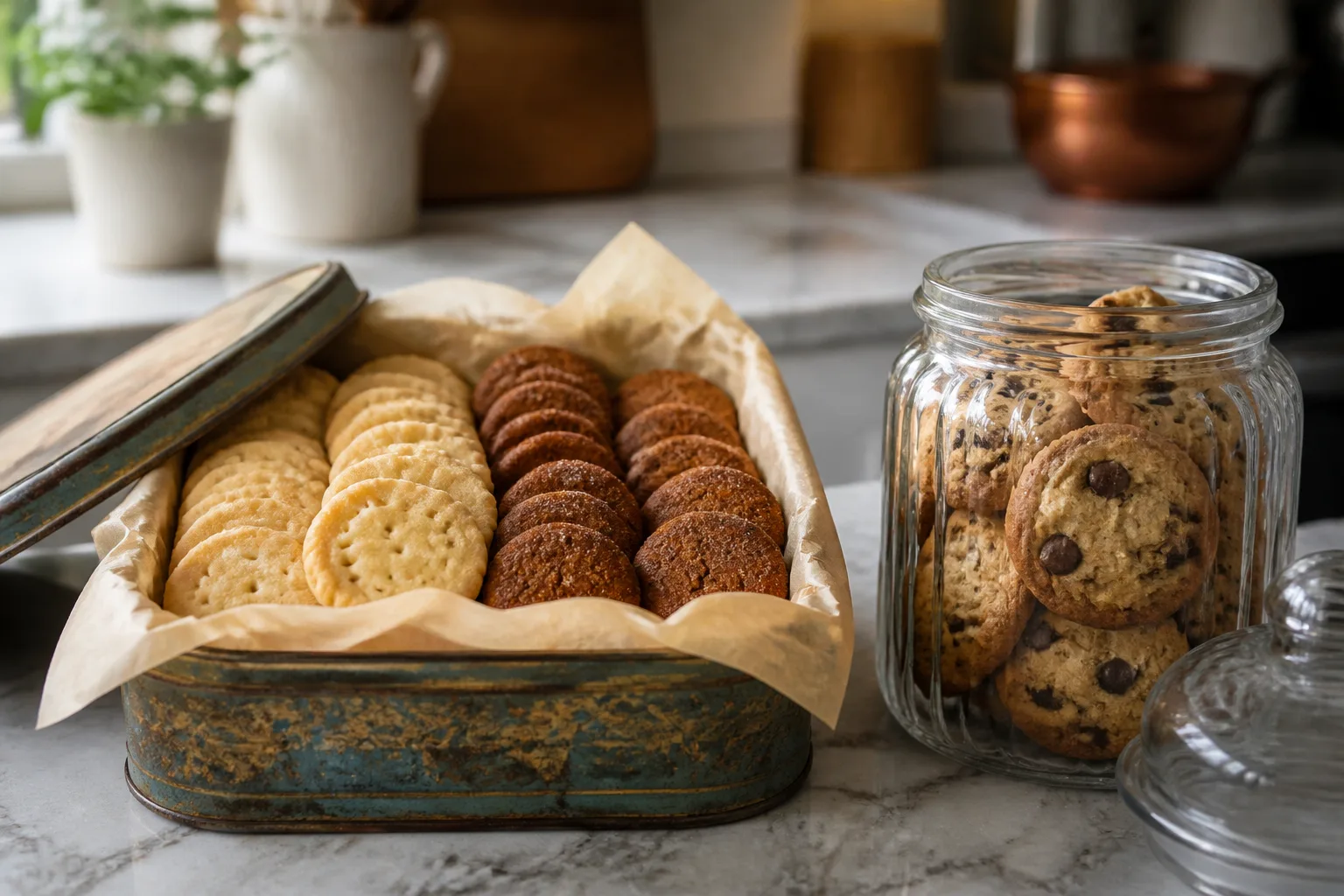

The first batch of chewy oatmeal cookies I stored in the same tin as my shortbread taught me a lesson the hard way. By the next morning, the shortbread had gone soft and the oatmeal cookies had turned leathery. I blamed the tin. Then I blamed the flour. It took a few more batches before I understood that the problem was not the recipe at all. It was the cookies talking to each other.
Here is the short answer: store soft cookies in an airtight container at room temperature, store crisp cookies in a container that is not perfectly sealed, and keep the two types apart. Every storage rule I follow comes from one idea. Moisture moves from wet things to dry things until the two even out, and your container is a closed system where that movement never stops.
Why Cookies Go Stale in the First Place
A cookie starts to change the moment it leaves the oven. Some of its moisture escapes into the air, and the starch inside slowly recrystallizes as it ages. That combination is what makes a soft cookie feel dry and firm after a day or two. A crisp cookie goes the other way. It is supposed to be dry, so it absorbs moisture from the surrounding air and loses its snap.
Because moisture migrates in a closed container, a soft cookie and a crisp cookie sharing a space will both end up somewhere in the middle. The soft ones lose their chew and the crisp ones lose their crunch. That is why a mixed tin is almost never a good idea, even if the cookies look perfect on the day you pack them.
Start With Completely Cool Cookies
Before any cookie goes into a container, it needs to be completely cool, not just warm to the touch. Trapped steam is one of the fastest ways to ruin a batch. It softens crisp cookies, makes soft cookies gummy, and in a sealed container it can encourage mold. I usually give cookies at least an hour on a rack, and longer for thick or filled ones.
Layer them with parchment or wax paper between rows. This keeps them from sticking together and stops decorations from smearing onto the cookie above. If you have iced cut-outs, let the royal icing set for 8 to 24 hours before you stack anything on top of them. Stacking too soon leaves dents and fingerprints that never fully go away.
Soft Cookies: Keep the Moisture In
Chewy drop cookies, soft molasses cookies and most bar cookies do best in an airtight container at room temperature. Use a container with a lid that actually seals, and check that the seal is snug before you walk away.
Here is the trick I rely on most. Add a moisture donor to the container. A slice of sandwich bread, a small piece of flour tortilla, or a wedge of apple will slowly give up its moisture to the cookies. The bread will turn hard and stale while your cookies stay soft, which is exactly the trade you want. Replace the bread or apple every couple of days, because once it dries out it stops helping.
Soft cookies usually stay good for about 3 to 5 days at room temperature. Bar cookies last a bit less, around 3 to 4 days, and I cut them into squares only when I am ready to serve them so the cut edges do not dry out.
Crisp Cookies: Let Them Breathe a Little
Crisp snap cookies and shortbread want the opposite treatment. A tin with a loose lid or a container that is not perfectly airtight lets a little humidity escape, which keeps the cookies from absorbing moisture and going soft. Store them alone, never with a soft cookie.
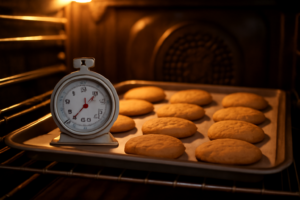
If your crisp cookies do lose their snap, you can bring them back. Spread them on a baking sheet and warm them at 300°F for about 5 minutes, then cool them completely on a rack before you put them away again. They will firm up as they cool, and the difference is often surprising.
Crisp cookies generally keep for 1 to 2 weeks at room temperature, which makes them the easiest type to store if you are baking ahead for a busy month.
Strong Flavors Need Their Own Space
Mint, anise and heavily spiced cookies are powerful enough to change everything around them. Their aroma travels through the air and settles into neighboring cookies, so a peppermint cookie can make a plain sugar cookie taste like candy cane. Give strongly flavored cookies their own container, even if they are the same type as the rest.
When the Refrigerator Helps and When It Hurts
Most cookies do not belong in the refrigerator. The cold air pulls moisture out of them and speeds up staling, so a sugar cookie that would have stayed pleasant on the counter comes out dry and firm after a night in the fridge. The exception is any cookie with a perishable filling, such as cream cheese or custard. Those need refrigeration, and they should be stored in a sealed container so they do not absorb fridge odors.
Freezing Baked Cookies for Later
Baked cookies freeze well for about 3 months. Pack them in a freezer bag and press out as much air as you can before sealing. When you want to eat them, thaw them still inside the sealed container or bag. This lets condensation form on the outside of the packaging instead of on the cookies, so they come out tasting fresh rather than damp.
Freezing is also the simplest way to save a batch you are not sure you will finish. I have pulled frozen cookies out for unexpected guests more times than I can count, and they usually taste almost as good as the day they were baked.
Packing a Mixed Gift Tin
A gift tin with several cookie types is lovely, but it is the hardest storage situation of all. If you have to pack ahead, wrap each type separately inside the tin so the soft and crisp cookies never touch. The best option is to assemble the tin on the day it is given. That way nothing has time to trade moisture before it reaches its new home.
Quick Reference by Cookie Type
| Cookie type | Best container | Room-temperature life | Freezes well? |
|---|---|---|---|
| Chewy drop cookies | Airtight container, with a bread slice | 3 to 5 days | Yes, about 3 months |
| Crisp snap or shortbread | Loosely sealed tin, stored alone | 1 to 2 weeks | Yes, about 3 months |
| Iced cut-out cookies | Airtight container, layered with parchment | About 1 week, after icing sets | Yes, unfrosted or fully set |
| Bar cookies | Airtight container, cut just before serving | 3 to 4 days | Yes, about 3 months |
| Sandwich or filled cookies | Airtight container, refrigerated if the filling is perishable | Varies with filling | Usually yes |
| Meringue-based cookies | Airtight container, kept dry | About 1 week | No, they turn sticky |
Frequently Asked Questions
Can I store soft and crisp cookies together if I wrap them?
Wrapping helps a little, but it does not stop moisture from moving between them if they share the same container. Keep the two types in separate containers for the best results. A single well-sealed container will still let the cookies trade moisture until they reach the same texture.
Why did my soft cookies turn hard overnight?
Soft cookies lose moisture and their starch begins to firm up as they age, which can happen quickly if the container is not airtight. Check the seal on your lid and consider adding a slice of sandwich bread to donate moisture back. Store them away from heat sources as well.
Is it safe to freeze cookies with cream cheese filling?
Cookies with perishable fillings are generally better kept refrigerated and eaten within a few days rather than frozen. Freezing can change the texture of cream cheese and custard fillings once they thaw. If you do freeze them, use a sealed container and thaw them fully before eating.
How do I know when cookies have gone bad?
Visible mold, a sour or off smell, or an unusual sticky or slimy surface all mean the cookies should be thrown out. Staleness alone is not a safety issue, but cookies with fillings that have spoiled should not be eaten. When in doubt, discard them, since a few dry cookies are not worth the risk.
About This Article

Written by Margaret Chen. Margaret Chen is a home baker and recipe developer with over 15 years of experience perfecting cookie recipes through rigorous testing and detailed experimentation. She tests every recipe multiple times, documents every variable, and applies the same rigor professional bakers use, with the warmth and accessibility of home baking. More about this site.
Scope and limits. Margaret is a home baker and recipe developer with no formal culinary training. Follow current food safety guidance for egg handling, storage, and anything you are serving to other people.
Verify this against a primary source
Specifics change, and your situation may differ from the one described here. These are the authorities worth checking directly:
- USDA FoodData Central — ingredient composition and nutrition data
- FoodSafety.gov — safe handling, storage and egg safety