
Chocolate Bourbon Pecan Pie: Keeping the Layers Separate
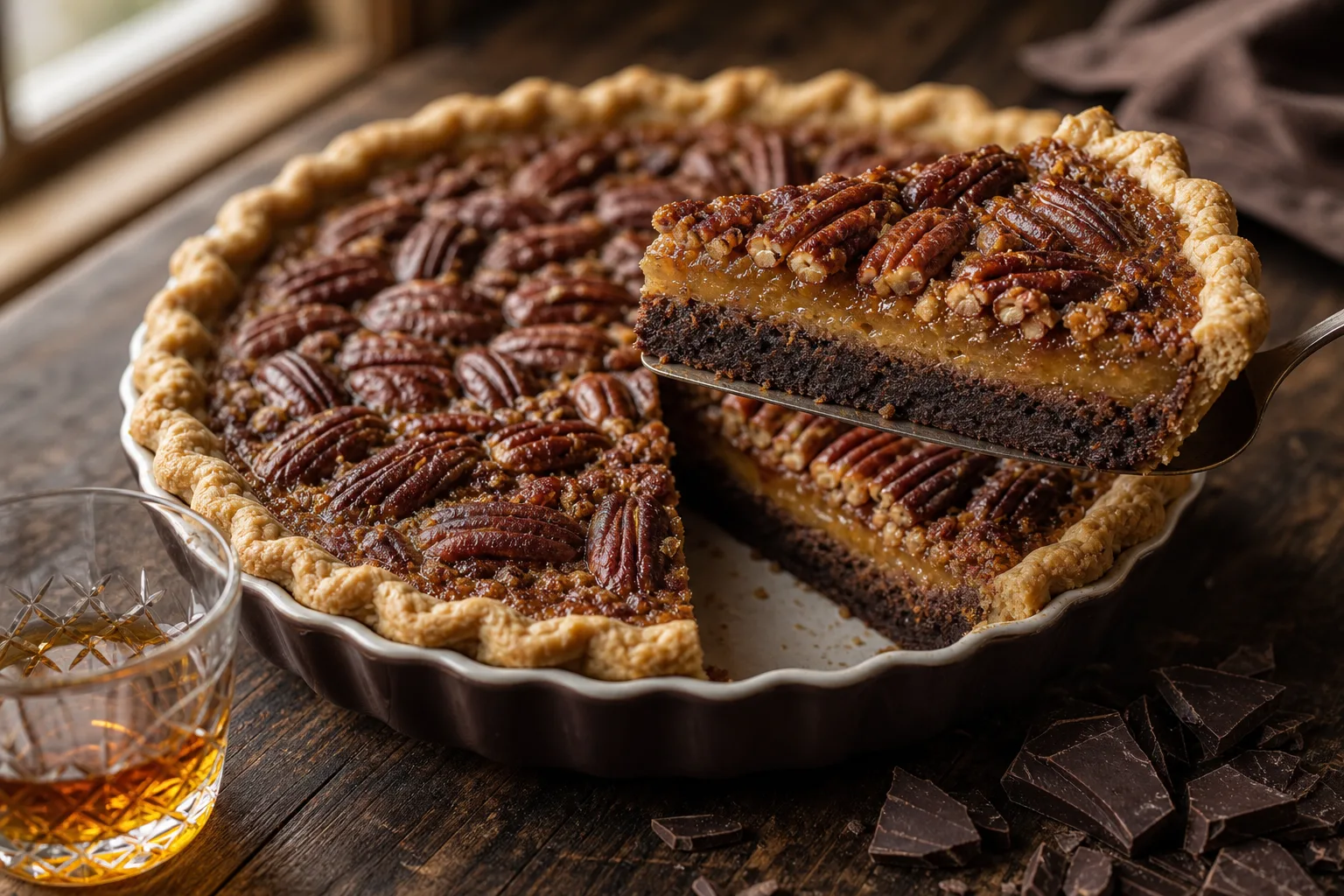
Chocolate bourbon pecan pie with a fudgy chocolate base, a set custard and a crisp pecan top. Learn why the layers form and how to control them.
Ingredients
- 1 single pie crust, homemade or store-bought, fitted into a 9-inch deep-dish pan
- 1 egg yolk, beaten, for sealing the blind-baked shell
- 4 ounces bittersweet chocolate (60 to 70 percent cacao), chopped
- 1 tablespoon unsalted butter
- 3 large eggs, at room temperature
- 1 cup packed dark brown sugar
- 3/4 cup dark corn syrup
- 4 tablespoons unsalted butter, melted and cooled slightly
- 2 tablespoons bourbon
- 1 teaspoon vanilla extract
- 1/2 teaspoon fine salt
- 1 tablespoon all-purpose flour
- 1 1/2 cups pecan halves, lightly toasted
- 1/2 cup coarsely chopped pecans, folded into the filling
Instructions
- Heat the oven to 375°F with a rack in the lower third. Blind bake the crust: line it with parchment, fill with pie weights, and bake for 20 minutes. Remove the weights and bake 5 to 7 minutes more until the bottom looks dry and pale gold.
- Brush the hot shell lightly with the beaten egg yolk and return it to the oven for 1 minute to seal. This thin seal keeps the chocolate and custard from soaking into the crust. Lower the oven to 350°F.
- Melt the chocolate and 1 tablespoon of butter together in a heatproof bowl over barely simmering water, stirring until smooth and glossy. Pour it into the warm shell and spread it in an even layer across the bottom and slightly up the sides. Let it set at room temperature for 15 minutes.
- Whisk the eggs in a large bowl just until combined, not frothy. Whisk in the brown sugar, corn syrup, melted butter, bourbon, vanilla, salt and flour until the mixture is smooth. Fold in the chopped pecans.
- Place the pie pan on a rimmed baking sheet. Pour the filling slowly over the back of a spoon held close to the chocolate, so the stream doesn't gouge the chocolate layer or push it up the sides.
- Arrange the toasted pecan halves in concentric circles on top. They will sink a little at first and float back up as the custard heats, so a tight pattern holds its shape better than a loose scatter.
- Bake at 350°F for 50 to 60 minutes. The pie is done when the edges are set and puffed slightly and the center jiggles as a single mass, like gelatin, when you nudge the pan. If the crust edge browns too fast, cover it with a ring of foil.
- Cool on a wire rack for at least 3 hours before slicing. The custard keeps setting as it cools, and a warm pie will cut into a puddle no matter how well you layered it. For the cleanest slices, chill the cooled pie for 1 hour, then cut with a thin knife wiped clean between cuts.
Notes
- Fits a standard 9-inch deep-dish pie pan (about 1 1/2 inches deep). Plan on 2 cups of pecan halves, with a few extra for the top.
The first time I put chocolate in a pecan pie, I stirred a cup of chips straight into the filling and poured it into the shell. What came out of the oven looked fine and cut like a mess. The chocolate had sunk into a dense, slightly gritty slab at the bottom, a thin custard sat above it, and the pecans had floated up and dried out into a crust that shattered when the knife touched it.
I spent most of one autumn making this pie over and over before I stopped fighting that separation and started using it. Chocolate is denser than the custard around it, and pecan halves are lighter. The oven is going to sort them by weight whether you plan for it or not. The only choice you get is whether the sorting is deliberate and tidy or accidental and muddy.
This version is built on purpose: a layer of melted chocolate in the bottom of the shell, a bourbon custard poured over it, and pecans arranged on top where they are going to end up anyway. You get three distinct layers in every slice, and the chocolate changes how the custard sets in ways worth understanding before you bake.
Why This Works
Everything in this pie comes down to density. Chocolate is heavier than the custard and sinks, pecans are lighter and rise, and the custard sets in between. Instead of stirring everything together and letting gravity make a mess of it, I place each component where it will end up anyway: melted chocolate spread in the shell first, custard poured gently over it, pecans arranged on top. A thin layer of chocolate also sets slightly firmer than the custard above it, which is what gives the slice a clean cut.
Ingredients
Fits a standard 9-inch deep-dish pie pan (about 1 1/2 inches deep). Plan on 2 cups of pecan halves, with a few extra for the top.
For the Crust
- 1 single pie crust, homemade or store-bought, fitted into a 9-inch deep-dish pan
- 1 egg yolk, beaten, for sealing the blind-baked shell
For the Chocolate Layer
- 4 ounces bittersweet chocolate (60 to 70 percent cacao), chopped
- 1 tablespoon unsalted butter
For the Bourbon Filling
- 3 large eggs, at room temperature
- 1 cup packed dark brown sugar
- 3/4 cup dark corn syrup
- 4 tablespoons unsalted butter, melted and cooled slightly
- 2 tablespoons bourbon
- 1 teaspoon vanilla extract
- 1/2 teaspoon fine salt
- 1 tablespoon all-purpose flour
For the Pecan Top
- 1 1/2 cups pecan halves, lightly toasted
- 1/2 cup coarsely chopped pecans, folded into the filling
Easy Swap
No bourbon in the house? Use 2 tablespoons of strong brewed coffee plus an extra 1/2 teaspoon of vanilla. The coffee deepens the chocolate the way bourbon does, without the oak and caramel notes.
How to Make It
Prep: 40 minutes | Bake: 60 minutes | Cool or chill: 3 hours | Serves: 8 slices
- Heat the oven to 375°F with a rack in the lower third. Blind bake the crust: line it with parchment, fill with pie weights, and bake for 20 minutes. Remove the weights and bake 5 to 7 minutes more until the bottom looks dry and pale gold.
- Brush the hot shell lightly with the beaten egg yolk and return it to the oven for 1 minute to seal. This thin seal keeps the chocolate and custard from soaking into the crust. Lower the oven to 350°F.
- Melt the chocolate and 1 tablespoon of butter together in a heatproof bowl over barely simmering water, stirring until smooth and glossy. Pour it into the warm shell and spread it in an even layer across the bottom and slightly up the sides. Let it set at room temperature for 15 minutes.
- Whisk the eggs in a large bowl just until combined, not frothy. Whisk in the brown sugar, corn syrup, melted butter, bourbon, vanilla, salt and flour until the mixture is smooth. Fold in the chopped pecans.
- Place the pie pan on a rimmed baking sheet. Pour the filling slowly over the back of a spoon held close to the chocolate, so the stream doesn’t gouge the chocolate layer or push it up the sides.
- Arrange the toasted pecan halves in concentric circles on top. They will sink a little at first and float back up as the custard heats, so a tight pattern holds its shape better than a loose scatter.
- Bake at 350°F for 50 to 60 minutes. The pie is done when the edges are set and puffed slightly and the center jiggles as a single mass, like gelatin, when you nudge the pan. If the crust edge browns too fast, cover it with a ring of foil.
- Cool on a wire rack for at least 3 hours before slicing. The custard keeps setting as it cools, and a warm pie will cut into a puddle no matter how well you layered it. For the cleanest slices, chill the cooled pie for 1 hour, then cut with a thin knife wiped clean between cuts.
Don’t Do This
Don’t stir chocolate chips into the filling and expect layers. Chips contain stabilizers that keep them from melting fully, so they sink as gritty lumps instead of a smooth layer. Melt real chopped chocolate and spread it in the shell.
Can You Make This Pie Ahead?
Yes — Here Is the Timeline
Bake the whole pie up to two days ahead and keep it covered at room temperature, or refrigerate for up to four days. The layers hold well and the flavor deepens overnight.
A finished pie is happy at room temperature for two days under a loose cover, which keeps the pecans crisp. Past that, refrigerate it, and let a slice sit out for 20 minutes before serving so the chocolate layer softens back to fudgy instead of firm.
If you want to stage the work, you can blind bake the shell a day ahead and keep it wrapped at room temperature. Add the chocolate layer and filling the next day. I would not pour the filling into an unbaked shell and wait, because the custard soaks into the dough and you lose the clean bottom layer.
To freeze, wrap the fully cooled pie tightly and freeze for up to a month. Thaw it overnight in the refrigerator. The custard stays smooth, though the pecans soften slightly, so I refresh the slices in a 300°F oven for 8 minutes if I want the top crisp again.
Why the Layers Sort Themselves
Once the pie goes into the oven, the filling thins out as the butter and sugar warm, and for a few minutes it is nearly as fluid as cream. In that window, anything denser than the custard moves down and anything lighter moves up. Chocolate is roughly 1.3 times as dense as the custard, so it sinks. Pecan halves are full of air pockets and oil, so they rise.
That is why a pie with chips stirred in ends up with a chocolate floor and a pecan ceiling anyway, just a messier version of it. Once I accepted that the separation was going to happen, the design question became easy: put the chocolate on the bottom myself and the pecans on top myself, and let the custard do the one job it is good at, which is filling the space between.
The order matters in the other direction too. If you pour custard into a shell and then drop chocolate on top, it sinks through unevenly and leaves streaks. Starting with the chocolate layer already set gives the custard a flat floor to settle onto.
Pour Low and Slow
Pour the filling against the back of a spoon, just above the chocolate. A fast stream from height digs a crater in the chocolate, and you end up with custard touching crust in places.
Controlling the Top: Pecans That Stay Put
Pecans float because they are light, and they stay crisp because they sit above the custard, where they toast instead of steaming. Both are what you want, but a loose handful of pecans dumped on top will drift together and leave bare patches of custard, which puff and crack. Arranging halves in tight concentric circles, rounded side up, keeps the surface even and gives you a pecan in every slice.
I fold a half cup of chopped pecans into the filling as well. The chopped pieces are small enough to stay suspended in the custard instead of rising, which gives the middle layer some texture without disrupting the chocolate beneath it. Toasting the pecans for 6 to 8 minutes at 350°F before you use them deepens the flavor and drives off a little surface moisture, so they brown evenly instead of turning leathery.
If the pecans on top are darkening before the center is set, tent the whole pie loosely with foil for the last 15 minutes. The crust edge usually needs the same protection, so one sheet of foil with the center cut out covers both problems.
How the Chocolate Changes the Set
A pecan pie without chocolate sets when the egg proteins firm up around the sugar and butter, and you can read doneness by the wobble. Chocolate adds cocoa solids and cocoa butter to the pie, and both change what you see. A pie with chocolate in the filling will often look set a few minutes earlier than it actually is, because the cocoa gives the surface a denser, drier look.
Keeping the chocolate in its own layer takes care of most of that, since it doesn’t change how the custard above it sets. The layer itself firms up as it cools and goes from glossy and soft to fudgy and sliceable. That is why I chill the finished pie for an hour before cutting: the chocolate firms up and the custard above it finishes setting, so the knife travels through both cleanly.
Judge doneness by the jiggle, not the color. The center should move as one mass when you nudge the pan. If a ripple travels across the surface, the custard needs another 5 to 8 minutes. Pull the pie when the jiggle is confined to a small circle in the center, because it will finish setting as it cools. A pie baked until perfectly rigid will be overcooked, with a grainy, slightly curdled custard.
Don’t Do This
Don’t slice a warm pie to check your layers. The chocolate is still soft and the custard is still setting, so the knife drags them together and you lose the separation you built. Wait at least 3 hours.
Margaret’s Tip
Let the melted chocolate cool until it is just warm to the touch before you pour in the filling. Hot chocolate partially melts into the custard and blurs the line you worked to draw; barely warm chocolate stays put.
Questions People Ask
Why did all the chocolate sink to the bottom and make a gritty layer?
Chocolate is denser than the custard, so it sinks. Grittiness usually comes from chocolate chips, which contain stabilizers that keep them from melting fully. Use chopped bar chocolate, melt it smooth and spread it in the shell so the sinking is already done for you.
Can I use milk chocolate or semisweet instead of bittersweet?
Yes, but the pie is already quite sweet from the brown sugar and corn syrup, and milk chocolate pushes it past balanced. Semisweet works well. If you use milk chocolate, cut the brown sugar to 3/4 cup and add an extra pinch of salt.
How do I know when the pie is done without overbaking it?
Nudge the pan. The edges should be set and puffed, and the center should move as one jiggly mass, about the size of a silver dollar. If the wobble travels in a wave across the whole surface, give it another 5 to 8 minutes. The pie keeps setting as it cools.
Why is the bottom crust soggy under the chocolate?
The shell needs to be fully blind baked and sealed with egg yolk before the chocolate goes in. Underbaked dough absorbs moisture from the custard, and the lower oven rack matters too, because it puts the bottom of the pan closest to the heat. Baking on a preheated baking sheet helps as well.
About This Article

Written by Margaret Chen. Margaret Chen is a home baker and recipe developer with over 15 years of experience perfecting cookie recipes through rigorous testing and detailed experimentation. She tests every recipe multiple times, documents every variable, and applies the same rigor professional bakers use, with the warmth and accessibility of home baking. More about this site.
Scope and limits. Margaret is a home baker and recipe developer with no formal culinary training. Follow current food safety guidance for egg handling, storage, and anything you are serving to other people.
Verify this against a primary source
Specifics change, and your situation may differ from the one described here. These are the authorities worth checking directly:
- USDA FoodData Central — ingredient composition and nutrition data
- FoodSafety.gov — safe handling, storage and egg safety