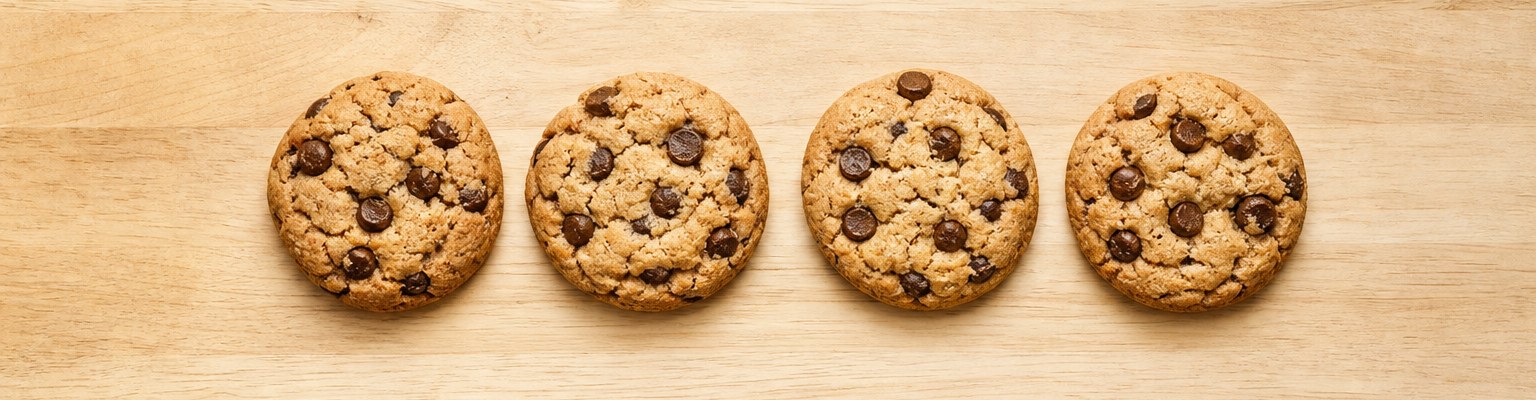
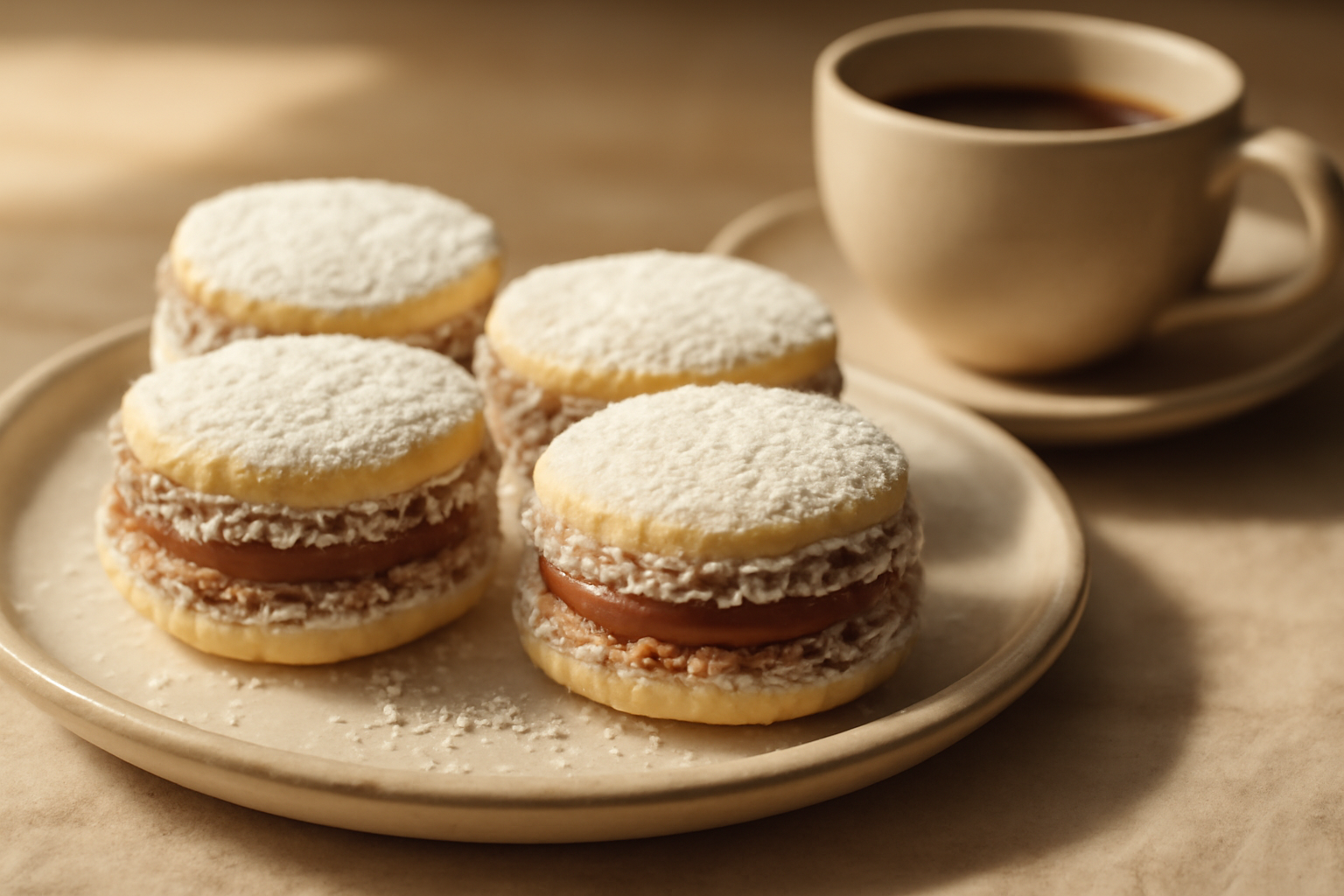

Alfajores
Delicate South American shortbread-style cookie sandwiches filled with dulce de leche caramel.
Ingredients
- 1 cup (120g) all-purpose flour, spooned and leveled
- 1½ cups (180g) cornstarch
- ½ teaspoon baking powder
- ¼ teaspoon fine sea salt
- 10 tablespoons (140g) unsalted butter, softened to 68°F
- ½ cup (60g) powdered sugar, sifted
- 2 large egg yolks, room temperature
- 1 teaspoon pure vanilla extract
- 1 tablespoon dark rum (optional but recommended)
- 1 cup (about 300g) dulce de leche, for filling
- Powdered sugar or shredded coconut, for rolling
Instructions
- Whisk together flour, cornstarch, baking powder, and salt in a bowl and set aside.
- Beat butter and powdered sugar on medium speed for 3 full minutes until pale and fluffy.
- Add egg yolks one at a time, mixing for 30 seconds after each, then add vanilla and rum, mixing until just combined.
- Add dry ingredients in two additions, mixing on low until just combined.
- Turn dough onto a lightly floured surface, flatten into a disc, wrap in plastic, and refrigerate for 1 hour minimum.
- Preheat oven to 325°F and line two baking sheets with parchment paper.
- Roll dough to ¼-inch thickness and cut into 1.75-inch rounds, placing them on prepared sheets 1 inch apart.
- Bake for 11 to 13 minutes, until just set and barely golden on the bottom.
- Cool completely on a wire rack for at least 20 minutes before assembling.
- Pipe or spoon about 1 teaspoon of dulce de leche onto the flat side of one cookie and sandwich with a second cookie, then roll edges in powdered sugar or coconut.
Notes
- Butter temperature of exactly 68°F is critical for proper emulsification and texture.
- Dulce de leche must be thick enough to hold a soft peak when lifted with a spoon before assembling.
- Best on day two—dulce de leche softens the cookie slightly overnight for perfect melt-in-your-mouth texture.
- Keep in airtight container at room temperature up to 4 days or refrigerated up to 10 days.
The first time I made alfajores dulce de leche cookies recipe from scratch was December 2018, during a snowstorm that knocked out our power for six hours. I had started the dough by candlelight, convinced I understood the recipe. What came out of the oven were sad, crumbly discs that crumbled into dust the moment I touched them. My husband, bless him, tried one anyway. He said nothing. That silence told me everything. I went back to my notes, rebuilt the recipe from scratch, and spent the next three years — through roughly 140 batches — figuring out exactly what makes this cookie sing.
Alfajores are a South American cookie sandwich with deep roots in Argentina and Peru, though versions exist across Latin America and even Spain. At their simplest, they are two delicate shortbread-style cookies held together by a thick layer of dulce de leche. That description, however, dramatically undersells them. When done right, they are extraordinary — melt-in-your-mouth tender, with a caramel filling so rich it barely needs anything else. Today, they are the one cookie I make for every important occasion, and guests always ask for the recipe.
What Makes a True Alfajores Dulce de Leche Cookies Recipe Work
The secret to a great alfajor lies almost entirely in the cookie itself. Most recipes I tested early on used a mix of all-purpose flour and cornstarch — and that ratio is everything. Through batches 1 through 30, I played with percentages obsessively. Too much all-purpose flour, and the cookie is tough. Too much cornstarch, and it crumbles before you can even fill it. My sweet spot: 1 cup (120g) all-purpose flour to 1½ cups (180g) cornstarch. That ratio produces a cookie with just enough gluten structure to hold its shape, while the cornstarch interrupts gluten development enough to deliver that signature tenderness.
Fat choice matters just as much. Butter is essential, but the temperature of that butter is critical. I use 10 tablespoons (140g) of unsalted butter, softened to exactly 68°F. Too warm, and the cookie spreads aggressively. Too cold, and the fat doesn’t cream properly with the sugar, leaving you with dense cookies that won’t absorb the dulce de leche correctly. In my experience, 68°F is where emulsification happens beautifully — the butter and sugar trap tiny air pockets that give the cookie its almost pillowy lift without puffing too much.
Leavening is minimal here. I use just ½ teaspoon of baking powder. Some traditional recipes use none at all, but that small amount helps the cookie develop a slight lift and a more even texture. However, go beyond that and you risk a cookie that puffs unevenly and cracks down the middle during baking — something that happened repeatedly in batches 14 through 19 before I dialed it back.
The Dulce de Leche: Homemade vs. Store-Bought
Let me be honest with you: I have made dulce de leche both ways, and I have strong opinions. Homemade dulce de leche — made by slow-cooking sweetened condensed milk for 2.5 to 3 hours — is extraordinary. The Maillard reaction and caramelization of milk sugars create a depth of flavor that no can off the shelf fully replicates. That said, it requires patience, attention, and a certain level of risk tolerance if you’re using the stovetop method.
For everyday baking, I use Nestlé La Lechera dulce de leche from a can. It’s consistent, it’s thick, and it holds between cookies without oozing everywhere. For special occasions — a holiday cookie tray, my daughter’s birthday — I make my own. If you go the homemade route, use the oven method: pour one can of sweetened condensed milk into a pie dish, cover tightly with foil, set it in a water bath, and bake at 425°F for 60 to 75 minutes. The result is a deep amber, almost butterscotch-flavored caramel that is genuinely unforgettable.
One critical note: your dulce de leche must be thick enough to pipe. If it slides off the cookie or squeezes out the sides when you press the sandwich together, it’s too thin. Refrigerate the filling for 20 to 30 minutes before assembling. Specifically, it should hold a soft peak when you lift a spoon from it — that’s your visual cue that it’s ready.
This recipe makes approximately 24 to 28 finished sandwich cookies, depending on how precisely you roll and cut. They keep in an airtight container at room temperature for up to 4 days, or refrigerated for up to 10 days. In my experience, they’re actually better on day two — the dulce de leche softens the cookie slightly overnight, creating that perfect melt-in-your-mouth texture.
The Cocoa Powder That Finally Gave My Alfajores That Deep, Sophisticated Finish
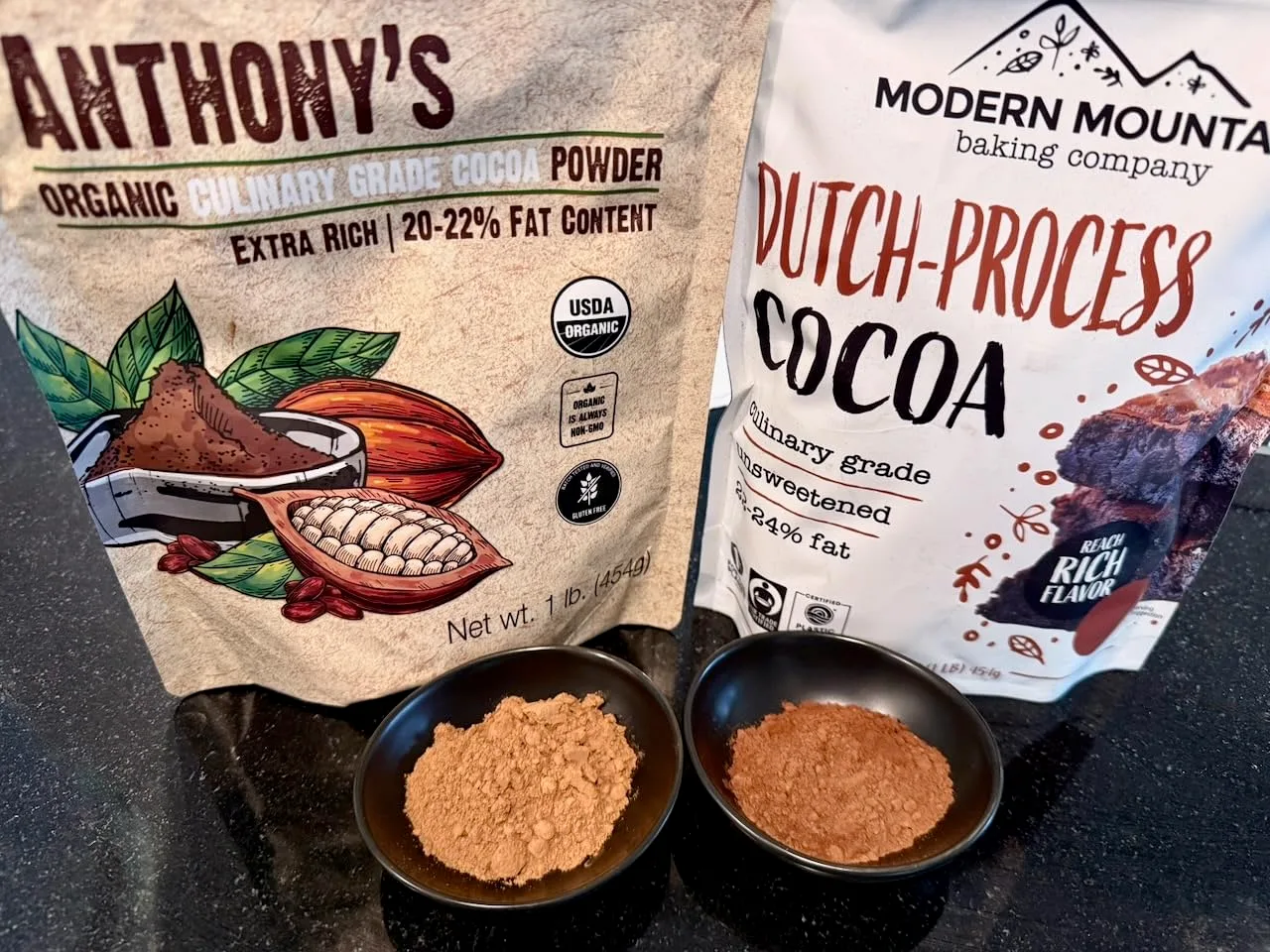
Alfajores are delicate enough without sabotaging them with the wrong cocoa. I spent years dusting mine with grocery-store cocoa that looked flat and tasted hollow—until I realized the fat content and processing method actually matter for that rich, velvety coating that makes people stop mid-bite and ask what you did differently.
What works
- The 22-24% fat content means it clings to the dulce de leche without looking dusty or separating after a day or two in the container.
- Dutch processing gives it that deeper, almost chocolate-forward color that makes the cookies look genuinely professional—not like I grabbed whatever was on sale.
- Fair Trade certification actually matters to me when I’m serving these to people I care about, and it tastes like I made a choice, not just bought an ingredient.
What doesn’t
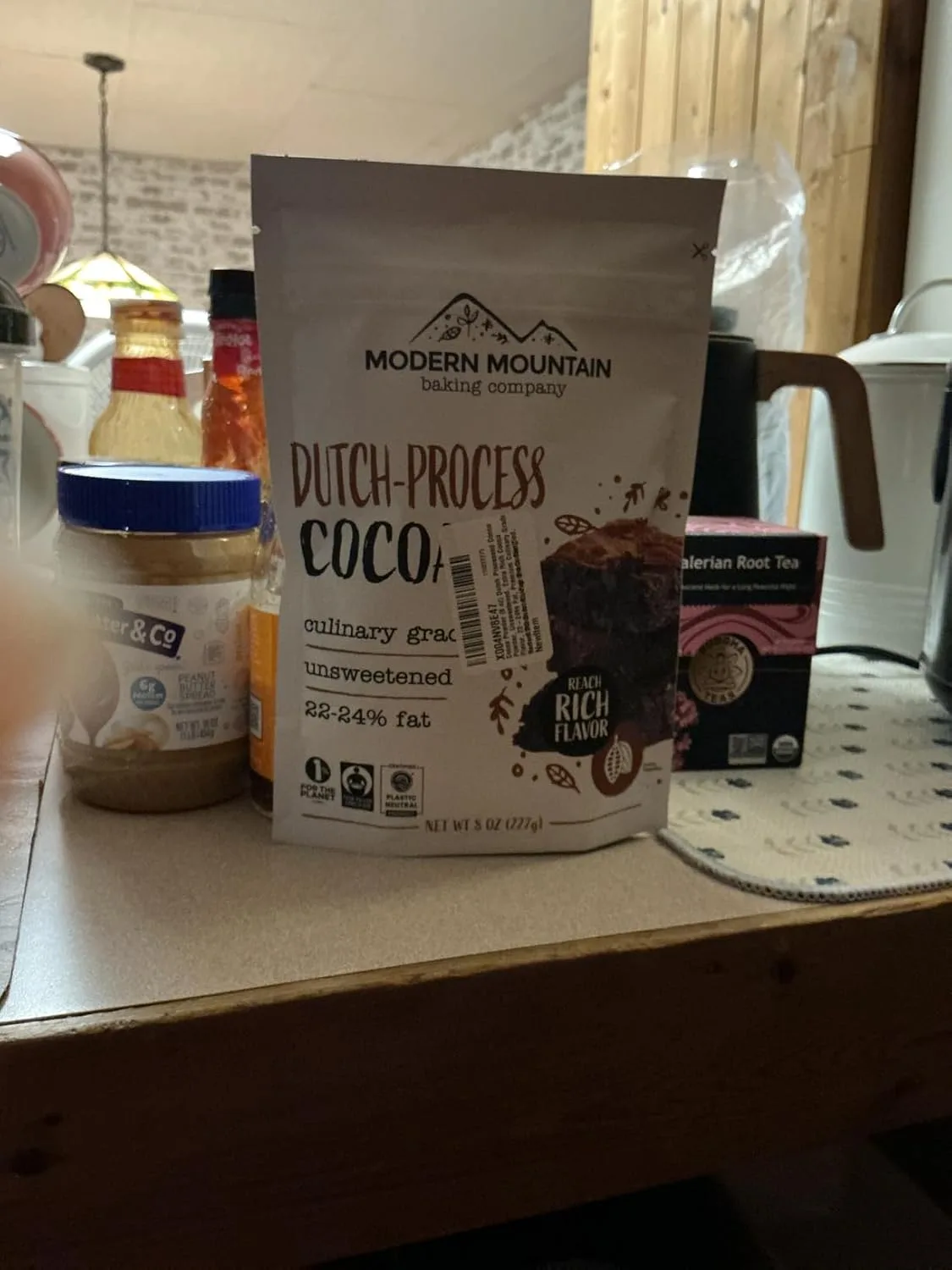
- The 8 oz size goes faster than I expect—I end up reordering every two batches, which isn’t ideal if you’re making alfajores regularly.
- It costs more than the bulk bins at the grocery store, so if you’re on a tight budget or testing a recipe for the first time, it might feel like overkill.
I almost didn’t commit to upgrading my cocoa—I remember standing in my pantry thinking maybe I was just being precious about it—but the moment I dusted my next batch and saw how it looked, I understood the difference between good alfajores and ones people actually remember. Dutch Processed Cocoa Powder (8 oz), 22-24% Fat, Premium Culinary Grade, Non-GMO and Fair Trade Certified
About This Article

Written by Margaret Chen. Margaret Chen is a home baker and recipe developer with over 15 years of experience perfecting cookie recipes through rigorous testing and detailed experimentation. She tests every recipe multiple times, documents every variable, and applies the same rigor professional bakers use, with the warmth and accessibility of home baking. More about this site.
Scope and limits. Margaret is a home baker and recipe developer with no formal culinary training. Follow current food safety guidance for egg handling, storage, and anything you are serving to other people.
Verify this against a primary source
Specifics change, and your situation may differ from the one described here. These are the authorities worth checking directly:
- USDA FoodData Central — ingredient composition and nutrition data
- FoodSafety.gov — safe handling, storage and egg safety