
Lemon Chess Pie: The Southern Pie With No Curd
Lemon chess pie is stirred and poured raw, not cooked into curd first. Get the crackly top, the tart filling, and why no blind baking is needed.
Ingredients
- 1 1/4 cups all-purpose flour
- 1/2 teaspoon salt
- 1 teaspoon granulated sugar
- 1/2 cup (1 stick) cold unsalted butter, cubed
- 3 to 4 tablespoons ice water
- 1 1/2 cups granulated sugar
- 1 tablespoon all-purpose flour
- 1 tablespoon fine yellow cornmeal
- 1/8 teaspoon salt
- 1/2 cup (1 stick) unsalted butter, melted and slightly cooled
- 4 large eggs, at room temperature
- 1/4 cup fresh lemon juice (about 2 lemons)
- 1 tablespoon finely grated lemon zest
- 1/4 cup buttermilk
- 1 teaspoon vanilla extract
Instructions
- Make the dough. Whisk the flour, salt, and sugar together. Work in the cold butter with your fingertips or a pastry cutter until the pieces are pea-sized to almond-sized. Sprinkle in the ice water 1 tablespoon at a time, tossing with a fork, until the dough just holds together when pinched. Shape it into a disk, wrap it, and refrigerate at least 1 hour.
- Set up the oven. Put a rack in the lower third and slide a rimmed baking sheet onto it. Heat the oven to 350°F so the sheet is hot when the pie goes in.
- Shape the shell. Roll the dough into a 12-inch circle on a floured surface. Fit it into a 9-inch pie plate without stretching it, trim the overhang to about 1 inch, then fold under and crimp. Chill the shaped shell in the refrigerator while you make the filling. Do not blind bake it.
- Mix the dry ingredients. In a large bowl, whisk the sugar, flour, cornmeal, and salt until no lumps of cornmeal remain.
- Build the filling. Whisk in the melted butter, then the eggs one at a time. Whisk in the lemon juice, zest, buttermilk, and vanilla. Whisk by hand just until smooth and glossy, about 1 minute. Do not use a mixer, and do not whip air into it.
- Fill and bake. Set the chilled shell on the hot baking sheet and pour in the filling. Bake 45 to 50 minutes. At about 25 minutes, check the rim of the crust and cover it loosely with foil if it is browning faster than the top.
- Check the doneness cue. The pie is ready when the top is light golden, the outer 2 inches look matte and firm, and only a coffee-mug-sized circle in the center wobbles when you nudge the pan. Pull it then. It will finish setting on the rack.
- Cool completely. Let the pie cool on a wire rack for at least 2 hours before slicing. Wipe the knife between cuts. Serve at room temperature or chilled.
Notes
- Makes one 9-inch pie. A standard 9-inch pie plate holds all of the filling, and about two lemons will give you the juice and zest.
The first lemon pie I ever made from scratch was a curd pie, and I spent forty minutes at the stove whisking a pot that either would not thicken or scrambled the moment I looked away. Then I made a lemon chess pie. The whole job was a whisk, a bowl, and a pour.
That difference is the point of this pie. A curd pie cooks its filling on the stove first, then pours it into a shell that was already baked all the way through. Chess pie skips both steps. The filling goes in raw, the crust goes in raw, and one trip through a 350°F oven does the work of both.
This post is mostly about that fork in the road: what each method asks of you, why chess pie can use an unbaked shell, and how to read the bake so you end up with a set, sliceable filling under a thin, crackly sugar top. The recipe comes first, and the reasoning follows it.
Why This Works
Chess pie is a baked custard made dense with sugar and butter, not a cooked curd. A cup and a half of sugar, a stick of butter, and four eggs go into the shell raw and bake together. The sugar and fat slow the eggs down, so the filling sets gently from the rim inward instead of scrambling. Because that filling spends 45 minutes or more in the oven sitting directly on the dough, the crust is baking the entire time, and that is why it needs no blind baking.
Ingredients
Makes one 9-inch pie. A standard 9-inch pie plate holds all of the filling, and about two lemons will give you the juice and zest.
For the Crust
- 1 1/4 cups all-purpose flour
- 1/2 teaspoon salt
- 1 teaspoon granulated sugar
- 1/2 cup (1 stick) cold unsalted butter, cubed
- 3 to 4 tablespoons ice water
For the Filling
- 1 1/2 cups granulated sugar
- 1 tablespoon all-purpose flour
- 1 tablespoon fine yellow cornmeal
- 1/8 teaspoon salt
- 1/2 cup (1 stick) unsalted butter, melted and slightly cooled
- 4 large eggs, at room temperature
- 1/4 cup fresh lemon juice (about 2 lemons)
- 1 tablespoon finely grated lemon zest
- 1/4 cup buttermilk
- 1 teaspoon vanilla extract
Easy Swap
No buttermilk? Use the same amount of whole milk or heavy cream. You lose a little tang, but nothing structural changes, and the lemon juice still carries the flavor.
How to Make It
Prep: 30 minutes | Bake: 50 minutes | Cool or chill: 2 hours | Serves: 8 slices
- Make the dough. Whisk the flour, salt, and sugar together. Work in the cold butter with your fingertips or a pastry cutter until the pieces are pea-sized to almond-sized. Sprinkle in the ice water 1 tablespoon at a time, tossing with a fork, until the dough just holds together when pinched. Shape it into a disk, wrap it, and refrigerate at least 1 hour.
- Set up the oven. Put a rack in the lower third and slide a rimmed baking sheet onto it. Heat the oven to 350°F so the sheet is hot when the pie goes in.
- Shape the shell. Roll the dough into a 12-inch circle on a floured surface. Fit it into a 9-inch pie plate without stretching it, trim the overhang to about 1 inch, then fold under and crimp. Chill the shaped shell in the refrigerator while you make the filling. Do not blind bake it.
- Mix the dry ingredients. In a large bowl, whisk the sugar, flour, cornmeal, and salt until no lumps of cornmeal remain.
- Build the filling. Whisk in the melted butter, then the eggs one at a time. Whisk in the lemon juice, zest, buttermilk, and vanilla. Whisk by hand just until smooth and glossy, about 1 minute. Do not use a mixer, and do not whip air into it.
- Fill and bake. Set the chilled shell on the hot baking sheet and pour in the filling. Bake 45 to 50 minutes. At about 25 minutes, check the rim of the crust and cover it loosely with foil if it is browning faster than the top.
- Check the doneness cue. The pie is ready when the top is light golden, the outer 2 inches look matte and firm, and only a coffee-mug-sized circle in the center wobbles when you nudge the pan. Pull it then. It will finish setting on the rack.
- Cool completely. Let the pie cool on a wire rack for at least 2 hours before slicing. Wipe the knife between cuts. Serve at room temperature or chilled.
Don’t Do This
Do not blind bake the shell for this pie. A shell baked once and then baked again under a 45-minute filling browns too dark at the rim. Also skip the electric mixer: whisk by hand just until smooth.
Can You Make This Pie Ahead?
Yes — Here Is the Timeline
Yes. Chess pie is one of the few pies that actually improves when it is made the day before. Bake it, cool it fully, then cover and refrigerate for up to 3 days. Serve it chilled, or set it out for 30 minutes first.
Overnight, the filling firms a little more and the lemon mellows, so slices cut cleaner on day two than they do on day one. Let the pie cool uncovered at room temperature for 2 hours, then cover it loosely so the crackly top does not get damp. Because the filling is eggs and dairy, do not leave the pie out for more than 2 hours total.
You can stage the crust separately. The dough disk keeps in the refrigerator for 3 days, or in the freezer for a month if you thaw it overnight in the refrigerator. I would not freeze the baked pie, because a thawed sugar-and-egg custard weeps and the thin sugar top turns sticky. Mix the filling right before it goes in the shell.
Chess Versus Curd: Stirred Versus Poured
A lemon curd filling is a stove-top project. Yolks, sugar, lemon juice, and butter go into a saucepan and get stirred over gentle heat until the mixture is thick enough to coat the back of a spoon. The thickening happens in the pot, so the eggs are already cooked before they reach the pie. The result is a smooth, glossy, very tart filling that gets poured into a shell that was baked all the way through beforehand, and usually chilled until firm. Curd pies are about control: you watch the pot, you pull it at the right moment, and you strain out any bits that cooked too fast.
Chess pie hands all of that to the oven. You whisk melted butter, sugar, a little flour and cornmeal, eggs, lemon juice, zest, and buttermilk together in a bowl, pour the thin batter into an unbaked shell, and bake. There is no pot, no strainer, and nothing to scorch. The eggs cook inside the pie, slowly, cushioned by a lot of sugar and fat.
The two pies end up different in more than process. Curd is sharp, silky, and best cold. Chess is sweeter and denser, closer to a custard, with a faintly crisp, caramelized top, and it is perfectly happy at room temperature.
Even the way they fail is different. Curd fails at the stove, where it comes out thin or scrambled before the pie is assembled. Chess fails in the oven, where it comes out overbaked, cracked, or weeping sugar. If I want something bright and cold and I have the patience to stand at a pot, I make curd. If I want a pie I can mix while the oven preheats, from ingredients already in the kitchen, I make chess.
Why Chess Pie Skips the Blind-Baked Shell
Blind baking exists for one reason: to cook a crust that its filling will not cook for it. A curd filling goes into the shell already finished, so nothing about that filling will ever bake the dough. Pour curd into a raw shell and you get raw dough under lemon. The shell has to be baked, cooled, and often chilled first, which is an extra hour and a pan full of pie weights before you even start the filling.
Chess pie reverses the arrangement. The filling sits directly on the dough for 45 to 50 minutes in the oven, so the crust gets a full bake from the same heat that sets the filling. The filling is also mostly sugar and fat with only a few tablespoons of watery liquid, so it does not soak the dough the way a juicy fruit filling would.
I tested it both ways, with the same filling, same oven, same day. One pie went into a fully blind-baked shell and one into a raw shell. The pre-baked rim was dark brown by the 30-minute mark and needed foil, and its bottom was no crisper than the other pie’s. The raw-start shell came out evenly golden and cut clean. For the first few pies I blind baked out of habit, and it only cost me time.
No blind baking does not mean no care. Set the pie on a hot baking sheet on the lower-middle rack so the bottom gets direct heat, and chill the shaped shell while the oven heats so the butter in the dough is firm when the heat arrives. Those two habits do more for the bottom crust than prebaking ever did.
The Self-Made Top and How to Read the Bake
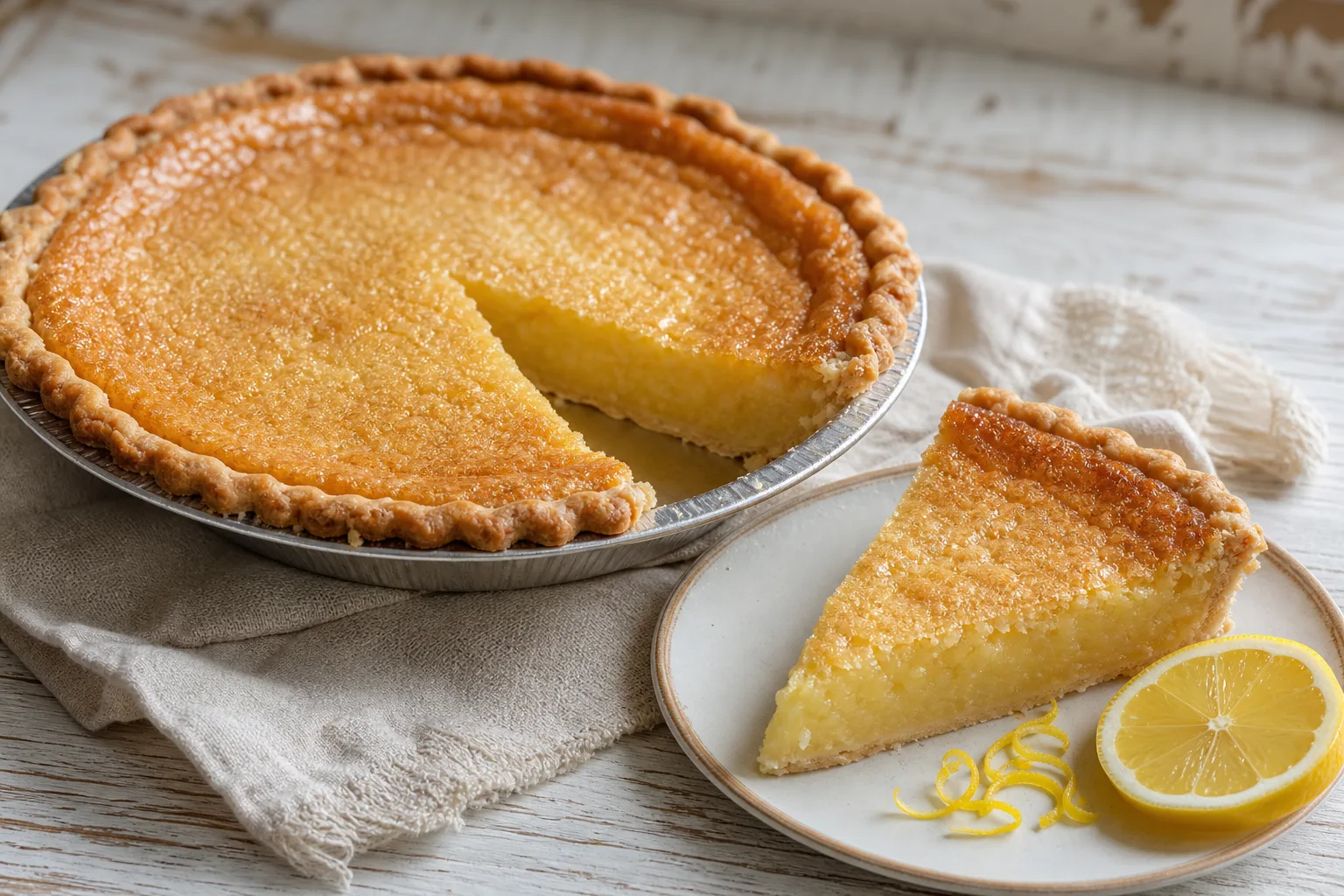
Curd pies are usually finished with a topping because a plain curd surface is flat and pale. Chess pie makes its own. The small amounts of flour and cornmeal, along with the sugar, drift up to the surface as the pie bakes and set into a thin, crackly, light-gold sheet. That sheet is the finish, and nothing else needs to go on top.
It only works if you whisk gently. Whisk by hand just until the batter is smooth. If you whip in air, the filling puffs up in the oven, then collapses and cracks as it cools.
Doneness is the other place chess pies go wrong. At 45 minutes, give the pan a gentle nudge. The edges should look matte and firm, the top should be light golden, and the center should wobble like barely set gelatin, in a circle about the size of a coffee mug. If the whole surface is rigid, the pie is overbaked, and you will see cracks and a slightly rubbery texture.
Then comes the hard part, which is waiting. Chess pie needs at least 2 hours on a rack before it can be sliced. Cut it warm and the filling runs; cut it cool and it holds a clean edge. The lemon needs the wait too, since the tartness in a freshly baked slice is sharper and flatter than it will be an hour later.
Margaret’s Tip
Pull the pie while the center still wobbles in a circle about the size of a coffee mug. Carryover heat finishes the set on the rack, and pies pulled at that point slice cleaner than ones baked until firm.
Questions People Ask
Do I have to blind bake the crust for lemon chess pie?
No, and you should not. The filling spends 45 to 50 minutes in the oven on top of the dough, which is plenty of time to bake it. A shell that is blind baked first just browns too dark at the rim by the time the filling sets. Chill the shaped shell and bake on a hot sheet instead.
What is the difference between lemon chess pie and a lemon curd pie?
The method. Curd is cooked on the stove until it thickens, then poured into a fully baked shell. Chess filling is whisked in a bowl, poured raw into an unbaked shell, and sets in the oven. Chess is sweeter, denser, and more custard-like with a crackly top, while curd is silky and sharply tart.
Why did my chess pie crack on top?
Almost always overbaking or too much air in the batter. If the whole surface was firm when you took it out, the eggs have gone past set. If you whipped the filling with a mixer, it puffed and then sank. Whisk by hand, and pull the pie while a mug-sized circle in the center still wobbles.
Can I use a store-bought crust?
Yes. A refrigerated roll-out crust fit into your own 9-inch pie plate works exactly like the homemade one: fill it raw and bake on a hot sheet. A frozen shell works too if you choose a deep-dish one and keep it on the baking sheet. Add a few minutes if it goes in frozen.
About This Article

Written by Margaret Chen. Margaret Chen is a home baker and recipe developer with over 15 years of experience perfecting cookie recipes through rigorous testing and detailed experimentation. She tests every recipe multiple times, documents every variable, and applies the same rigor professional bakers use, with the warmth and accessibility of home baking. More about this site.
Scope and limits. Margaret is a home baker and recipe developer with no formal culinary training. Follow current food safety guidance for egg handling, storage, and anything you are serving to other people.
Verify this against a primary source
Specifics change, and your situation may differ from the one described here. These are the authorities worth checking directly:
- USDA FoodData Central — ingredient composition and nutrition data
- FoodSafety.gov — safe handling, storage and egg safety