
Gluten-Free Shortbread
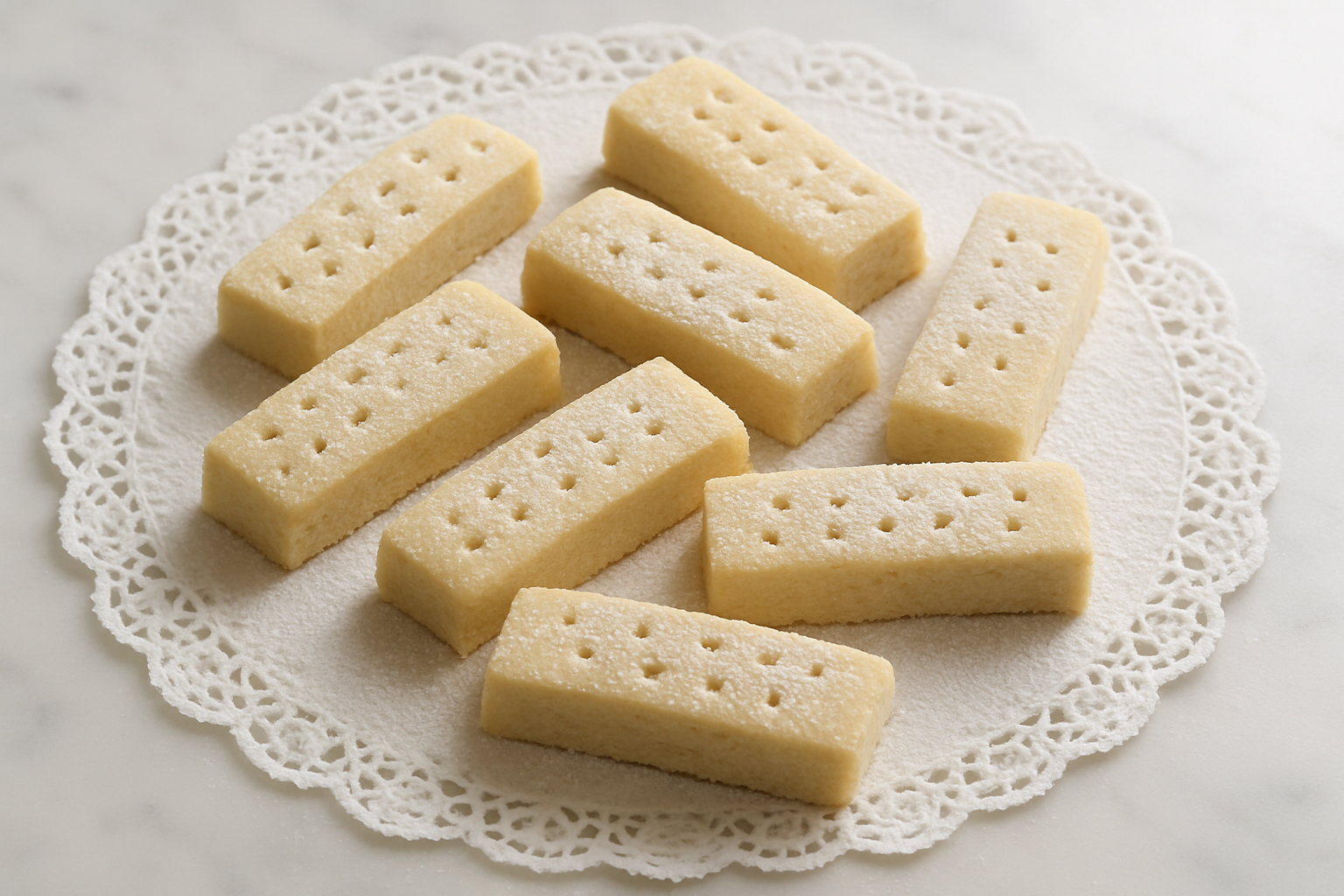
A buttery, crisp gluten-free shortbread made with rice flour and tapioca starch that melts on your tongue.
Ingredients
- 1 cup (227 grams) unsalted butter, at room temperature
- 1/2 cup (100 grams) powdered sugar
- 1 1/2 cups (180 grams) Bob's Red Mill rice flour, sifted
- 1/2 cup (60 grams) tapioca starch
- 1/4 teaspoon fine sea salt
Instructions
- Preheat your oven to 325°F (165°C).
- Line a baking sheet with parchment paper.
- In a mixing bowl, cream the softened butter and powdered sugar together for 5 to 7 minutes, beating until the mixture is light and fluffy.
- In a separate bowl, whisk together the sifted rice flour, tapioca starch, and sea salt.
- Gently fold the dry mixture into the creamed butter and sugar, stirring until just combined.
- Turn the dough out onto parchment paper and shape it into a disc about 1/4 inch thick.
- Cut the dough into squares or wedges — traditional shortbread is about 2 inches per side.
- Place them on your lined baking sheet, leaving about an inch of space between each piece.
- Bake for 13 to 18 minutes, until the edges are just barely golden but the centers are still pale.
- Let the cookies cool on the baking sheet for 5 minutes, then transfer them to a wire rack to cool completely.
Notes
- Sift the rice flour before measuring to avoid lumps.
- The cookies will look underdone when you pull them from the oven, but they firm up as they cool.
- Store in an airtight container at room temperature for up to a week or freeze for up to a month.
I almost cried in my kitchen the December my mom was diagnosed with celiac disease — three days before our annual cookie exchange. I had been making the same buttery Scottish shortbread recipe for fifteen years, and suddenly, that tin of golden squares felt completely off the table. I didn’t want her to sit there watching everyone else eat cookies she couldn’t touch, so I did what any determined baker does: I dove headfirst into the world of gluten free shortbread cookies and promptly made four batches of sandy, crumbly, flavorless disappointment before I found my footing.
Why Gluten-Free Shortbread Is Harder Than It Looks (And How to Get It Right)
Here’s the thing about shortbread that makes it both wonderful and terrifying to adapt: there is nowhere to hide. Traditional shortbread has just three or four ingredients — butter, sugar, flour, and sometimes a pinch of salt. That’s it. There’s no cocoa powder to mask a weird flour flavor, no egg to hold together a crumbly structure, no baking soda to create a forgiving lift. When you swap out the wheat flour, every flaw shows up immediately. Too much rice flour and your cookie tastes like chalk. Too much tapioca and it turns sticky and gummy in the center. Not enough fat and the whole thing crumbles apart before it reaches the serving plate.
After those four failed batches, I learned that the magic in gluten free shortbread comes from blending flours strategically. A single-flour approach almost never works. What you want is a base of finely milled rice flour for that classic snap and neutral flavor, combined with a small amount of tapioca starch to provide the gentle chew and binding that gluten normally delivers. That combination is what finally gave me cookies that actually tasted like shortbread — buttery, crisp at the edges, and tender enough to melt on your tongue.
My Baking Essentials for This Recipe
Before we get into technique, let me walk you through the ingredients and tools that made the biggest difference in my testing. Getting these right is honestly half the battle.
The Rice Flour That Finally Gave Me That Melt-in-Your-Mouth Shortbread Texture
When you’re trying to replicate the delicate, sandy crumb of traditional shortbread without gluten, you need a flour that actually behaves like wheat flour does — and most gluten-free blends are too heavy or leave a gritty aftertaste. Bob’s Red Mill rice flour became my secret weapon for keeping that signature buttery snap.
What works
- The texture stays crisp for days without becoming dense or cake-like — I was shocked the first batch stayed snappy even after a week in an airtight tin.
- It blends seamlessly with starches and other gluten-free flours without creating that powdery, chalky mouthfeel I kept running into with other brands.
- It measures predictably in recipes, so once I dialed in my ratio, I could replicate that golden-brown finish and snap every single batch.
What doesn’t
- It’s not a one-to-one swap for all-purpose flour — you still need to balance it with tapioca or potato starch, or the cookies can come out slightly dry.
- The bags can be a bit dusty when you open them, so I always sift it first to avoid lumps and ensure even hydration throughout the dough.
I second-guessed myself halfway through that first batch — the dough felt slightly different than what I was used to — but the moment those cookies came out of the oven, I knew I’d found the right ingredient. Bob’s Red Mill Gluten Free Rice Flour is now a permanent fixture in my pantry.
The Recipe: Gluten-Free Shortbread That Actually Works
This is the recipe that finally delivered — the one I’ve made a dozen times since that December when Mom needed cookies she could actually eat. The secret is in that rice flour and tapioca blend, and the creaming step that builds everything you need for a tender, buttery result. It’s surprisingly straightforward once you trust the flour combination.
What You’ll Need
- 1 cup (227 grams) unsalted butter, at room temperature
- 1/2 cup (100 grams) powdered sugar
- 1 1/2 cups (180 grams) Bob’s Red Mill rice flour, sifted
- 1/2 cup (60 grams) tapioca starch
- 1/4 teaspoon fine sea salt
How I Make Them, Step by Step
- Preheat your oven to 325°F (165°C). Line a baking sheet with parchment paper.
- In a mixing bowl, cream the softened butter and powdered sugar together for 5 to 7 minutes, beating until the mixture is light and fluffy. This step is crucial — don’t skip it or rush through it. You’re building air into the dough, which gives the shortbread that tender crumb.
- In a separate bowl, whisk together the sifted rice flour, tapioca starch, and sea salt.
- Gently fold the dry mixture into the creamed butter and sugar, stirring until just combined. The dough should come together without any streaks of flour.
- Turn the dough out onto parchment paper and shape it into a disc about 1/4 inch thick. (I use my hands, lightly floured, to avoid adding extra moisture.)
- Cut the dough into squares or wedges — traditional shortbread is about 2 inches per side. Place them on your lined baking sheet, leaving about an inch of space between each piece.
- Bake for 13 to 18 minutes, until the edges are just barely golden but the centers are still pale. The cookies will look underdone when you pull them from the oven, but they firm up as they cool. Overbaking is the enemy here.
- Let the cookies cool on the baking sheet for 5 minutes, then transfer them to a wire rack to cool completely. They’ll crisp up further as they rest.
Yield and Storage
This recipe makes about 20 to 24 shortbread pieces, depending on how large you cut them. Store them in an airtight container at room temperature for up to a week — though they rarely last that long in my house. These freeze beautifully too: I’ve kept batches in the freezer for a month and they come out tasting exactly as good as the day I baked them.