
Create Bakery-Style Eggless Coconut Cookies at Home
The Charm of Bakery-Style Treats
Bakery-style coconut cookies are a staple tea-time snack across India. They are famous for their rich, buttery taste. Additionally, the distinct aroma of toasted coconut is inviting. The texture offers a delightful crunch with every bite. For example, the exterior is crisp, while the center remains tender. Moreover, the absence of eggs makes them lighter than standard cookies. Therefore, they suit various dietary preferences perfectly.
If you’re inspired to recreate these delightful bakery-style coconut cookies in your own kitchen after your travels through India, having the right baking essentials will make all the difference in achieving authentic results. Start with high-quality shredded coconut that provides the signature tropical flavor and chewy texture that makes these cookies so memorable and delicious. To prevent sticking and ensure even baking, invest in unbleached parchment paper which creates a non-stick surface and makes cleanup incredibly easy after your baking session. For creaming butter and sugar to that perfect fluffy consistency, a reliable electric hand mixer saves time and ensures your dough develops the right airy texture that characterizes bakery-quality cookies. You’ll also need a quality baking sheet set in multiple sizes to accommodate different batch sizes and ensure even heat distribution throughout the baking process. Don’t forget the aromatic ground cardamom that adds that authentic Indian bakery flavor profile which transports you back to the chai shops of Mumbai or Delhi. For precision in measuring ingredients, especially when scaling recipes up or down, a sturdy kitchen scale ensures consistent results every single time you bake these beloved treats. After baking, proper cooling racks allow air to circulate around your cookies, preventing sogginess and maintaining that perfect crispy exterior you experienced abroad. Reusable silicone baking mats offer an eco-friendly alternative to parchment paper and provide excellent non-stick properties for years of baking adventures. A versatile set of stainless steel mixing bowls with lids helps you organize ingredients, mix dough efficiently, and store any leftover cookie dough for future baking sessions. Finally, a professional cookie scoop set ensures uniformly sized cookies that bake evenly and look just as impressive as those you admired in Indian bakery display cases during your travels.
These treats are also known as “coconut biscuits” in many regions. They pair wonderfully with a hot cup of chai or coffee. Furthermore, they are easy to store for later use. Consequently, many home bakers choose this recipe for holiday gifting. The combination of simple flavors creates a nostalgic experience.
Essential Ingredients for Success
You do not need fancy equipment to make these treats. Most required items are likely already in your pantry. However, quality matters for the best flavor profile.
Key components include:
- Desiccated Coconut: This is the star ingredient. It provides the signature chew and tropical flavor.
- All-Purpose Flour (Maida): This creates the structural base of the cookie.
- Butter or Ghee: These fats ensure a melt-in-the-mouth texture.
- Powdered Sugar: This mixes easily into the fat for a smooth dough.
- Cardamom Powder: Ideally, add a pinch for an authentic aromatic touch.
Additionally, ensure all your ingredients are at room temperature. This step helps everything emulsify properly. As a result, your dough will be uniform and easy to handle.
Mastering the Dough Consistency
Achieving the perfect texture requires specific techniques. First, cream the butter and sugar together thoroughly. You should mix until the mixture is pale and fluffy. This process incorporates air into the batter. Consequently, your cookies will be light rather than dense.
Next, gently fold in the dry ingredients. Do not overmix the dough. Overworking the gluten results in hard, tough cookies. Instead, mix just until the flour disappears. If the dough feels too sticky, chill it briefly. For instance, twenty minutes in the fridge can make shaping easier. Finally, roll the dough balls in extra dry coconut before baking. This step adds an extra layer of crunch.
Versatile Baking Methods
You can bake these cookies using various appliances. Therefore, lack of an oven is not a barrier.
Oven Method: Preheat your oven to ensure even cooking. Place the cookies on a parchment-lined tray. Leave space between them as they will spread. Then, bake until the edges turn a golden brown.
Stovetop Method: Surprisingly, you can use a heavy-bottomed pan or pressure cooker. First, add a layer of salt or sand to the bottom of the vessel. Place a wire rack inside. Cover and preheat on medium heat for ten minutes. Afterward, place a plate of cookies on the rack. Cover the vessel tightly again. Finally, bake on low heat until they are crisp. This method mimics the effect of a traditional oven effectively.
Ingredients and Variations
To create the perfect batch of eggless coconut cookies, you need a few key ingredients. The choice between butter, oil, or ghee can significantly impact the texture and flavor of your cookies.
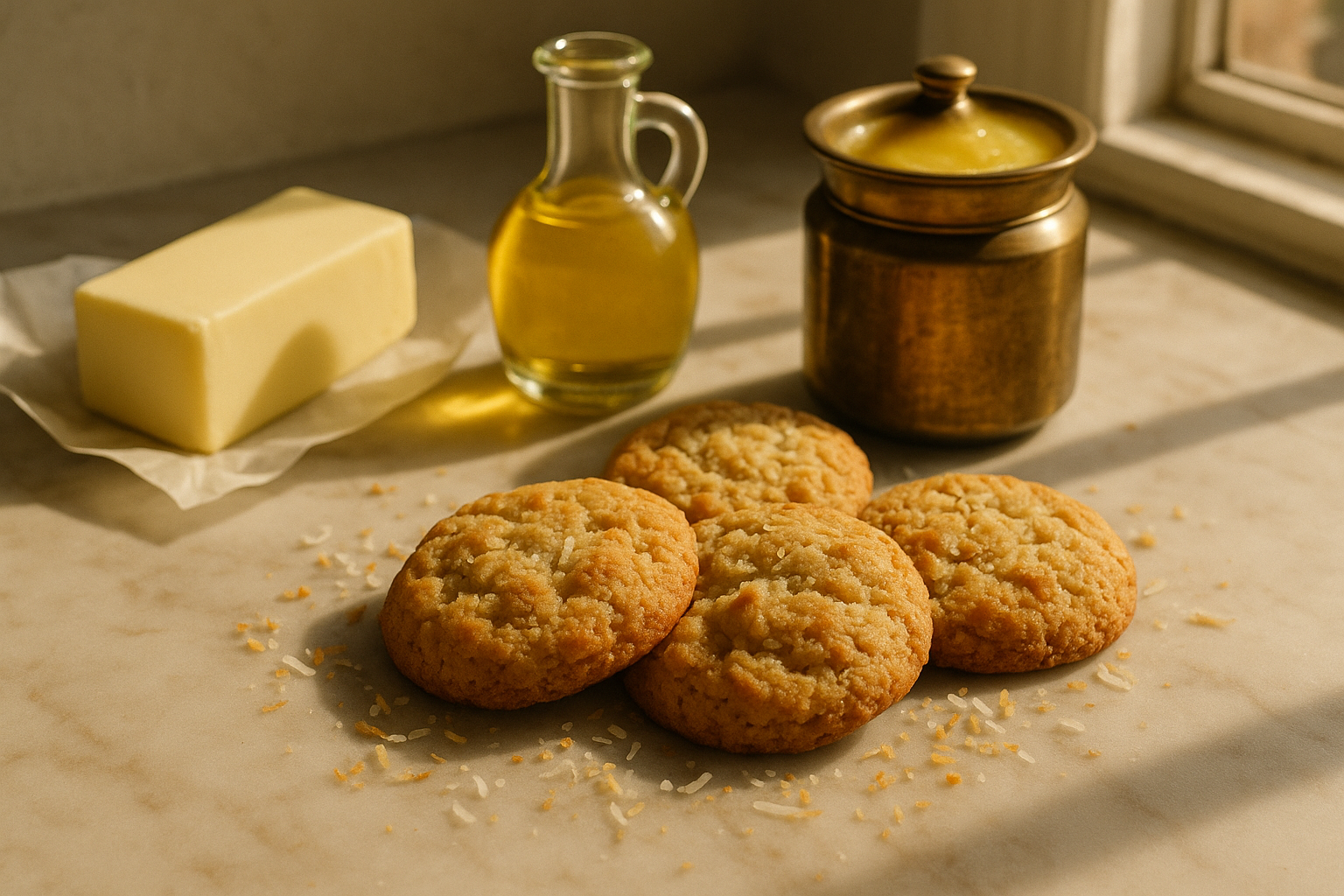
Ingredients:
- 1 cup all-purpose flour
- 1/2 cup desiccated coconut
- 1/2 cup sugar
- 1/2 cup unsalted butter or ghee (softened)
- 1/4 teaspoon baking powder
- 1/4 teaspoon vanilla extract
- A pinch of salt
Butter vs. Oil or Ghee
The Impact of Butter
Selecting the right fat is crucial for your final result. Specifically, this choice dictates both texture and taste. Therefore, understanding these differences helps you bake better treats.
Butter remains the gold standard for many bakers. Primarily, it aerates the dough when creamed with sugar. As a result, this process creates tiny air pockets. Consequently, your coconut cookies achieve a light, tender crumb. Furthermore, butter contains milk solids that brown during baking. This reaction adds a distinct, toasted depth to the flavor profile.
Baking with Oil
In contrast, using oil yields a significantly different texture. Because oil is liquid at room temperature, it coats flour differently. Therefore, the resulting cookies are often denser and moister. Additionally, they may stay soft for longer periods.
However, the type of oil matters immensely. Consider these options:
- Vegetable Oil: Provides a neutral backdrop, allowing the coconut to shine.
- Coconut Oil: Enhances the tropical flavor profile intensely.
The Unique Qualities of ghee
Finally, ghee serves as an excellent alternative fat source. Essentially, it is butter with water and milk solids removed. Thus, it provides a pure, concentrated fat content.
This ingredient imparts a rich, nutty aroma immediately. Moreover, it pairs perfectly with shredded coconut. Texture-wise, ghee creates a melt-in-your-mouth sensation similar to shortbread. For example, traditional recipes like Nankhatai often rely on this fat. Ultimately, ghee bridges the gap between the richness of butter and the density of oil.
Baking Instructions
Traditional Oven Method
- Preheat the oven to 350°F (175°C).
- In a bowl, cream the softened butter and sugar until light and fluffy.
- Add vanilla extract and mix well.
- Sift in the flour, baking powder, and salt. Add desiccated coconut and combine into a dough.
- Roll the dough into small balls and flatten them slightly.
- Place them on a baking tray lined with parchment paper.
- Bake for 15-18 minutes or until the edges are golden brown.
- Allow cookies to cool on a wire rack.
Stovetop Method Using a Cooker or Pot
- Preheat a thick-bottomed pot or cooker on medium heat for 10 minutes.
- Place a wire stand inside the pot.
- Arrange the cookie dough on a plate that fits inside the pot.
- Cover and bake for 15-20 minutes, checking occasionally to prevent burning.
- Once done, remove cookies and let them cool.
Troubleshooting Dough Consistency
Mastering Dough Consistency
Perfect dough texture separates mediocre coconut cookies from exceptional ones. Therefore, understanding the tactile qualities of properly mixed dough is essential. Your mixture should hold together without crumbling apart. Additionally, it shouldn’t cling stubbornly to your fingers or work surface.
Troubleshooting Dry Dough
When your coconut cookie dough crumbles or won’t bind, it needs more moisture. For example, add one teaspoon of milk at a time. Alternatively, you can use water or coconut milk for enhanced flavor. Moreover, let the liquid incorporate fully before adding more. Mix thoroughly after each addition. Consequently, this gradual approach prevents over-correction. The dough should transition from crumbly to cohesive within two to three teaspoons.
Fixing Overly Sticky Dough
However, excess moisture creates its own challenges. Sticky dough spreads excessively during baking. Furthermore, it becomes nearly impossible to shape or handle. In this case, sprinkle one tablespoon of flour onto your mixture. Additionally, work the flour in completely before assessing the texture. You may need two or three tablespoons total. Meanwhile, remember that shredded coconut can release moisture over time. Therefore, dough that sits too long often becomes stickier.
The Ideal Texture
Your finished dough should feel firm yet flexible. For instance, it should roll into balls without cracking. Moreover, it shouldn’t leave residue on your palms. As a result, you’ll achieve uniform cookies that maintain their shape. The consistency resembles play dough or soft clay. Consequently, this texture ensures even baking and attractive presentation.
Conclusion
Mastering the Texture and Taste Creating the perfect eggless coconut cookie is a rewarding culinary journey. Primarily, these treats are loved for their distinct mouthfeel. Consequently, every bite delivers a satisfying, crispy crunch. The inclusion of desiccated coconut provides a chewy contrast to the golden edges. Furthermore, the sweet aroma fills the kitchen instantly. You can easily adjust the sweetness levels to suit your palate. For example, add a pinch of cardamom for an exotic twist. Alternatively, vanilla extract offers a classic bakery scent. As a result, these cookies become a versatile canvas for flavor. ## Choosing Your Ingredients The fat you choose significantly impacts the final result. Therefore, understanding your options is crucial for success. * Butter: This is the standard choice for most bakers. It creates a rich, melt-in-your-mouth texture. Additionally, it helps the cookies spread evenly. * Ghee (Clarified Butter): This is excellent for a nutty, traditional flavor. Moreover, it often results in a slightly crispier cookie. * Oil: Using a neutral oil makes the recipe lighter. However, the texture may be slightly denser than butter-based versions. Experimenting with these fats allows for total customization. Thus, you can perfect your own signature recipe. Versatile Baking Methods You do not need professional equipment to achieve bakery-style results. In fact, these cookies are incredibly forgiving. Baking in an Oven: This method ensures consistent heat distribution. Consequently, the cookies brown evenly on all sides. Preheat your oven to ensure the dough sets correctly. Baking in a Cooker: Surprisingly, a heavy-bottomed pan or pressure cooker works wonders. simply use a layer of salt or sand at the base. Then, place a stand inside to hold the baking tray. Therefore, even those without ovens can enjoy fresh treats. ## Perfect Pairings and Storage These cookies are delightful at any time of day. Specifically, they pair wonderfully with hot beverages. For instance, dip them into masala chai for a comforting snack. On the other hand, they perfectly complement a strong cup of black coffee. Storage Tips: 1. Allow the cookies to cool completely before storing. 2. Place them in an airtight container to maintain crispness. 3. Keep the container in a cool, dry place. Finally, these treats make excellent gifts for friends and family. Their homemade charm is always appreciated.
If you’re inspired to recreate these delightful bakery-style coconut cookies in your own kitchen after your travels through India, having the right baking essentials will make all the difference in achieving authentic results. Start with high-quality shredded coconut that provides the signature tropical flavor and chewy texture that makes these cookies so memorable and delicious. To prevent sticking and ensure even baking, invest in unbleached parchment paper which creates a non-stick surface and makes cleanup incredibly easy after your baking session. For creaming butter and sugar to that perfect fluffy consistency, a reliable electric hand mixer saves time and ensures your dough develops the right airy texture that characterizes bakery-quality cookies. You’ll also need a quality baking sheet set in multiple sizes to accommodate different batch sizes and ensure even heat distribution throughout the baking process. Don’t forget the aromatic ground cardamom that adds that authentic Indian bakery flavor profile which transports you back to the chai shops of Mumbai or Delhi. For precision in measuring ingredients, especially when scaling recipes up or down, a sturdy kitchen scale ensures consistent results every single time you bake these beloved treats. After baking, proper cooling racks allow air to circulate around your cookies, preventing sogginess and maintaining that perfect crispy exterior you experienced abroad. Reusable silicone baking mats offer an eco-friendly alternative to parchment paper and provide excellent non-stick properties for years of baking adventures. A versatile set of stainless steel mixing bowls with lids helps you organize ingredients, mix dough efficiently, and store any leftover cookie dough for future baking sessions. Finally, a professional cookie scoop set ensures uniformly sized cookies that bake evenly and look just as impressive as those you admired in Indian bakery display cases during your travels.
*As an Amazon Associate, I earn from qualifying purchases.