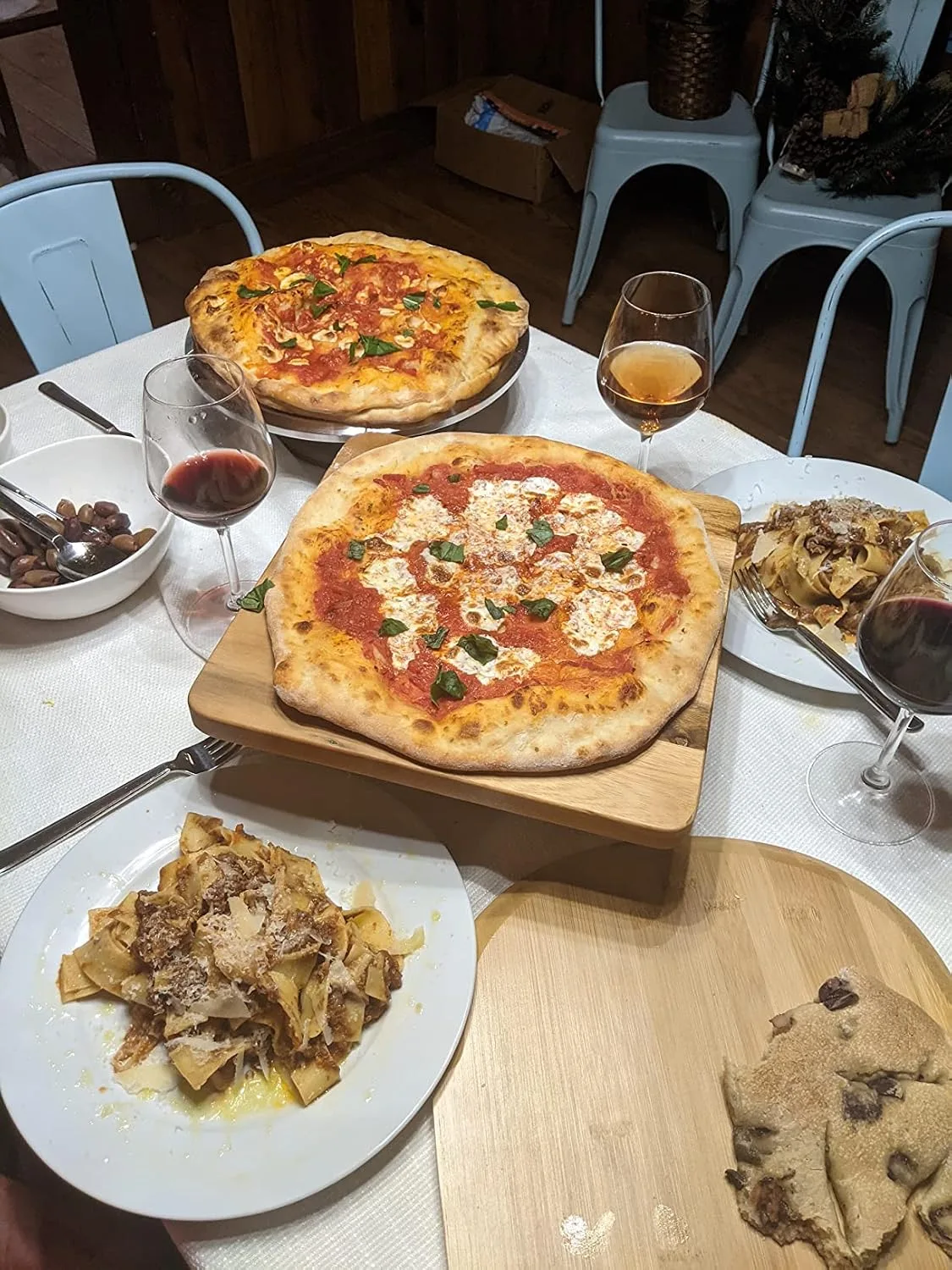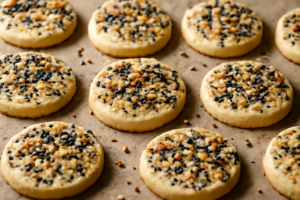
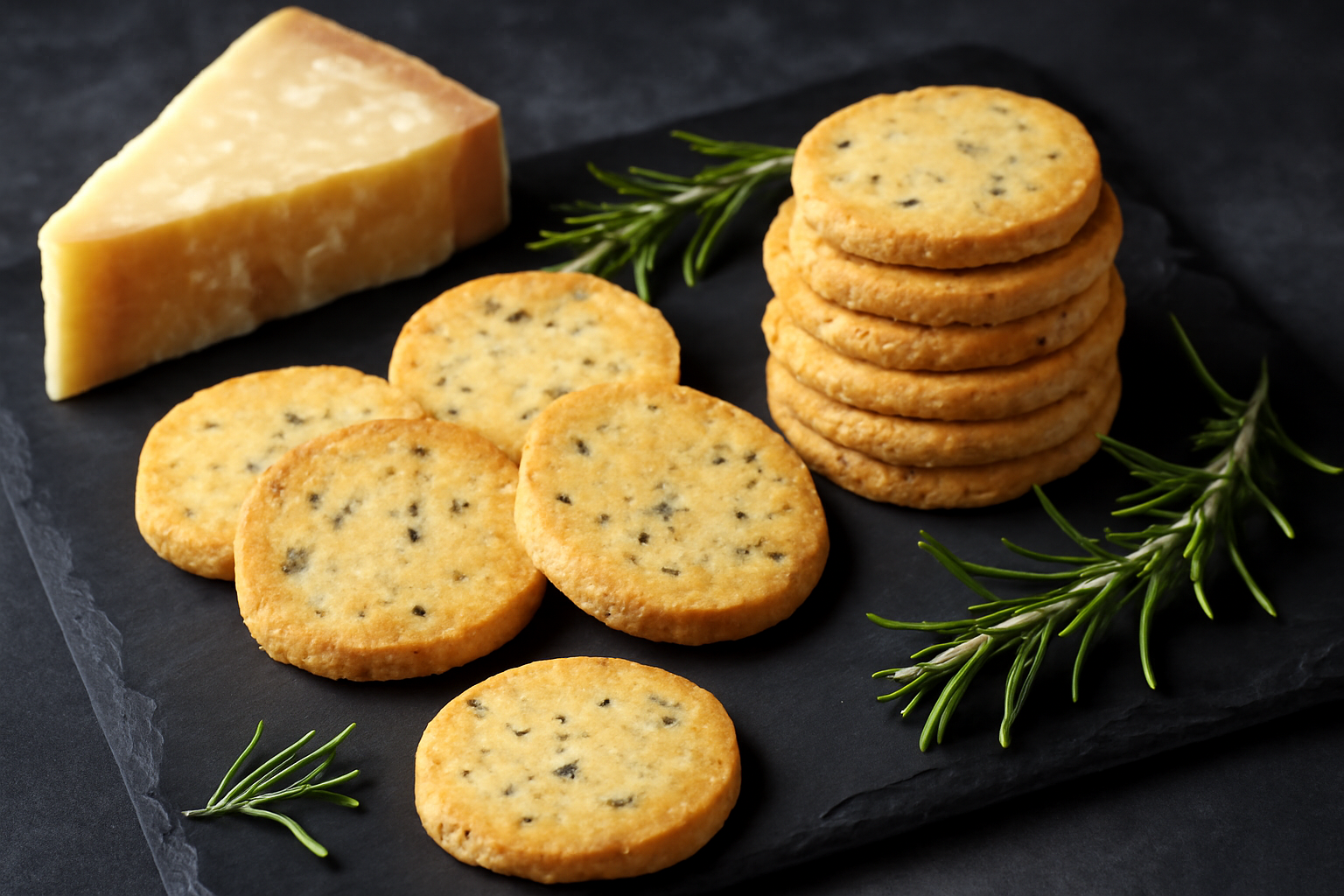
It was Thanksgiving 2019 when I first brought a tin of parmesan shortbread cookies savory recipe veterans would recognize — buttery, crumbly, deeply cheesy rounds — to my sister-in-law’s house in Portland. I set them out next to the usual crudités platter at 4 p.m. By 4:17, the tin was empty. My brother-in-law actually checked behind the cheese board to see if I had hidden more. I had not. That moment cemented something I had quietly suspected after months of tinkering: a great savory shortbread can outperform every other cocktail snack on the table, every single time.
I have been developing cookie recipes for over 15 years, and I will be honest — savory cookies took me by surprise. My instincts are calibrated for brown butter chocolate chip and cardamom snickerdoodles. However, once I started testing savory shortbread seriously, I became a little obsessed. After roughly 60 dedicated test batches of this specific recipe alone, I have nailed down exactly why these work, exactly where bakers go wrong, and exactly which ingredient choices make the difference between good and extraordinary.
This is the recipe I bring to every cocktail party, holiday gathering, and “just dropping by” occasion. It requires no chilling overnight, no special equipment beyond a food processor, and fewer than ten ingredients. What it does require is the right parmesan — and I will get very specific about that shortly. Let’s dig in.
Why Savory Shortbread Works (The Science Behind the Magic)
Traditional sweet shortbread relies on a very high fat-to-flour ratio — typically 1:2 butter to flour by weight — to inhibit gluten development and create that signature sandy, melt-in-your-mouth crumb. Savory shortbread works on exactly the same principle, but it layers in a second fat source: the fat naturally present in aged hard cheese. That additional fat further shortens the gluten strands, producing a texture that is even more delicate than its sweet cousin.
In my recipe, I use 115g (1 stick / 8 tablespoons) of cold unsalted butter to 180g (1½ cups) of all-purpose flour and 100g (about 1 firmly packed cup) of finely grated parmesan. The cheese fat contributes meaningfully to that ratio. As a result, you end up with a cookie that practically dissolves on the tongue before the umami flavor even fully registers — and then it hits you, deep and savory and slightly nutty. That sequence is what makes people reach for a second one before swallowing the first.
The Maillard reaction also plays a starring role here. Aged parmesan contains free amino acids — specifically glutamic acid, which is the backbone of umami — and those amino acids react with the trace sugars in the dough during baking, producing hundreds of flavor compounds. This is why baking temperature matters so much. Too low and you miss the browning. Too high and you scorch the delicate cheese proteins before the interior sets properly.
The Parmesan That Actually Tastes Like Something in a Shortbread
Shortbread lives or dies by its cheese — use the pre-grated stuff and you’ll get a muted, almost plastic flavor; use real Parmigiano Reggiano and suddenly these butter cookies become something people fight over. I learned this the hard way after a batch that tasted like salty cardboard.
What works
- The 24-month age brings out a sharpness that cuts through the butter without needing extra salt — the cookies taste bright and complex, not one-dimensional.
- It grates cleanly and fine enough to distribute evenly throughout the dough without creating gritty pockets or uneven flavor.
- The wedge format lets me grate exactly what I need, so the cheese stays fresh and doesn’t oxidize or dry out like pre-grated versions do after opening.
What doesn’t
- The cost is higher than grabbing a canister of pre-grated from the regular aisle, which stings a little when you’re making cookies that disappear in minutes.
- You need a box grater or microplane on hand — there’s no shortcut here, and I’ve definitely forgotten this step and had to pause mid-recipe.
The Recipe: Parmesan Shortbread for a Crowd
What You’ll Need
- 115g (1 stick / 8 tablespoons) cold unsalted butter, cut into pieces
- 180g (1½ cups) all-purpose flour, lightly spooned and leveled
- 100g (about 1 firmly packed cup) Parmigiano Reggiano, finely grated
- ¼ teaspoon fine sea salt (optional, depending on your cheese saltiness)
- ⅛ teaspoon ground black pepper (optional, for a subtle kick)
Equipment
Food processor, baking sheets, parchment paper, and a box grater or microplane for the cheese.
How I Make Them, Step by Step
- Combine the dry ingredients. Add 180g flour, ¼ teaspoon sea salt, and ⅛ teaspoon black pepper to your food processor. Pulse briefly to combine.
- Work in the butter. Add 115g cold butter pieces to the processor. Pulse until the mixture resembles coarse cornmeal — you want pea-sized flecks of butter visible throughout, not a smooth paste. This takes 10 to 15 one-second pulses. Stop and check frequently; over-processing creates tough cookies.
- Add the cheese. Scatter 100g grated parmesan over the flour-butter mixture and pulse just until the dough comes together in clumps. Don’t overwork it. The dough will be crumbly but should hold together when gently squeezed.
- Press and shape. Tip the dough onto a clean work surface and gently press it together into a compact block. You can bake it free-form (as rustic rounds) or roll it between two sheets of parchment into a ¼-inch slab, then cut into 1½-inch rounds or squares with a knife. No chilling needed — this dough is ready to bake immediately.
- Prepare your pans. Preheat your oven to 350°F (175°C). Line baking sheets with parchment paper. Arrange cookies 1 inch apart on the parchment — they don’t spread much, but you want air circulation.
- Bake. Bake for 12 to 15 minutes, until the edges are pale golden and the cheese is fragrant. The centers should still look slightly underbaked — they’ll crisp up as they cool. If you bake until the whole cookie is golden brown, you’ve gone too far.
- Cool completely. Let the cookies cool on the baking sheet for 5 minutes, then transfer them to a wire rack to cool all the way. They’ll firm up considerably as they cool — this is where the shortbread crunch really develops.
Yield and Storage
This recipe yields approximately 35 to 40 cookies, depending on shape and size. Store them in an airtight container at room temperature for up to 5 days — though in my experience, they never make it past day 2. They freeze beautifully for up to 2 months if you want to bake ahead for a party.
Timing
Prep time: 10 minutes. Baking time: 15 minutes. Total: 25 minutes from start to cooling. This is not a recipe that eats your evening — it’s a recipe that saves your evening.
I second-guessed the investment the first time I saw the price, wondering if it would actually make a difference in something as simple as shortbread — but the moment I tasted these cookies against a batch made with grocery-store Parm, I never looked back. Grab the Frank and Sal Parmigiano Reggiano 24 Month Excellent Top Grade and watch your shortbread reach a completely different level.
This post contains affiliate links. As an Amazon Associate, I earn from qualifying purchases at no extra cost to you.