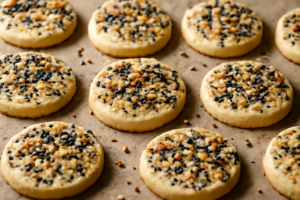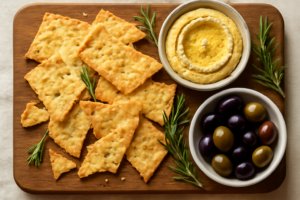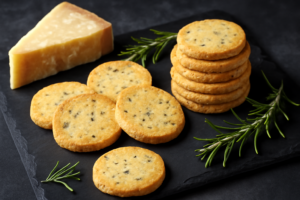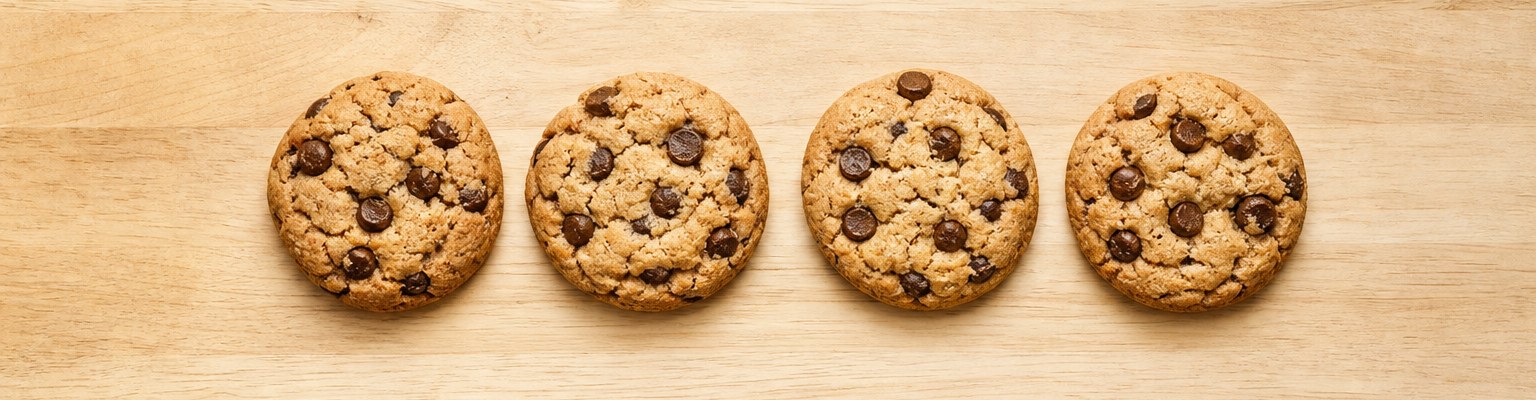
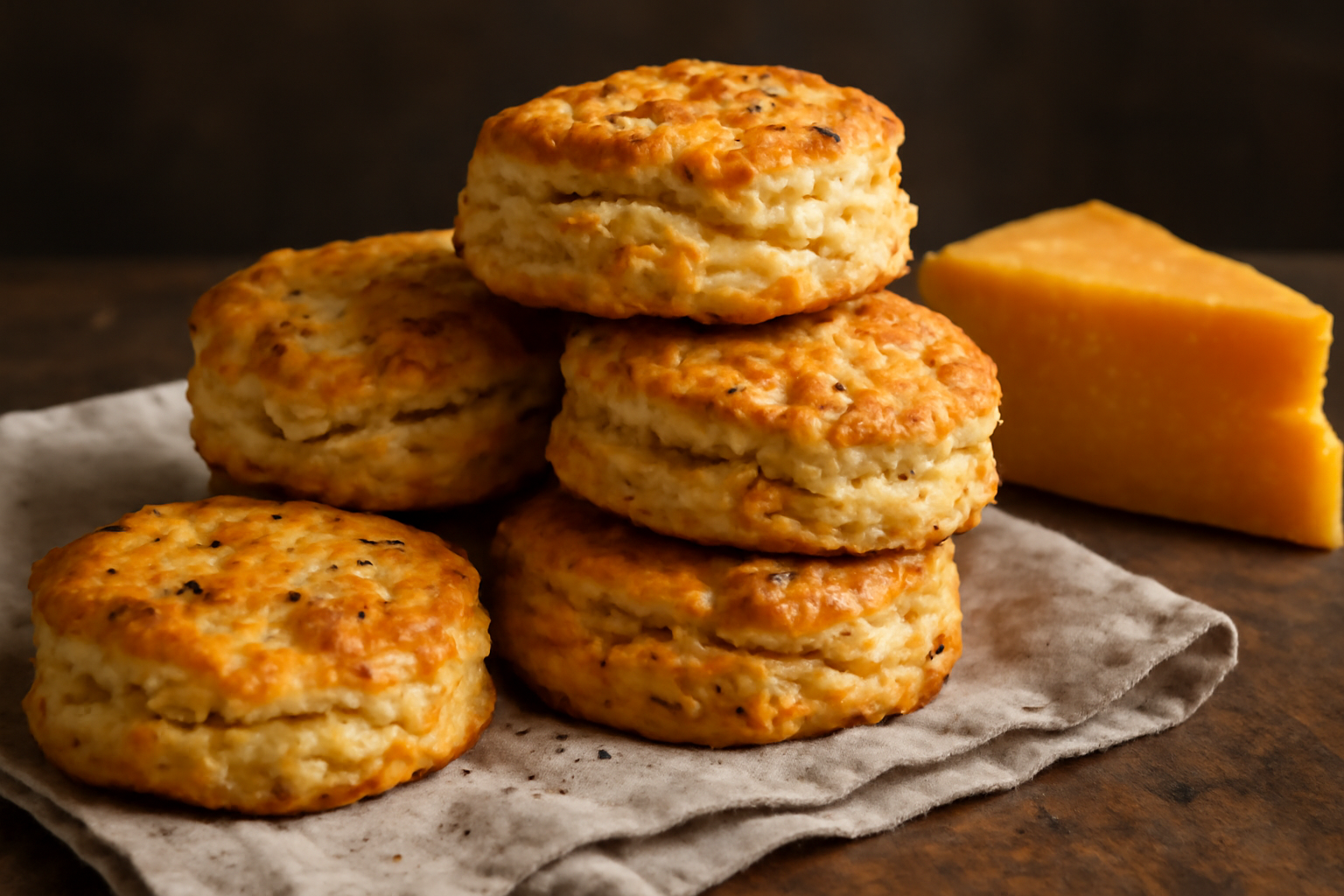

Cheddar Black Pepper Biscuits
Flaky, cheesy biscuits with sharp cheddar tang and bold freshly cracked black pepper heat, topped with a golden Parmigiano Reggiano crust.
Ingredients
- 2 cups (240g) all-purpose flour, plus more for dusting
- 1 tablespoon baking powder
- 1 teaspoon fine sea salt
- 1¾ teaspoons coarsely cracked black pepper, divided
- ½ teaspoon garlic powder
- 6 tablespoons (85g) unsalted butter, frozen and cut into ½-inch cubes
- 1½ cups (170g) sharp aged cheddar, freshly hand-grated
- ¾ cup (180ml) whole buttermilk, very cold
- 2 tablespoons finely grated Parmigiano Reggiano, for topping
- 1 tablespoon cold heavy cream, for brushing
Instructions
- Preheat your oven to 425°F (220°C) and line a baking sheet with parchment paper and place it in the refrigerator to chill while you prepare the dough.
- Whisk together the flour, baking powder, salt, 1½ teaspoons of the cracked pepper, and garlic powder in a large cold bowl.
- Add the frozen butter cubes and using your fingertips, press and smear the butter into flat, irregular pieces roughly the size of a pea or small almond, working quickly to keep the butter cold.
- Toss in the grated cheddar and mix briefly with a fork to distribute throughout the flour-butter mixture.
- Pour in the cold buttermilk all at once and stir with a fork just until the dough comes together, stopping the moment no dry flour remains.
- Turn the dough onto a lightly floured surface and pat it gently into a ¾-inch thick rectangle without using a rolling pin.
- Fold the rectangle in thirds like a letter, then pat back to ¾ inch thick, and repeat this fold once more to create additional layers.
- Cut rounds using a 2½-inch biscuit cutter, pressing straight down without twisting, and re-roll scraps once only.
- Place biscuits on the chilled baking sheet, touching each other slightly.
- Brush tops lightly with cold heavy cream and sprinkle with the remaining ¼ teaspoon cracked pepper and the finely grated Parmigiano Reggiano.
- Bake at 425°F for 13 to 15 minutes, until the tops are deep golden and the Parmesan crust is visibly caramelized.
- Cool on the pan for 5 minutes before serving.
Notes
- Best eaten warm, within 2 hours of baking.
- Reheat at 350°F for 6 minutes if you have leftovers.
- Use coarsely cracked black pepper about the size of a poppy seed for best flavor.
- Hand-grate the cheddar and use a 24-month aged Parmigiano Reggiano for best results.
My husband, David, has never once asked me to make him a chocolate chip cookie. In fifteen years of marriage and thousands of cookies cooling on my kitchen counter, the man consistently reaches past the dessert tray and straight for whatever savory thing I happen to be testing. So when I developed these cheddar black pepper biscuits savory cookies, I honestly expected him to be polite about them. Instead, he ate four in one sitting and asked me to put them on permanent rotation. That reaction told me everything I needed to know.
These biscuits sit somewhere delightfully in between. They have the buttery, layered tenderness of a classic Southern biscuit, but the flavor punch of a savory cracker. Sharp cheddar delivers tang and richness. Freshly cracked black pepper adds heat that builds slowly at the back of the throat. A tiny dusting of finely grated Parmigiano Reggiano on top creates a golden, salty crust as they bake. I have made these exact biscuits at least 47 times, adjusting ratios, fat temperatures, flour protein content, and pepper grind size along the way. What I am sharing today is the version that finally made me stop tweaking.
Whether you call them biscuits or savory cookies depends on your upbringing and your stubbornness. I call them both, depending on the audience. What matters is that they are extraordinary — flaky, cheesy, boldly spiced, and gone within twenty minutes of leaving the oven.
Why Fat Temperature Is Everything in These Cheddar Black Pepper Biscuits Savory Cookies
I learned this the hard way during my first dozen batches. The biscuits were spreading flat, losing their layers entirely and coming out dense and slightly greasy. I blamed the flour. Then I blamed my oven. Finally, on batch 13, I set up a proper experiment: same dough, three different butter temperatures — straight from the freezer, thirty minutes cold from the refrigerator, and softened at room temperature. The results were dramatic and unambiguous. Frozen butter won every single time.
Here is the science behind that result. When you keep butter in small, solid pieces throughout your dough, those chunks create steam pockets as they hit the hot oven. That steam is what produces flaky, distinct layers. Softened or melted butter, however, incorporates fully into the flour, coating the gluten strands and producing a more crumbly, uniform texture — fine for shortbread, catastrophic for biscuits. In my experience, cutting your butter into ½-inch cubes and then freezing them for at least 20 minutes before using makes an enormous difference.
The cheese adds another layer of fat complexity. Sharp cheddar contains significant moisture, which affects gluten development. Specifically, I use aged sharp cheddar — the kind aged at least 12 months — because the lower moisture content means less steam from the cheese itself. That gives me better control over where the steam is actually coming from in the oven. Hand-grating the cheddar rather than buying pre-shredded also matters. Pre-shredded cheese is coated in cellulose, which prevents proper melting and cohesion inside the dough.
The Pepper Ratio That Took Me 23 Batches to Get Right
Batch 23 was genuinely the turning point. Before that, I had been treating black pepper the way most biscuit recipes do — as a background note, a whisper of spice. I was using ½ teaspoon for a recipe that made 12 biscuits, and everyone kept telling me they were good but somehow flat. David, bless him, finally said: “They taste like cheese. Where’s the pepper?”
The answer was more pepper, freshly cracked, at a much coarser grind. I pushed all the way to 1¾ teaspoons of coarsely cracked black pepper in the dough, plus an additional pinch pressed onto the top of each biscuit before baking. That combination creates two distinct flavor moments: pepper warmth distributed throughout the interior, and a sharper, more aromatic pepper hit right on the first bite. The difference is significant and intentional.
Grind size matters enormously here. Fine ground pepper disperses too evenly and gets lost in the fat. Coarse cracked pepper — I use a mortar and pestle for this, not a grinder — creates little pockets of concentrated heat. However, do not go too coarse or you get an unpleasant woody texture. I aim for pieces roughly the size of a poppy seed. That size delivers heat without distraction.
This recipe makes 10 to 12 biscuits, depending on how carefully you re-roll the scraps. They are best eaten warm, within 2 hours of baking. That said, they reheat beautifully at 350°F for 6 minutes if you somehow have leftovers. I rarely do.
The Aged Parmigiano That Finally Gave These Biscuits Their Sharp, Crystalline Bite
Sharp cheddar does the heavy lifting in these biscuits, but I learned the hard way that a truly excellent Parmigiano Reggiano layered underneath transforms them from good to the kind of savory cookie David actually fights me for. Young Parm melts into nothing; you need the 24-month aged stuff with those little flavor crystals intact.
What works
- Those crystalline bits stay visible and crunchy throughout baking instead of disappearing into the dough—they catch your teeth in the best way.
- The nutty, complex flavor doesn’t get lost against the black pepper and cheddar; it adds a savory depth that reads as “fancy” but tastes homemade.
- A little goes a long way, so even though it costs more upfront, one wedge lasts through multiple batches of testing and gifting.
What doesn’t
- It’s genuinely pricey compared to the pre-shredded stuff, and if your household isn’t full of savory-cookie devotees, that wedge will slowly harden in your fridge.
- You do have to grate it yourself, which means one more bowl and one more step when you’re already juggling dough and toppings.
I almost skipped the Parm entirely on my third batch because I was running low and second-guessing whether it really mattered—it absolutely does. Grab the Frank and Sal Parmigiano Reggiano 24 Month Excellent Top Grade and finish these biscuits the way they deserve.
About This Article

Written by Margaret Chen. Margaret Chen is a home baker and recipe developer with over 15 years of experience perfecting cookie recipes through rigorous testing and detailed experimentation. She tests every recipe multiple times, documents every variable, and applies the same rigor professional bakers use, with the warmth and accessibility of home baking. More about this site.
Scope and limits. Margaret is a home baker and recipe developer with no formal culinary training. Follow current food safety guidance for egg handling, storage, and anything you are serving to other people.
Verify this against a primary source
Specifics change, and your situation may differ from the one described here. These are the authorities worth checking directly:
- USDA FoodData Central — ingredient composition and nutrition data
- FoodSafety.gov — safe handling, storage and egg safety