
Why Homemade Beats Store-Bought
Making chocolate sandwich cookies at home transforms a simple snack into something extraordinary. You control every ingredient that goes into your cookies. Store-bought versions contain preservatives and artificial flavors that you can easily avoid. Additionally, the satisfaction of biting into a cookie you made yourself cannot be matched.
The process requires attention to detail, but the results justify your effort. Your kitchen will fill with the aroma of fresh-baked chocolate cookies. Furthermore, you can adjust sweetness levels to match your preferences perfectly.
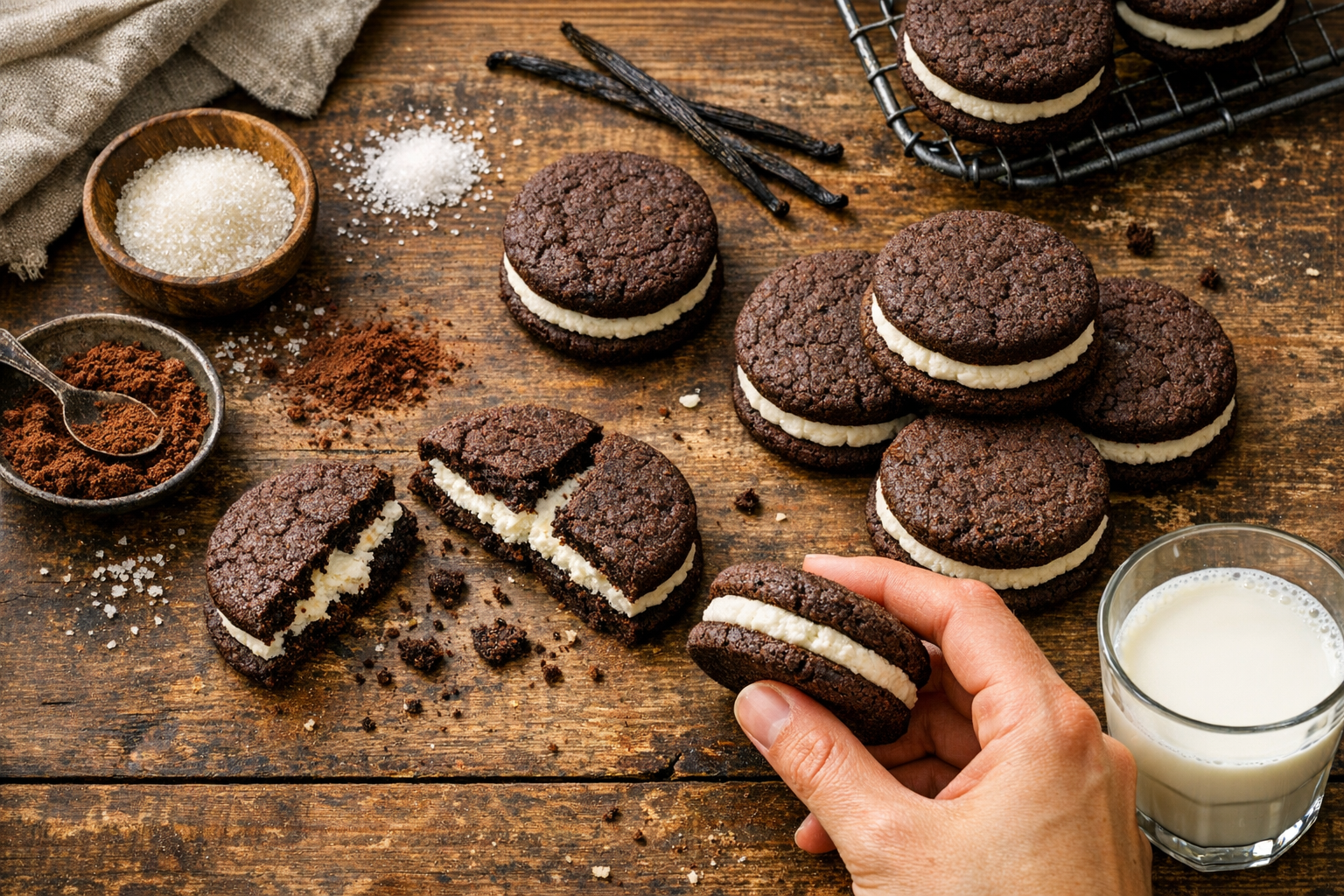
Understanding the Science Behind Perfect Cookies
Chemistry plays a crucial role in creating the ideal cookie texture. Baking soda affects both color and pH levels in your dough. The alkaline environment created by baking soda deepens the chocolate color significantly. Moreover, it helps achieve that characteristic snap when you bite into the cookie.
The right balance of ingredients determines whether your cookies turn out crispy or cakey. Too much baking soda creates an overly alkaline taste. Conversely, too little results in pale, soft cookies that lack structure. You need to measure precisely to hit the sweet spot.
The Role of Fat in Cookie Structure
Butter provides flavor, but it also affects texture dramatically. The water content in butter creates steam during baking. This steam helps cookies spread and develop their characteristic thin profile. However, butter alone cannot create the perfect texture.
Combining fats produces superior results in both cookies and filling. The filling requires a specific melting point to achieve the right consistency. Coconut oil melts at approximately 76°F, which makes it perfect for cream fillings. Therefore, your filling will soften slightly at room temperature while maintaining structure.
Essential Ingredients for Chocolate Cookies
Gathering quality ingredients sets the foundation for success. Dutch-processed cocoa powder delivers intense chocolate flavor and deep color. All-purpose flour provides the structure your cookies need. Granulated sugar sweetens while helping cookies spread during baking.
When you’re ready to create your own chocolate sandwich cookies at home, having the right tools and ingredients makes all the difference in achieving bakery-quality results. Starting with high-quality Cocoa Powder Dutch processed cocoa will give your cookies that deep, rich chocolate flavor and dark color that makes them so visually appealing and delicious. Once your cookies come out of the oven, you’ll want to transfer them immediately to 2PCS Cooling Racks so air can circulate around them evenly, preventing soggy bottoms and ensuring the perfect crisp texture throughout. Precision is absolutely essential in baking, which is why investing in an Amazon Basics Digital kitchen scale helps you measure ingredients accurately for consistent results every single time you bake. For mixing your cookie dough and cream filling efficiently without tiring out your arm, a reliable Kitchen Stand Mixer,3.2Qt takes the hard work out of combining ingredients until they reach the perfect consistency. To create uniformly sized cookies that bake evenly and look professionally made, a set of HOMURE Cookie Scoop tools ensures each portion of dough is exactly the same size for consistent baking times. Before you begin mixing your dry ingredients, using a Flour Sifter, Stainless steel model removes lumps from your cocoa powder and flour, resulting in a smoother, more evenly textured dough. The cream filling benefits tremendously from adding Nielsen-Massey Single Serve pure vanilla extract, which provides an authentic, complex vanilla flavor that complements the chocolate cookies beautifully. For a dairy-free alternative or to add subtle tropical notes to your filling, incorporating pack organic refined coconut oil creates a smooth, creamy texture that holds up well at room temperature. If you want to get creative with shapes beyond traditional rounds, a set of Pieces Round Cookie cutters in graduated sizes lets you experiment with different dimensions and even create sandwich cookies of varying scales. Finally, lining your baking sheets with pack silicone baking mats ensures easy cookie removal, eliminates the need for parchment paper, and provides an eco-friendly reusable solution that will serve you through countless batches of homemade treats.
Baking soda acts as your leavening agent and pH modifier. Salt enhances all the other flavors in your dough. Butter adds richness and helps bind ingredients together. Finally, eggs provide moisture and help everything come together into a cohesive dough.
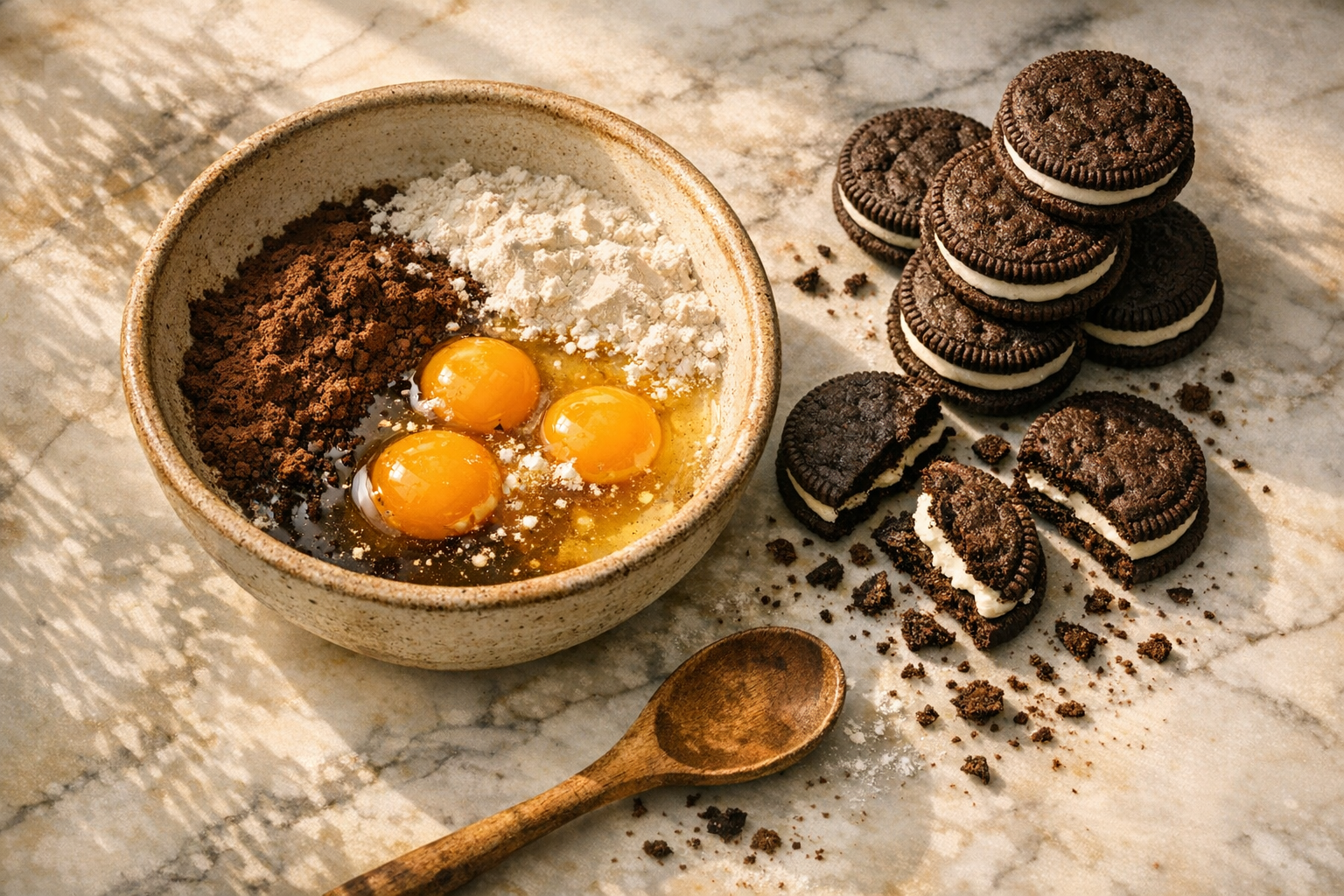
Choosing the Right Cocoa Powder
Dutch-processed cocoa differs significantly from natural cocoa powder. The Dutch process neutralizes cocoa’s natural acidity through alkaline treatment. This process creates a smoother, less bitter flavor profile. Additionally, it produces a darker, more appealing color in your finished cookies.
Natural cocoa powder works in many recipes, but not this one. The recipe already contains baking soda, which needs acidity to activate properly. Dutch-processed cocoa’s neutral pH works better with the extra baking soda. Consequently, you achieve better texture and color simultaneously.
Creating the Perfect Vanilla Cream Filling
The filling distinguishes homemade cookies from ordinary chocolate wafers. Powdered sugar forms the base of your cream filling. Shortening provides structure and prevents the filling from becoming greasy. Vanilla extract adds essential flavor that complements the chocolate perfectly.
Coconut oil serves a specific scientific purpose in the filling. Its melting point creates the ideal texture at room temperature. The filling remains firm enough to hold its shape. Nevertheless, it softens slightly when you bite into it, creating pleasant mouthfeel.
Why Traditional Buttercream Won’t Work
Buttercream frosting seems like an obvious choice for filling. However, butter’s low melting point creates problems in sandwich cookies. Butter begins softening around 68°F, which means your filling becomes too soft. The cookies would slide apart at room temperature.
Shortening stays solid at higher temperatures than butter does. Mixing shortening with coconut oil creates the perfect balance. You get stability from the shortening and smooth texture from the coconut oil. Furthermore, this combination mimics the mouthfeel of commercial cookie fillings.
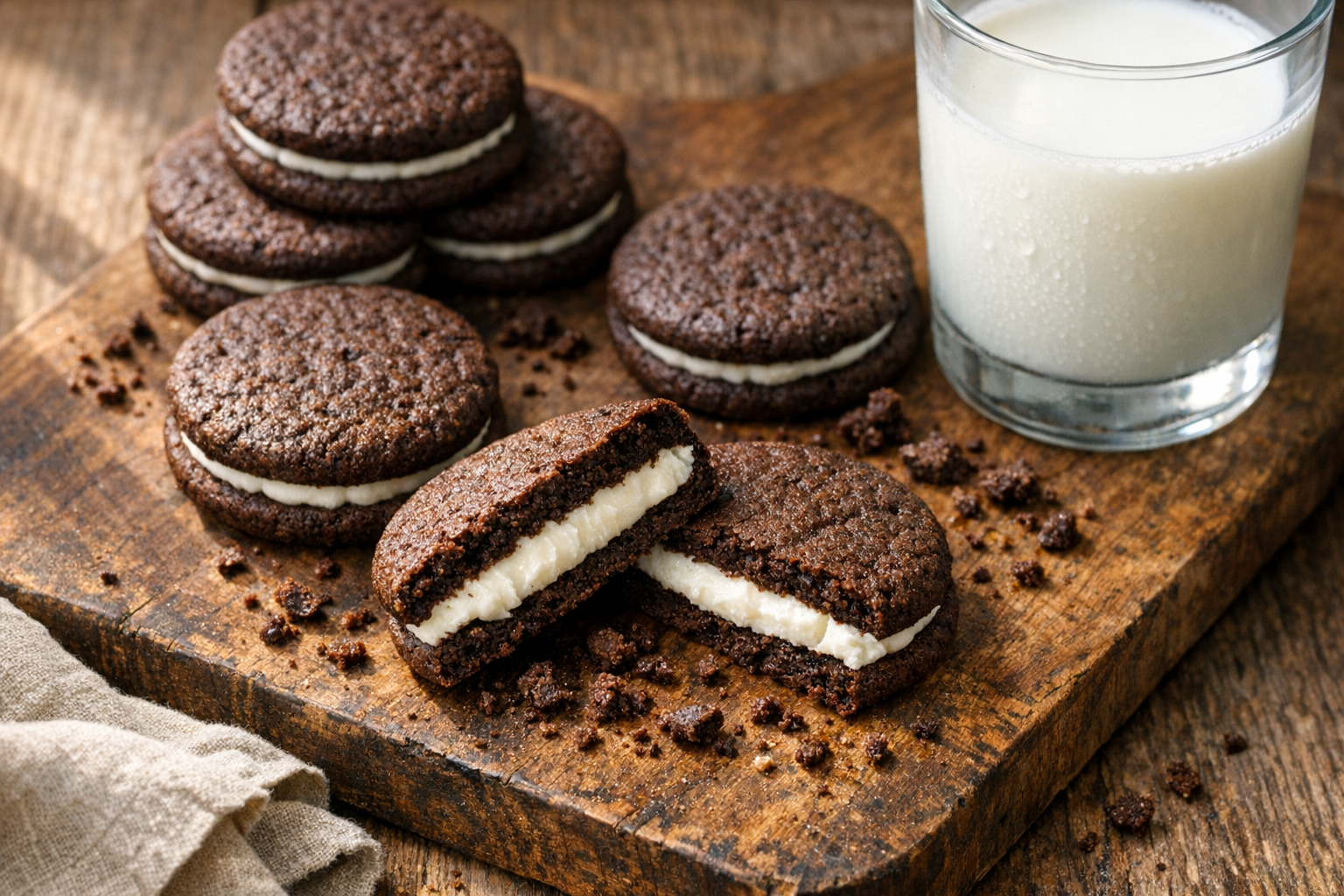
Complete Recipe: Chocolate Sandwich Cookies
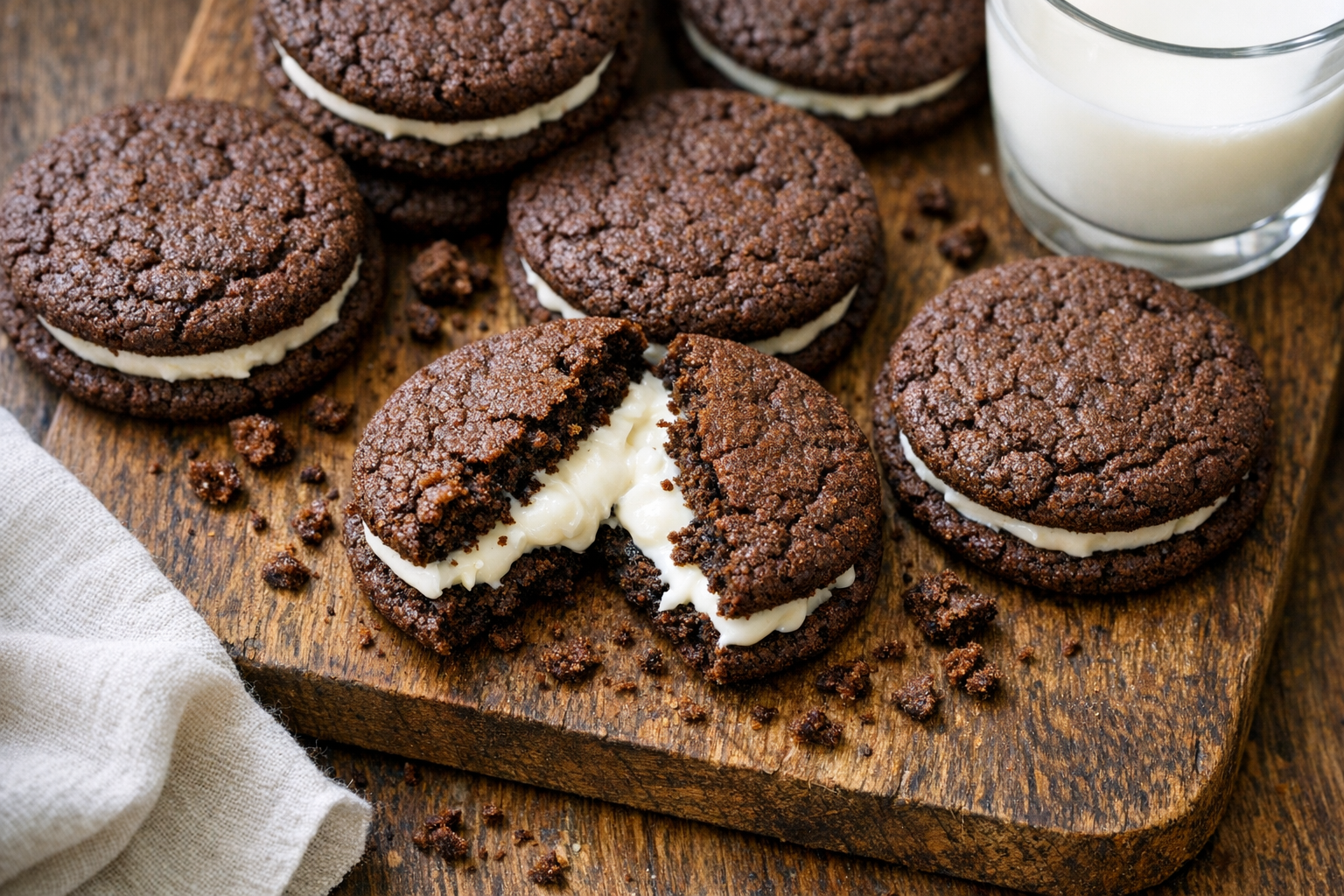
Chocolate Cookie Wafers
Ingredients:
- 1¼ cups (156g) all-purpose flour
- ½ cup (43g) Dutch-processed cocoa powder
- 1 teaspoon baking soda
- ½ teaspoon salt
- ½ cup (113g) unsalted butter, softened
- 1 cup (200g) granulated sugar
- 1 large egg
- 1 teaspoon vanilla extract
Instructions:
- Preheat your oven to 325°F and line two baking sheets with parchment paper.
- Whisk together flour, cocoa powder, baking soda, and salt in a medium bowl.
- Beat butter and sugar in a large bowl until light and fluffy, approximately 3 minutes.
- Add egg and vanilla extract to the butter mixture and beat until fully combined.
- Gradually mix in the dry ingredients until a cohesive dough forms.
- Roll dough into 1-inch balls and place them 2 inches apart on prepared baking sheets.
- Flatten each ball slightly with the bottom of a glass to create uniform thickness.
- Bake for 12-14 minutes until cookies are set and edges look dry.
- Cool cookies on the baking sheet for 5 minutes before transferring to a wire rack.
- Allow cookies to cool completely before filling, at least 30 minutes.
Vanilla Cream Filling
Ingredients:
- ½ cup (95g) vegetable shortening
- 2 tablespoons refined coconut oil, melted
- 2 cups (240g) powdered sugar
- 2 teaspoons vanilla extract
- 1-2 tablespoons milk or cream
Instructions:
- Beat shortening and melted coconut oil together until smooth and creamy.
- Gradually add powdered sugar, beating on low speed to prevent clouds of sugar.
- Add vanilla extract and 1 tablespoon of milk to the mixture.
- Increase speed to medium-high and beat for 2-3 minutes until light and fluffy.
- Add additional milk if needed to achieve a spreadable but firm consistency.
- Transfer filling to a piping bag or plastic bag with the corner snipped off.
- Pipe approximately 1 tablespoon of filling onto the flat side of half the cookies.
- Top with remaining cookies, flat side down, and press gently to spread filling to edges.
- Store assembled cookies in an airtight container at room temperature for up to one week.
Achieving Uniform Cookie Size
Consistency matters when creating sandwich cookies that look professional. Weighing your dough balls ensures every cookie bakes identically. Each ball should weigh approximately 15 grams for standard-sized cookies. This precision creates cookies that match perfectly when sandwiched together.
A cookie scoop simplifies the portioning process significantly. Choose a scoop that holds about one tablespoon of dough. Level scoops create uniform portions without the need for weighing. Subsequently, your cookies will bake evenly and look professionally made.
The Importance of Flattening
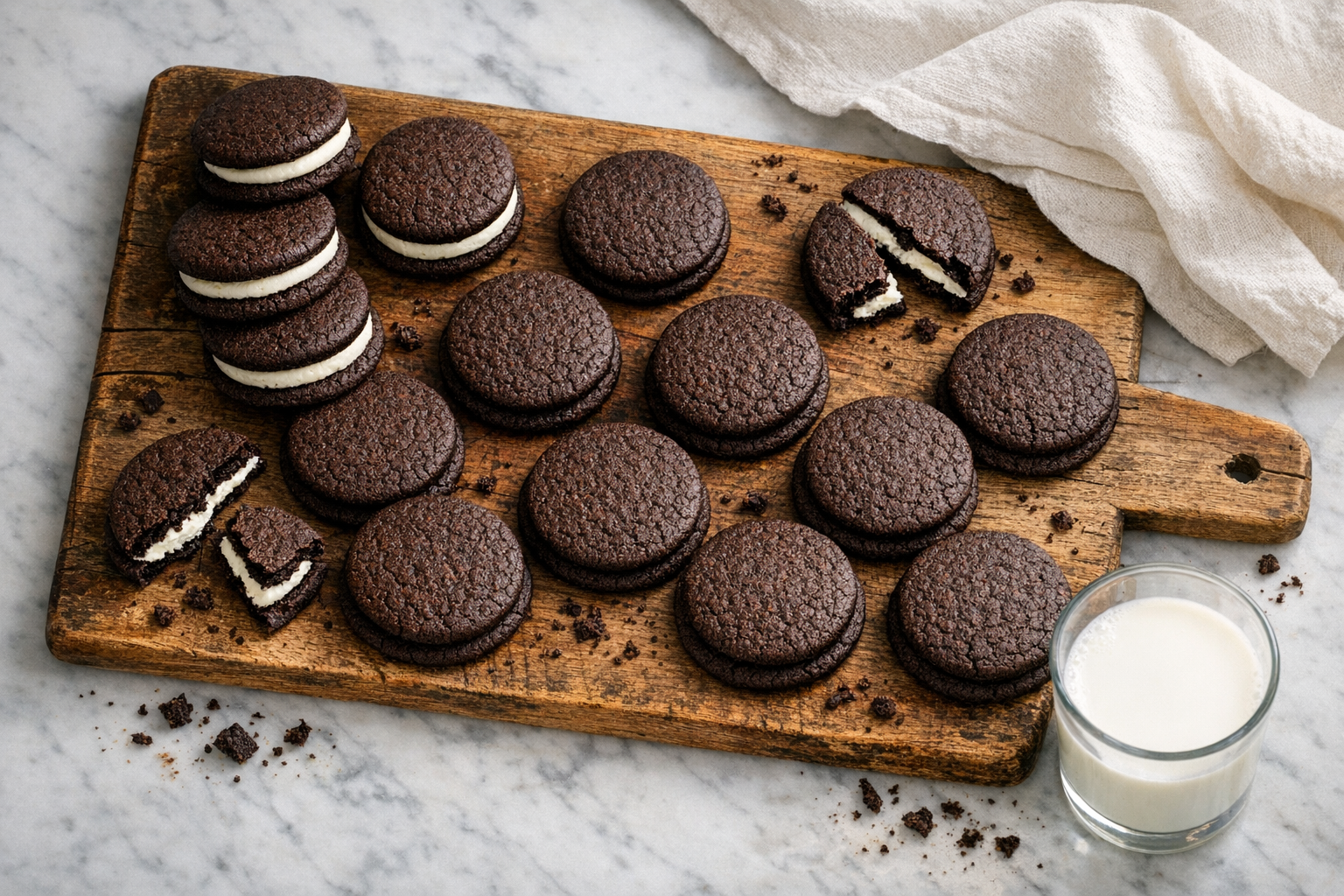
Chocolate cookie dough does not spread much during baking. The high cocoa content and baking soda create a dough that holds its shape. Therefore, you must flatten each dough ball before baking. Press down gently with a flat-bottomed glass or measuring cup.
Aim for cookies that are approximately ¼ inch thick after flattening. This thickness bakes through completely while maintaining a crisp texture. Thicker cookies remain soft in the center. Meanwhile, thinner cookies may burn around the edges before the centers set.
Troubleshooting Common Cookie Problems
Understanding Dough Temperature Issues
Excessive cookie spreading during baking reveals a fundamental problem with your dough’s temperature. When cookies flatten out too much, they lose their intended texture. Furthermore, they often become thin and crispy rather than soft and chewy. The culprit is almost always dough that entered the oven too warm.
Heat causes the butter in your dough to melt rapidly. As a result, the cookies spread before the structure sets. Therefore, proper chilling becomes essential for maintaining the perfect shape. Additionally, warm dough can cause your creme filling to leak or melt prematurely during baking.
The 30-Minute Chill Solution
Refrigerating your dough for at least 30 minutes solves most spreading problems. However, some bakers prefer chilling for up to two hours. Moreover, overnight refrigeration can actually improve flavor development. The cold temperature solidifies the fats in your dough. Consequently, the cookies hold their shape better when exposed to oven heat.
For instance, professional bakeries often chill cookie dough overnight as standard practice. Meanwhile, home bakers can achieve similar results with proper planning. Consider portioning your dough into balls before chilling. This approach saves time later and ensures even baking.
Butter Consistency Matters
The initial butter temperature dramatically affects your final results. Room temperature butter is crucial, but many bakers misunderstand this term. In contrast to truly soft butter, proper room temperature butter maintains structural integrity. It should feel cool to the touch, around 65-67°F.
Additionally, butter that’s too soft incorporates excessive air during mixing. This creates a loose, warm dough from the start. Therefore, test your butter before beginning. Press it gently with your finger. It should indent slightly but not lose its shape completely. Furthermore, it shouldn’t feel greasy or appear shiny on the surface.
Cookies that remain soft after cooling need longer baking time. Add 2-3 minutes to your baking time for crispier results. However, watch carefully to prevent burning. The cookies should look dry and set around the edges.
Fixing Filling Issues
Troubleshooting Overly Soft Cookie Fillings
When your cream filling turns into a melting mess, coconut oil is usually the culprit. This ingredient has an exceptionally low melting point of around 76°F. Therefore, it liquefies quickly in warm environments. Your cookies will ooze and separate if the filling contains excessive amounts.
Making the Essential Fat Adjustment
The solution requires a simple mathematical swap in your recipe. Reduce your coconut oil quantity by 50%. For example, if your recipe calls for one cup of coconut oil, decrease it to half a cup. Meanwhile, increase your shortening by the same amount you removed. This means adding an extra half cup of shortening to compensate.
Why This Formula Works
Shortening possesses a significantly higher melting point than coconut oil. Consequently, it remains solid at room temperature and even in moderately warm conditions. The reformulated filling achieves better structural stability throughout the day. Additionally, shortening provides a neutral flavor that won’t overpower your cookie’s taste profile.
Temperature Performance Benefits
This adjustment transforms how your cookies behave during storage and serving. Furthermore, they’ll maintain their shape during transportation to picnics or parties. The filling stays creamy yet firm between the cookie layers. As a result, you’ll avoid the disappointing experience of cookies sliding apart. Moreover, your treats will look professionally made with clean, defined edges.
Filling that tastes greasy needs more powdered sugar. Add sugar gradually, one tablespoon at a time, until the texture improves. The extra sugar absorbs excess fat and creates better structure. Moreover, it enhances sweetness without making the filling cloying.
Storage and Make-Ahead Tips
Mastering Room Temperature Storage
Proper storage ensures your creme filled cookie shells remain crisp. First, allow the baked cookies to cool completely on a rack. However, rushing this step causes unwanted condensation. Moisture will quickly turn a crunchy cookie soggy. Therefore, patience during the cooling process is vital for texture.
Once cooled, transfer the shells to an airtight container. For example, rigid plastic or glass containers work best. These vessels protect delicate edges from breaking or crumbling. Additionally, keep the container in a cool, dark spot. A pantry shelf is usually the ideal location. Avoid areas with high heat or fluctuating humidity. Consequently, the stove and dishwasher are poor storage neighbors.
Freezing for Long-Term Freshness
Freezing extends the shelf life of your baked goods significantly. Moreover, this method allows for stress-free party preparation. You can bake large batches weeks in advance. Nevertheless, proper layering is crucial for success.
Follow these steps for the best results:
- Use Parchment: Cut small squares of wax or parchment paper.
- Layer Carefully: Place paper between every single cookie.
- Seal Tightly: Remove as much air as possible.
This barrier prevents the cookies from sticking together firmly. As a result, you can remove just a few at a time. Furthermore, the paper protects the surface design from damage. Thaw the shells on the counter before filling. Finally, pipe your creme filling only after they reach room temperature.
Assembled sandwich cookies maintain quality for about one week. The filling gradually softens the cookies, which some people prefer. Store assembled cookies in a single layer when possible. Stacking can cause the filling to squeeze out from pressure.
Freezing for Future Enjoyment
Preparing dough ahead of time transforms your baking routine. Consequently, you can enjoy fresh crème-filled cookies whenever a craving strikes. This strategy is perfect for unexpected guests or late-night snacks. Furthermore, freezing actually improves the final texture of the cookie. The cold dough prevents the crème center from melting too quickly. As a result, you achieve a thick, soft cookie with a perfectly hidden filling.
Mastering the Flash Freeze
Proper preparation ensures your cookies remain distinct and beautiful. You cannot simply throw soft dough into a bag immediately. Instead, follow a specific process to preserve their shape.
- Line a baking sheet with parchment paper or a silicone mat.
- Scoop the dough into individual balls using a cookie scoop.
- Space them out so they do not touch one another.
- Place the sheet flat in the freezer for at least one hour.
Eventually, the outer layer becomes rock hard. This “flash freezing” step is absolutely critical. Therefore, do not skip it, or you will end up with a giant dough lump.
Storage and Baking Tips
Once the balls are solid, transfer them to a heavy-duty freezer bag. Squeeze out as much air as possible before sealing the zipper. Additionally, label the bag with the date and baking temperature. This simple habit prevents confusion later on. generally, these dough balls will stay fresh for up to three months.
When you are ready to eat, preheat your oven as usual. Place the frozen dough balls on a baking sheet. However, do not wait for them to thaw on the counter. Bake them directly from their frozen state. Because the dough is ice-cold, it requires slightly more time in the oven. Typically, adding just 2 to 3 minutes is sufficient. Finally, let them cool completely to set the crème center.
You can also freeze assembled cookies successfully. Wrap individual cookies in plastic wrap, then place them in a freezer bag. Thaw at room temperature for about 30 minutes before serving. The texture remains remarkably close to freshly made cookies.
Customization Ideas
Elevating Flavor Profiles
Customizing your crème filling transforms a standard recipe into something extraordinary. Therefore, you should not limit yourself to plain vanilla. Instead, explore the vast world of flavoring options available today. This simple adjustment allows you to match specific themes or seasons effortlessly. For example, a simple drop of extract changes the entire personality of the cookie.
Peppermint extract offers a cool, refreshing bite. Consequently, it is the perfect choice for winter holiday baking. It pairs exceptionally well with dark chocolate wafers. On the other hand, almond extract provides a nutty, sophisticated profile. Furthermore, it mimics the taste of marzipan. This flavor elevates the dessert, making it feel more elegant and complex.
Managing Extract Potency
However, you must exercise caution with potency. Most flavoring extracts are significantly stronger than standard vanilla. As a result, they can easily overpower the sugar and fat in your filling. If you are not careful, the taste can become bitter or medicinal.
To avoid this, follow a simple ratio rule. Start with half the amount called for in the recipe. For instance, if a recipe requires one teaspoon of vanilla, use only half a teaspoon of almond. You can always add more later. Therefore, taste your filling frequently as you mix. This step ensures the flavor remains balanced and delicious.
Creative Flavor Pairings
Beyond the classics, there are endless combinations to try. Additionally, you can match the filling color to the flavor for visual appeal. Consider these exciting options for your next batch:
- Citrus Zest: Use lemon or orange extract for a bright, summery twist. These pair perfectly with golden vanilla cookies.
- Coffee Shop: Add espresso extract to create a mocha-style treat. Moreover, this appeals to adult palates.
- Berry Burst: Strawberry or raspberry extracts add sweetness and a fun pink hue.
- Tropical Vibes: Coconut extract creates a vacation-inspired flavor profile.
Finally, remember that baking is an experiment. Consequently, do not be afraid to mix and match. Your unique creation might become a new family favorite.
Add food coloring to your filling for festive occasions. Gel food coloring works better than liquid because it does not thin the filling. A few drops create vibrant colors for holidays and celebrations. Furthermore, you can divide the filling and create multiple colors.
Flavor Variations for Adventurous Bakers
Replace two tablespoons of flour with instant espresso powder for mocha cookies. The coffee enhances chocolate flavor without making cookies taste like coffee. Additionally, espresso adds depth and complexity to the overall taste profile.
Mix mini chocolate chips into your filling for extra chocolate intensity. Fold in ¼ cup of mini chips after beating the filling. The chips add texture and visual interest. Similarly, crushed cookies or sprinkles create fun variations that kids love.
The History Behind Cream-Filled Cookies
The Dawn of Industrial Snacking
The turn of the 20th century marked a sweet revolution in food history. Specifically, 1908 saw the debut of Hydrox cookies by Sunshine Biscuits. Soon after, the National Biscuit Company launched the famous Oreo in 1912. Consequently, a legendary rivalry began between these two manufacturing giants. Before this era, cookies were mostly homemade or bakery-bought items with short shelf lives. However, industrialization changed everything for American snack lovers. Suddenly, consistent and affordable treats were available at nearly every corner store.
Creating the perfect sandwich cookie required serious engineering innovations. Engineers needed machines that could deposit filling precisely on fragile wafers. Additionally, the chocolate disks had to remain crisp against the moist cream. Therefore, food scientists tweaked recipes for maximum shelf stability. They utilized vegetable shortenings to keep the filling firm at room temperature. As a result, these cookies could travel long distances without melting or spoiling. This innovation truly democratized access to high-quality desserts across the nation.
Texture, Taste, and Tradition
The enduring appeal of these cookies lies in their contrasting textures. You get a satisfying, dark chocolate crunch followed by smooth vanilla sweetness. Moreover, the bitter cocoa flavor balances the sugary center perfectly. This combination creates a sensory experience that simple cookies cannot match. Furthermore, the structural integrity of the sandwich allows for unique eating rituals.
Fans often debate the best method to consume these treats:
- The Twister: Carefully separating the halves to lick the cream first.
- The Dunker: Submerging the cookie in cold milk until soft.
- The Biter: Eating the sandwich whole for maximum crunch.
Ultimately, this interactive nature makes the snack timeless. It transforms a simple dessert into a playful activity. For many, the creme-filled cookie represents a nostalgic connection to childhood. Consequently, brands continue to experiment with new flavors while protecting the original recipe. Source
The industrial version set the standard that home bakers now try to recreate. Understanding the original helps you appreciate the engineering behind these simple treats. Every element serves a specific purpose in creating the perfect eating experience.
Final Tips for Success
Measure your ingredients accurately using a kitchen scale when possible. Weight measurements eliminate variables that affect cookie texture. Spooning flour into measuring cups can result in too much flour. This excess creates dry, crumbly cookies that lack appeal.
Do not skip the cooling time before filling your cookies. Warm cookies will melt the filling and create a mess. Patience ensures your filling maintains its shape and texture. Finally, enjoy the process and take pride in your homemade creation.
These chocolate sandwich cookies prove that homemade treats surpass commercial versions. You control quality, flavor, and ingredients completely. Moreover, the satisfaction of creating something from scratch makes every bite taste better. Your friends and family will request these cookies repeatedly once they taste the difference.
When you’re ready to create your own chocolate sandwich cookies at home, having the right tools and ingredients makes all the difference in achieving bakery-quality results. Starting with high-quality Cocoa Powder Dutch processed cocoa will give your cookies that deep, rich chocolate flavor and dark color that makes them so visually appealing and delicious. Once your cookies come out of the oven, you’ll want to transfer them immediately to 2PCS Cooling Racks so air can circulate around them evenly, preventing soggy bottoms and ensuring the perfect crisp texture throughout. Precision is absolutely essential in baking, which is why investing in an Amazon Basics Digital kitchen scale helps you measure ingredients accurately for consistent results every single time you bake. For mixing your cookie dough and cream filling efficiently without tiring out your arm, a reliable Kitchen Stand Mixer,3.2Qt takes the hard work out of combining ingredients until they reach the perfect consistency. To create uniformly sized cookies that bake evenly and look professionally made, a set of HOMURE Cookie Scoop tools ensures each portion of dough is exactly the same size for consistent baking times. Before you begin mixing your dry ingredients, using a Flour Sifter, Stainless steel model removes lumps from your cocoa powder and flour, resulting in a smoother, more evenly textured dough. The cream filling benefits tremendously from adding Nielsen-Massey Single Serve pure vanilla extract, which provides an authentic, complex vanilla flavor that complements the chocolate cookies beautifully. For a dairy-free alternative or to add subtle tropical notes to your filling, incorporating pack organic refined coconut oil creates a smooth, creamy texture that holds up well at room temperature. If you want to get creative with shapes beyond traditional rounds, a set of Pieces Round Cookie cutters in graduated sizes lets you experiment with different dimensions and even create sandwich cookies of varying scales. Finally, lining your baking sheets with pack silicone baking mats ensures easy cookie removal, eliminates the need for parchment paper, and provides an eco-friendly reusable solution that will serve you through countless batches of homemade treats.
*As an Amazon Associate, I earn from qualifying purchases.