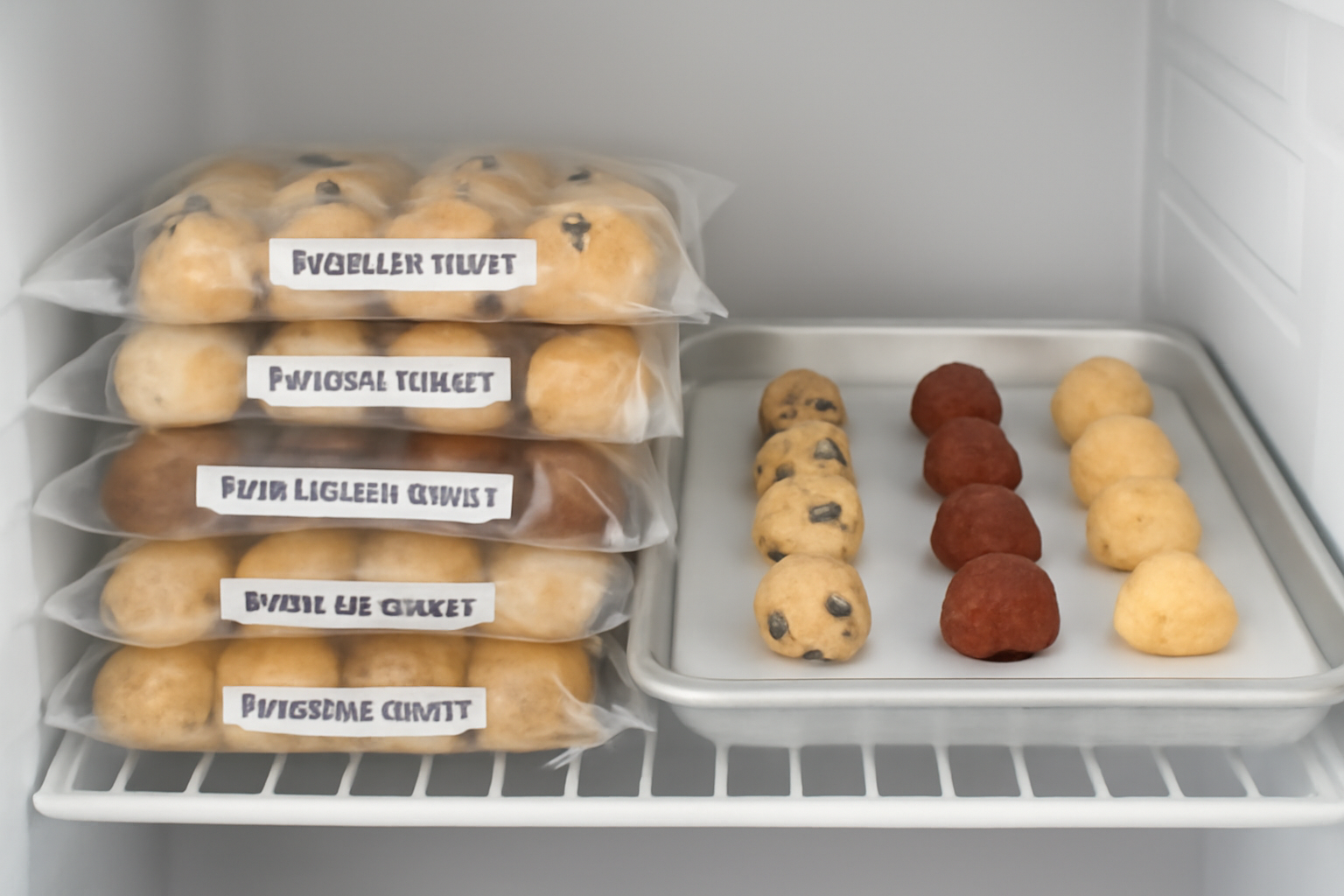

It was the Wednesday before Thanksgiving 2019 when I finally cracked the code on freezing cookie dough properly for fresh cookies on demand. My sister had called in a panic — she needed three dozen cookies for her office party the next morning. I walked to my freezer, pulled out a bag of pre-portioned chocolate chip dough I’d made two weeks earlier, and had warm, golden cookies on a rack within 18 minutes. She was stunned. Honestly, so was I — because it had taken me nearly 40 failed batches to get the system right. That moment convinced me this technique was worth documenting obsessively.
Here’s the thing most baking blogs won’t tell you: freezing cookie dough isn’t just about convenience. Done correctly, it can actually improve your cookies. The extended cold rest allows gluten to relax fully and gives enzymes time to break down starches into simpler sugars — the same science behind why refrigerating dough for 72 hours produces better flavor. However, done carelessly, you end up with freezer-burned dough, cookies that spread into puddles, or centers so dense they could anchor a boat. I’ve made every one of those mistakes. Let me save you the frustration.
Why Freezing Cookie Dough Properly Gives You Better Fresh Cookies
Let’s start with the science, because understanding why this works will help you troubleshoot when things go sideways. When you mix cookie dough, a few important processes begin immediately. Gluten develops as flour proteins hydrate. Sugar starts dissolving into the fat and moisture. Leavening agents — baking soda or baking powder — begin a slow reaction with acidic ingredients. Freezing essentially pauses all of this chemistry at its peak.
In my experience, dough frozen within two hours of mixing retains the optimal chemical balance. The butter stays solid and uniformly distributed throughout the dough. As a result, when it hits a hot oven later, that butter melts slowly and creates steam pockets — giving you lift, chew, and those gorgeous crispy edges. Dough frozen too late, after sitting out for hours, has already begun emulsification breakdown. The cookies will spread too fast and bake flat.
Specifically, I’ve found that doughs with higher brown sugar ratios freeze exceptionally well. Brown sugar is hygroscopic — it holds onto moisture — which means the dough resists drying out during freezer storage better than doughs made primarily with white sugar. My go-to ratio for freezer-friendly dough is 60% brown sugar to 40% white sugar in a standard 2¼-cup flour recipe. That small adjustment made a noticeable difference starting around batch 23 of my testing.
How to Portion and Freeze Cookie Dough the Right Way
Portioning before freezing is non-negotiable in my kitchen. I tried freezing full logs and full bowls of dough early on — and I learned this the hard way. Slicing a frozen log unevenly meant some cookies baked through perfectly while others were still raw in the center at the same oven temperature. Portioning individual balls before freezing solves the problem entirely by standardizing thickness and weight.
I use a #40 cookie scoop (about 1.5 tablespoons) for standard cookies and a #20 scoop (about 3 tablespoons) for larger bakery-style ones. Scoop directly onto a parchment-lined baking sheet in a single layer. Don’t skip the flash freeze — place the entire sheet uncovered in the freezer for exactly 90 minutes. That 90-minute window is the sweet spot I found after testing 15-minute increments. Shorter, and the balls stick together in the bag. Longer, and the surface begins to dry.
Once flash-frozen, transfer the balls into freezer-safe zip-lock bags, pressing out as much air as possible. I double-bag anything I plan to store longer than three weeks. Label every bag with the date, the dough type, and the bake temperature. That last detail sounds overly cautious, but at 2 a.m. trying to remember whether those are snickerdoodles or brown butter shortbreads — you’ll thank yourself. Properly stored, most cookie doughs keep beautifully for up to three months.
Which Doughs Freeze Best (And Which to Avoid)
- Excellent freezers: Chocolate chip, oatmeal raisin, snickerdoodle, sugar cookies, shortbread, peanut butter
- Good with care: Brown butter cookies (slightly more fragile emulsion), double chocolate, white chocolate macadamia
- Not worth the effort: Meringue-based cookies, cookies with fresh fruit folded in, anything with a cream cheese swirl
The Baking Process: Going From Frozen Dough to Fresh Cookies in 15 Minutes
Here is where most tutorials fall apart — they tell you to thaw the dough first. After testing both methods across 30+ side-by-side batches, I bake directly from frozen every single time. Thawing reactivates surface moisture unevenly and causes unpredictable spreading. Baking from frozen gives you more control, and honestly, the results are more consistent.
Preheat your oven to 375°F for standard chocolate chip cookies — 25°F higher than you’d bake fresh dough. That temperature bump compensates for the frozen core and drives the Maillard reaction on the surface while the inside catches up. For thicker, bakery-style cookies with a #20 scoop, I go to 350°F and add 3 to 4 extra minutes. The higher initial heat of 375°F would overbrown the edges before the center sets at that size.
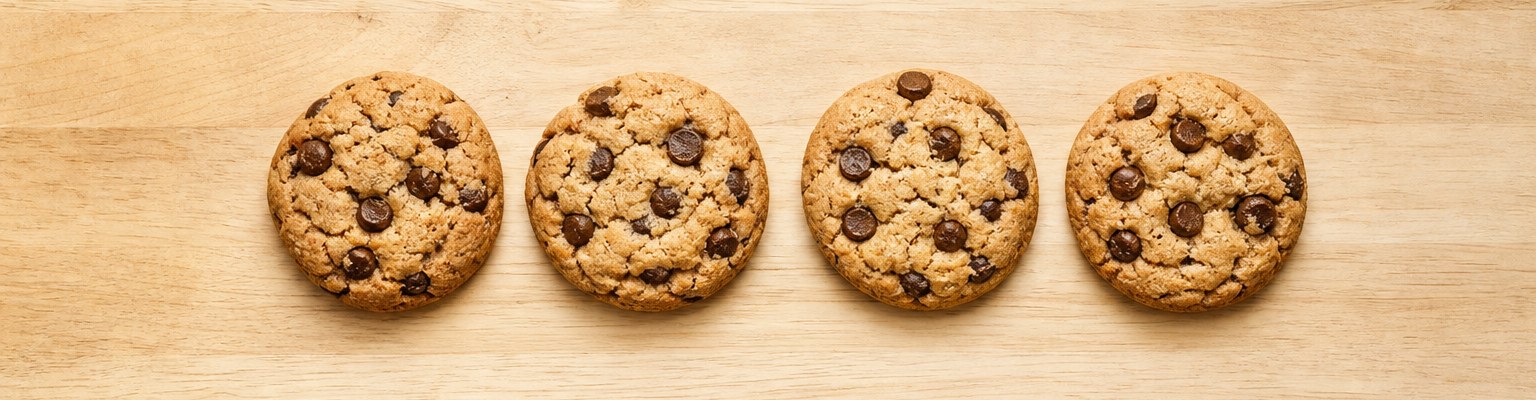
Timing from frozen runs 13 to 16 minutes depending on your oven and cookie size. Pull them when the edges are set and golden but the center still looks slightly underdone — they’ll finish cooking on the hot pan for another 4 minutes. That carryover cooking is essential. I set a timer for exactly 4 minutes and resist touching them. The result? Cookies with crispy edges, chewy centers, and that just-baked smell that makes everyone wander into the kitchen.
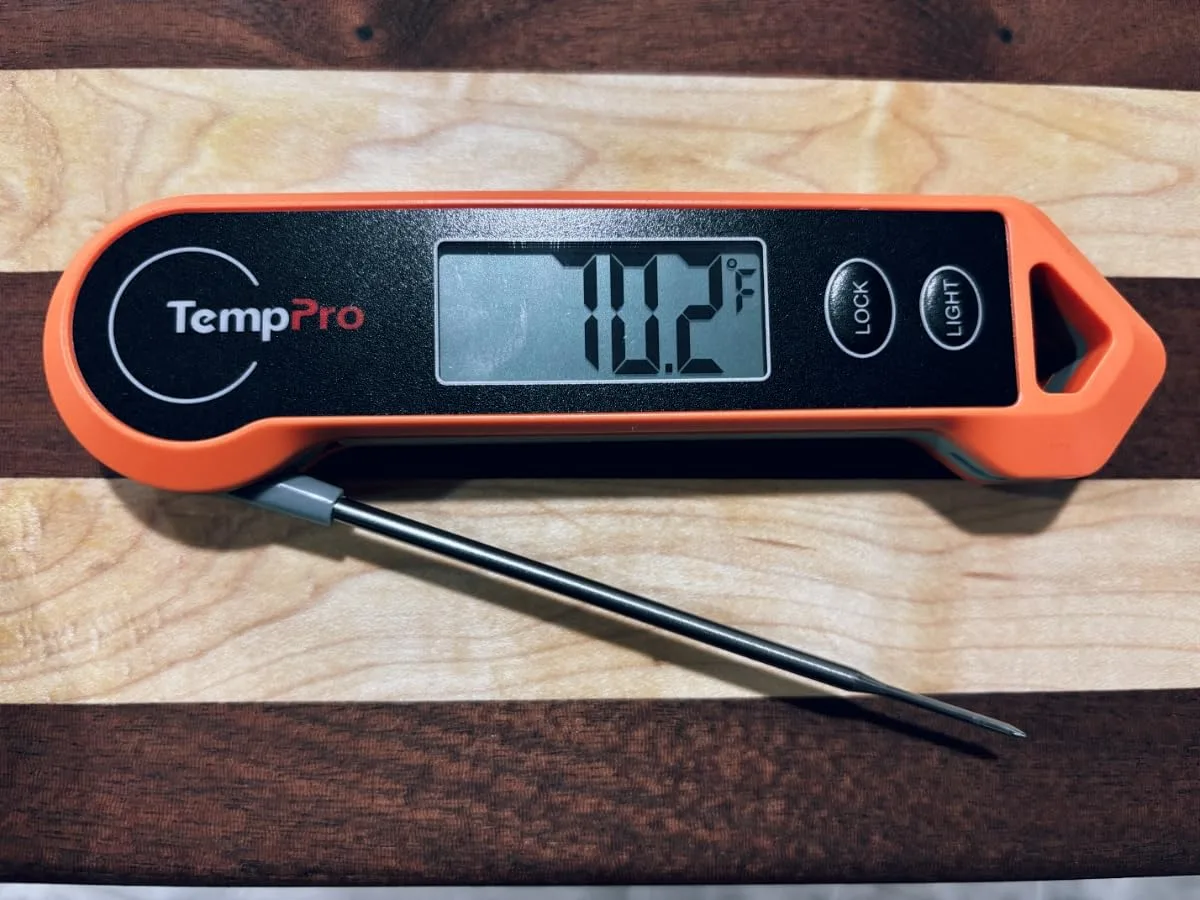
The Thermometer That Stopped Me From Baking Frozen Dough Straight from the Freezer
When you’re pulling dough straight from the freezer and baking on a deadline, it’s tempting to just pop it in the oven and hope the internal temperature catches up. But underproofed or unevenly baked frozen dough is how you end up with dense centers and burnt edges — and no time to fix it.
What works
- The probe is thin and fast enough that I can check the internal dough temperature without leaving a huge hole or waiting forever for a reading.
- I can actually verify when a frozen dough ball has warmed to a bakeable state, instead of just guessing based on how it looks or feels to the touch.
- The digital display is bright and easy to read, even when I’m standing in front of a hot oven with my eyes squinting.
What doesn’t
- It’s overkill for bakers who are content to thaw dough on the counter or don’t mind a slightly longer bake time — there’s nothing wrong with that approach.
- At this price point, it’s another small tool to find drawer space for, and I’ll admit I sometimes still bake frozen dough by feel when I’m in a real rush.
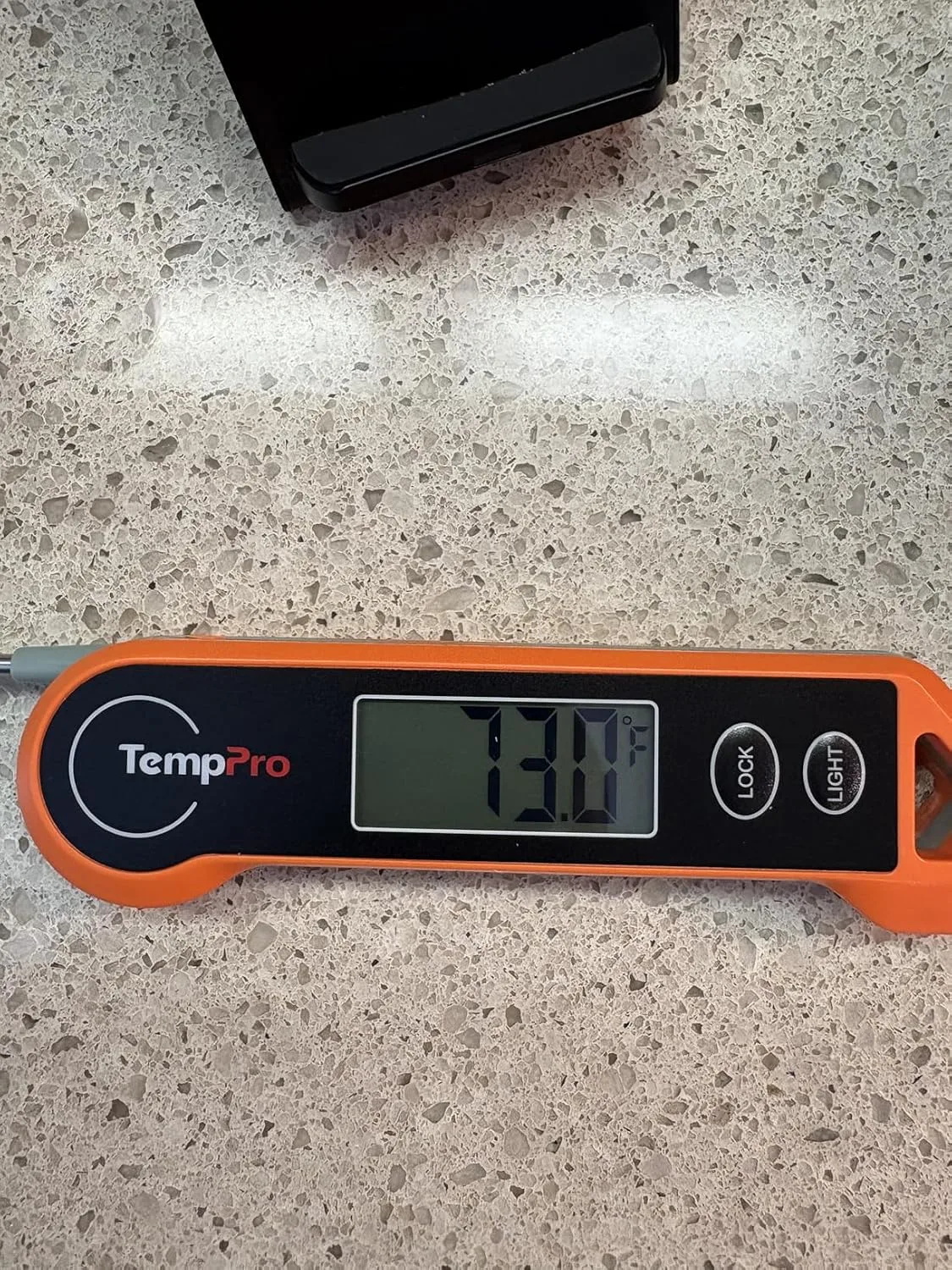
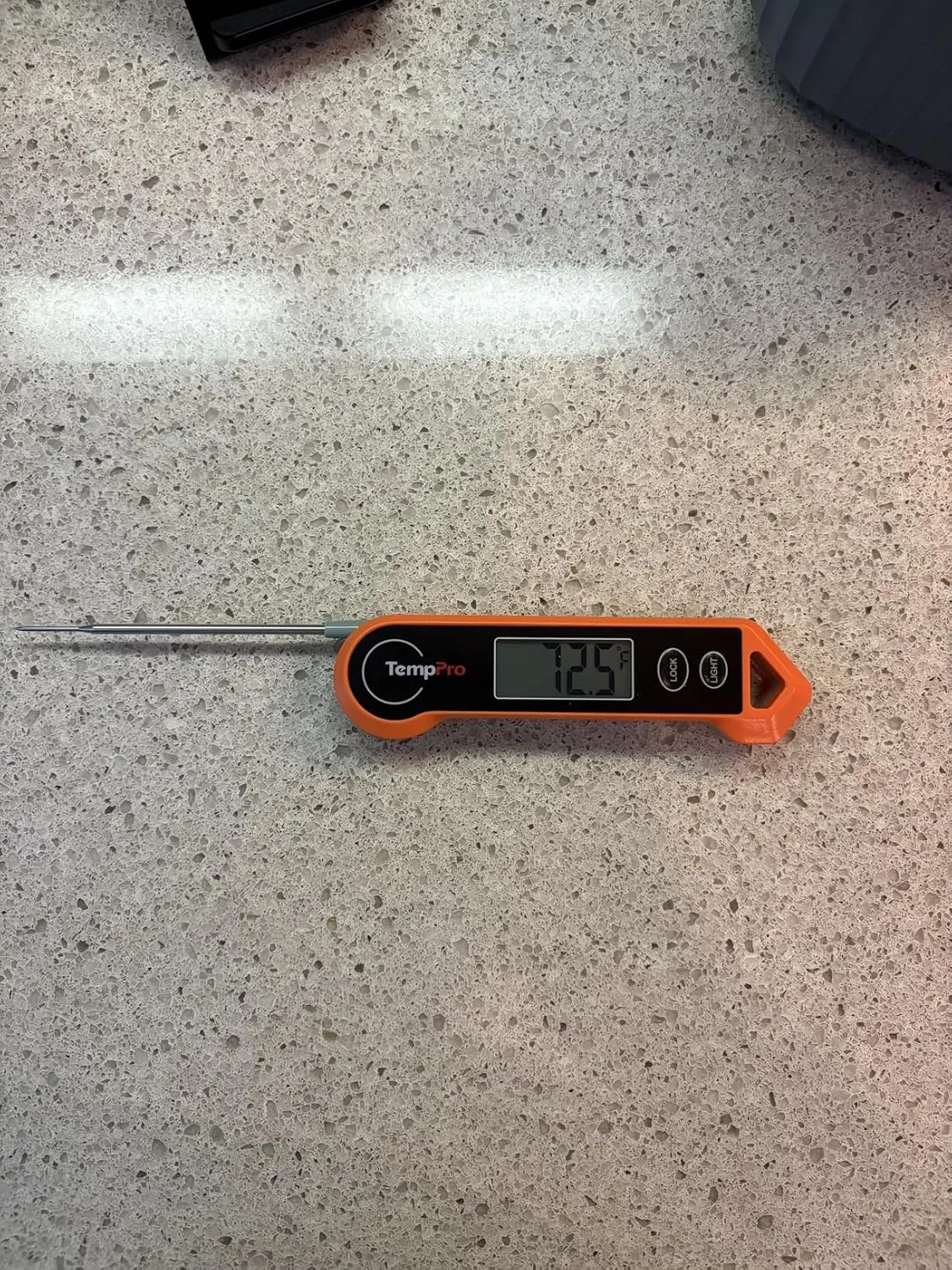
I was skeptical that I actually needed this until I pulled a batch early because I thought they were done, only to slice into a cookie and find a cold, doughy center — that’s when I knew I needed to take the guessing out of the equation. Grab the TempPro TP19H Digital Instant Read Thermometer and stop wasting frozen dough on failed batches.
About This Article

Written by Margaret Chen. Margaret Chen is a home baker and recipe developer with over 15 years of experience perfecting cookie recipes through rigorous testing and detailed experimentation. She tests every recipe multiple times, documents every variable, and applies the same rigor professional bakers use, with the warmth and accessibility of home baking. More about this site.
Scope and limits. Margaret is a home baker and recipe developer with no formal culinary training. Follow current food safety guidance for egg handling, storage, and anything you are serving to other people.
Verify this against a primary source
Specifics change, and your situation may differ from the one described here. These are the authorities worth checking directly:
- USDA FoodData Central — ingredient composition and nutrition data
- FoodSafety.gov — safe handling, storage and egg safety