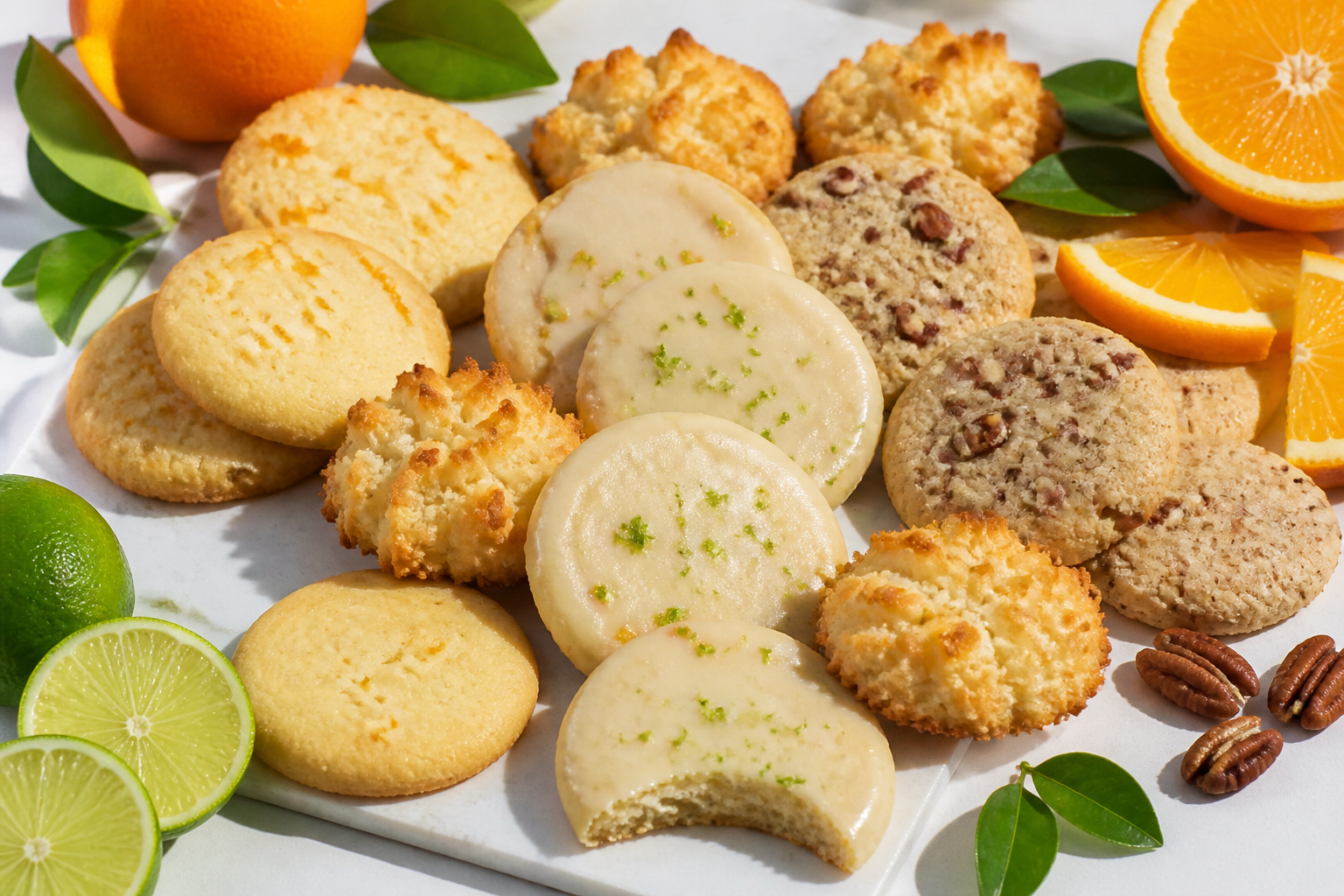

When people think of American regional cookies, they often picture New England’s molasses snaps or the chocolate chip dynasties of the Midwest. But after spending three years traveling through Florida’s kitchens—from the Panhandle’s pecan groves to Miami’s vibrant Cuban neighborhoods—I’ve discovered that Florida cookie recipes represent some of the most exciting, underrated baking traditions in the entire country.
Florida baking is different. It’s tropical. It’s influenced by centuries of Spanish, Cuban, and Caribbean immigration. It celebrates ingredients that simply don’t grow anywhere else in America: key limes that pack a pucker and a floral complexity no Persian lime can match, Valencia oranges that seem to capture actual sunshine, and coconuts that arrived on boats and took root in sandy soil.
My own journey into Florida cookie recipes began almost by accident. I was visiting my friend Lucia in Tampa, and her abuela—a woman who had hand-rolled Cuban pastries for sixty years—handed me a polvorone (a powdered shortbread cookie dusted with cinnamon sugar) still warm from the oven. That single bite shifted something in my baking perspective. It reminded me that American cookie culture isn’t monolithic. Every region, every community, every state has its own sacred recipes passed down through generations.
In this post, I’m digging into a question that came out of that afternoon in Lucia’s kitchen: are holiday cookies actually regional in America, or does everyone’s cookie plate look basically the same? I’ll walk through two Florida cookie recipes that convinced me the answer is a firm yes—along with the stories, techniques, and cultural traditions behind them.
Florida’s Signature Ingredients in Cookie Baking
Before diving into specific cookie recipes Florida bakers have perfected, let’s talk about what makes these cookies authentically Floridian. The ingredient list reads like a postcard from South Beach.
Key Lime: This isn’t just a pie ingredient. Key limes—smaller, more aromatic, and more acidic than Persian limes—are fundamental to USA Southern regional cookies that come from the Keys and surrounding areas. The juice is bright and almost perfumy. The zest is where magic happens.
Florida Valencia Oranges: These aren’t those sad supermarket oranges. Florida’s Valencia oranges are sweeter, juicier, and have a more delicate flavor than navels. They’re perfect for cookies because they don’t overpower other flavors.
Coconut: Whether you’re using freshly grated, toasted, or sweetened shredded varieties, coconut appears in almost every homemade Florida cookie recipes tradition. It ties back to Florida’s Caribbean connections and grows abundantly throughout the state.
Pecans: Florida grows exceptional pecans, particularly in the northern regions. They bring a buttery richness that complements tropical ingredients beautifully.
Macadamia Nuts: While often associated with Hawaii, macadamia nuts thrive in Florida and feature in sophisticated cookie recipes, especially those with tropical fruits.
Guava: This is where Cuban and Caribbean influences shine brightest in Florida cookie recipes. Guava paste (pasta de guayaba) appears in traditional pastries adapted into cookie form.
Vanilla: What many people don’t know is that Florida actually has vanilla orchid farms. While most of America’s vanilla extract comes from Madagascar, using Florida-sourced vanilla in cookies adds a subtle, local pride to your baking.
Florida Orange Cardamom Cookies
This is where USA Southern regional cookies meet spice-route sophistication. Florida’s Valencia oranges are naturally sweeter than most American citrus, and when paired with warm cardamom, they create something truly special. The pairing isn’t my invention, either—orange and cardamom have real roots in Scandinavian baking, where cardamom’s own citrusy, floral undertones are used specifically because they echo and amplify orange rather than compete with it. It’s a nice reminder that even a “Florida” cookie is really a cookie made of ingredients and ideas that traveled a very long way to end up here.
I developed this recipe after visiting Alico, Inc.’s orange groves in Hendry County. Standing among thousands of fruit-heavy trees, I realized that Florida’s citrus deserves to be celebrated beyond juice and pie. These cookies are soft, slightly cakey, and studded with fresh orange zest that practically glows.
Ingredients:
- 2 1/4 cups all-purpose flour
- 1 teaspoon baking powder
- 1/2 teaspoon baking soda
- 1/2 teaspoon kosher salt
- 1 1/2 teaspoons ground cardamom
- 3/4 cup unsalted butter, softened
- 1 cup granulated sugar
- 1 egg
- 2 tablespoons fresh Florida orange juice
- 2 tablespoons fresh Florida orange zest
- 1 teaspoon vanilla extract
- Coarse sugar for topping (optional)
Instructions:
1. Whisk together flour, baking powder, baking soda, salt, and cardamom. 2. Cream butter and sugar until light and fluffy (about 3 minutes). 3. Add egg, orange juice, orange zest, and vanilla. Mix until combined. 4. Gradually add flour mixture, stirring until just combined. 5. Chill dough for 30 minutes. 6. Preheat oven to 350°F. Drop dough by rounded tablespoon onto parchment-lined baking sheets, spacing 2 inches apart. 7. If using coarse sugar, sprinkle lightly over each cookie before baking. 8. Bake for 11-13 minutes, until edges are light golden but centers still look slightly underbaked. 9. Cool on baking sheet for 5 minutes, then transfer to a wire rack.
Yield: About 24 cookies | These have a wonderfully tender, almost muffin-like crumb that makes them perfect for afternoon tea.
Cuban-Inspired Polvorones (Florida’s Cuban Community)
In South Florida, particularly in Miami’s Wynwood and Little Havana neighborhoods, polvorones are cultural ambassadors. These delicate, powdered shortbread cookies appear at celebrations, funerals, holidays, and quiet Tuesday mornings. They’re more than just cookies—they’re edible memory.
The word “polvoron” comes from “polvo” (powder), referring to the characteristic cinnamon-sugar coating that makes these cookies so distinctive. While polvorones originated in Spain (particularly Andalusia), Cuban and Puerto Rican bakers adapted them, and now they’re woven into the identity of Florida cookie recipes.
I want to approach this respectfully. Polvorones represent generations of Cuban-American baking tradition, particularly among immigrant families who brought these recipes during the waves of Cuban migration to Florida. When we bake Cuban cookies, we’re participating in cultural preservation and honoring the families who have shared these traditions. Part of what makes a good polvoron a good polvoron, technically speaking, is a high ratio of butter to flour—that’s what gives it the “melt the second it hits your tongue” texture, rather than the snap of a standard shortbread.
Ingredients:
- 1 cup (2 sticks) unsalted butter, softened
- 1/2 cup granulated sugar
- 1 egg yolk
- 1 teaspoon vanilla extract
- 2 cups all-purpose flour
- 1/4 teaspoon kosher salt
- 1/4 cup granulated sugar (for coating)
- 1 tablespoon ground cinnamon (for coating)
Instructions:
1. Cream butter and sugar until light and fluffy. 2. Add egg yolk and vanilla, mixing until combined. 3. Whisk together flour and salt, then gradually add to butter mixture. 4. Chill dough for 1 hour. 5. Preheat oven to 350°F. 6. Roll dough into 1-inch balls and place on parchment-lined baking sheets. 7. Bake for 12-14 minutes, until pale and set but not browned. 8. While still warm, roll cookies in a mixture of sugar and cinnamon until fully coated. 9. Cool on a wire rack. These are best served fresh, still carrying warmth and the slight fragrance of cinnamon.
Are Holiday Cookies Regional in America?
This is a question I get asked constantly while traveling and baking my way through American kitchens: are Santa’s favorite Christmas cookies regional?
The answer is absolutely yes—and it’s one of the most delightful aspects of American baking culture.
In Florida, holiday cookie plates look decidedly different from those in Minnesota or Texas. A traditional Florida holiday spread might feature Cuban polvorones sitting right alongside orange cardamom cookies—a pairing of Andalusian tradition and Scandinavian spice technique that only makes sense because of who ended up living next to whom in South Florida. These reflect the state’s immigrant communities, its climate, and its available ingredients.
Meanwhile, in the Midwest, you’ll find spritz cookies and anise-flavored treats. In the South, pecan pie cookies dominate. In the Northeast, molasses and gingerbread reign supreme. These aren’t coincidences—they’re the result of centuries of regional food traditions, immigration patterns, and what grows in each climate.
Florida’s cookie recipes Florida bakers make for the holidays are influenced by its Cuban, Puerto Rican, Dominican, and other Caribbean communities. Walk through Miami during December, and you’ll find bakeries selling torrijas (another Spanish-influenced cookie), besitos de coco (coconut kisses), and other treats that reflect the region’s cultural heritage.
To answer the question directly: if Santa were visiting houses all across America, his cookie plate in Florida would look completely different than his plate in Pennsylvania or New Mexico. And honestly? That’s exactly as it should be. Regional cookie traditions are part of what makes American baking so rich and diverse.
Tips for Baking With Florida Citrus
The orange cardamom cookies above depend entirely on getting the citrus right, so here are my hard-won lessons from years of baking with key limes and Florida oranges.
Fresh vs. Bottled Citrus Juice: Fresh is always preferable for its aromatic qualities and brightness. Bottled juice works in a pinch, but avoid brands with added preservatives or sweeteners. If you can’t find fresh Florida oranges or key limes locally, check farmers’ markets or order them online—they’re worth the effort for the flavor difference.
Zesting Technique: The most flavorful part of any citrus is the zest—that’s where all the aromatic oils live. Use a microplane zester (not a box grater, which pulls too much pith). Only zest the colored outer layer; the white pith underneath is bitter. If you’re making multiple recipes, zest your fruit before juicing it, as it’s much harder to zest a juiced fruit.
Juice Selection: Press your citrus firmly before cutting, or microwave whole citrus for 15 seconds to release more juice. For key limes especially, room temperature fruit yields more juice than cold fruit. One medium key lime yields about 1/2 tablespoon of juice—they’re small, so expect to need several.
Humidity Considerations: Florida’s humidity is famously high, and it affects cookie texture significantly. Cookies with a delicate crumb, like the orange cardamom cookies above, can become slightly less crisp in humid environments. If you’re baking in summer or in high humidity, reduce the liquid (juice) slightly and ensure your oven is fully preheated. Store baked cookies in airtight containers with a desiccant packet (even a few crackers will work) to maintain crispness.
Storage of Fresh Citrus: Keep citrus at room temperature for at least 24 hours before baking—cold fruit has less flavorful juice. Store zest in an airtight container in the freezer for up to two months if you want to prep ahead.
A Final Word on Homemade Florida Cookie Recipes
After years of baking across America, I can confidently say that Florida’s cookie traditions deserve recognition alongside better-known regional recipes. These cookies tell stories—of Spanish conquistadors, Cuban immigrants, Caribbean influences, and the unique agricultural bounty of South Florida.
When you make a batch of homemade Florida cookie recipes, you’re not just baking. You’re participating in cultural traditions that have been refined across generations. You’re celebrating ingredients that literally cannot be replicated anywhere else in America. And you’re connecting yourself to the beautiful, complicated, vibrant history of Florida itself.
I encourage you to start with one recipe—maybe the Orange Cardamom Cookies if you want something that eats like a Scandinavian-spiced everyday cookie with a Florida accent, or the Polvorones if you want to engage directly with Cuban-American tradition. Make them for your family. Adjust them based on what you discover about your own preferences. And then share them forward, because that’s how food traditions survive and thrive.
Have you tried making any of these Florida cookie recipes? I’d love to hear about your experience in the comments. And if you discover other regional cookies I should explore, please let me know. My mission is to taste-test and document the regional American cookie traditions that are too often overlooked.
Happy baking, and may your kitchen smell like key limes and coconut.
— Margaret Chen
About This Article

Written by Margaret Chen. Margaret Chen is a home baker and recipe developer with over 15 years of experience perfecting cookie recipes through rigorous testing and detailed experimentation. She tests every recipe multiple times, documents every variable, and applies the same rigor professional bakers use, with the warmth and accessibility of home baking. More about this site.
Scope and limits. Margaret is a home baker and recipe developer with no formal culinary training. Follow current food safety guidance for egg handling, storage, and anything you are serving to other people.
Verify this against a primary source
Specifics change, and your situation may differ from the one described here. These are the authorities worth checking directly:
- USDA FoodData Central — ingredient composition and nutrition data
- FoodSafety.gov — safe handling, storage and egg safety