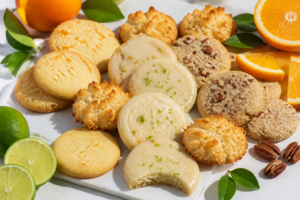


Every December, someone in my family asks the same question: “Margaret, what’s going on the cookie plate this year?” After 15 years of obsessive holiday baking, I finally have a real answer — not just a list, but a fully engineered christmas cookie plate assortment ideas blueprint. It covers every texture, every flavor profile, and every type of person who might reach across that platter. This is the system I wish I’d had back in 2009 when I showed up to my mother-in-law’s Christmas dinner with four variations of essentially the same buttery shortbread. Lovely cookies. Terrible strategy.
Building a great cookie plate isn’t about making your favorites eight times over. It’s about balance — crunchy versus chewy, rich versus bright, decorated versus rustic, chocolate versus fruit. Think of it like composing a playlist: every song can be excellent, but the sequence and variety are what make people stay in the room. I’ve baked my way through more than 400 holiday batches over the years, and the eight cookies I’m sharing today are the ones that have survived every single round of ruthless testing. They earn their spot every December.
Why Cookie Plate Balance Matters More Than Individual Recipes
Here’s something I learned after years of feedback from my tasting panel (also known as my neighbors): people don’t just want a good cookie. They want a good experience. In my experience, the plates that got the most compliments weren’t the ones with the single showstopper recipe. They were the ones where every person found something that felt made for them. That requires intention from the start, not just an afternoon of baking whatever sounds fun.
Specifically, I think about five dimensions when I build my plate: texture, flavor base, visual impact, difficulty level, and dietary range. A plate that hits all five feels abundant and thoughtful. One that skips even two of them starts to feel repetitive, even if the individual cookies are excellent. That said, you don’t need 15 varieties. Eight is the magic number I keep coming back to — enough for range, manageable for a home kitchen, and beautiful when arranged together.
The 8 Cookies I Build My Christmas Plate Around
1. Classic Butter Sugar Cookies (Decorated)
These are the visual anchor of the plate. I use a ratio of 3 cups all-purpose flour to 1 cup (2 sticks) unsalted butter, 3/4 cup sugar, 1 egg, and 1 teaspoon pure vanilla extract. Chilling the dough for a minimum of 2 hours — ideally overnight — is non-negotiable. Cold fat means less gluten activation during rolling, which gives you clean edges after cutting. I bake these at 350°F for exactly 10–12 minutes, just until the edges are set but the centers look slightly underdone. They firm up as they cool.
I learned this the hard way in Christmas 2013 when I skipped the chill step because I was impatient. The stars spread into blobs and the Christmas trees looked like they’d melted. Thirty-six cookies, completely unusable for gifting. Now I make the dough two days ahead without exception. For decorating, I use a simple royal icing — meringue powder, powdered sugar, and water — tinted in three colors maximum. Restraint is more elegant than chaos.
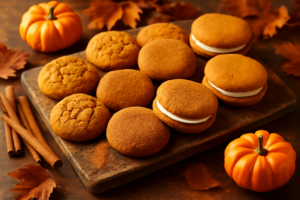
2. Chewy Ginger Molasses Cookies
These provide the spiced, chewy counterpoint to the buttery shortbread-style sugar cookie. The key is using both fresh-grated ginger and ground ginger — the fresh adds brightness, the dried adds depth. I use 1/4 cup molasses (Grandma’s Original is my go-to brand) and 1/2 cup brown sugar, packed. The molasses is hygroscopic, meaning it attracts moisture, which is what keeps these cookies soft for days after baking. I bake them at 375°F for 9–10 minutes and pull them when the tops are just crackled but still look underdone. They set up chewy, not cakey.
3. Chocolate Crinkle Cookies
Chocolate crinkles are my “everyone loves these” cookie — the one that disappears first from every plate I’ve ever assembled. The crinkle effect comes from a high sugar content creating steam during baking, which cracks the powdered sugar coating. However, getting the texture right took me until batch 23 to nail. The secret is chilling the dough for a full 4 hours minimum, rolling the balls first in granulated sugar before powdered sugar, and using Dutch-process cocoa rather than natural. Dutch-process has a neutral pH, which means it doesn’t react with baking soda and gives you a fudgier, denser result. I bake these at 350°F for 11 minutes exactly.
4. Pecan Sandies (Shortbread)
Every good plate needs a true shortbread moment. My pecan sandies use a 3:1:2 ratio of flour to powdered sugar to butter by weight — 150g flour, 50g powdered sugar, 100g cold butter — plus a pinch of salt and 3/4 cup finely chopped toasted pecans. Powdered sugar instead of granulated gives a more tender crumb because the finer particles interfere with gluten formation more effectively. I bake these low and slow at 325°F for 18–20 minutes until just barely golden at the edges. They’re fragile while warm, so I don’t touch them for 15 minutes after they come out.
5. Peppermint Bark Cookies
These are my nod to the holiday flavors everyone associates with December. I start with a thick brownie-style chocolate cookie base, press in crushed candy canes before baking, then drizzle white chocolate over the cooled cookies. The menthol in peppermint is fat-soluble, which means it bonds beautifully with chocolate during baking and gets more pronounced as it cools. These provide the visual pop — white, dark, and red — that photographs beautifully and signals “holiday” from across the room. As a result, they always get photographed before they get eaten.
6. Lemon Almond Thumbprints
Bright, fruity, and not-chocolate is a category every plate needs. These thumbprints use an almond flour and all-purpose blend (50/50 by weight), which gives a tender, slightly nutty base that complements lemon curd beautifully. I fill the wells with homemade lemon curd right before serving — not before baking — so the filling stays glossy and vivid yellow. The citric acid and bright color provide a visual and flavor contrast to everything else on the plate. In my experience, these are the ones that guests who claim not to have a sweet tooth reach for repeatedly.
7. Spritz Cookies
Spritz cookies are pure nostalgia and they earn that sentiment. The dough is pressed through a cookie press and relies on a high butter-to-flour ratio — typically 1 cup butter to 2.25 cups flour — for that characteristic melt-in-your-mouth quality. The emulsification step matters here: cream the butter and sugar for a full 3–4 minutes before adding the egg. This creates a stable emulsion that allows the fat to distribute evenly, which is what gives you that smooth, even texture when pressed. I color half the batch red and half green with gel food coloring, which doesn’t thin the dough the way liquid coloring does.
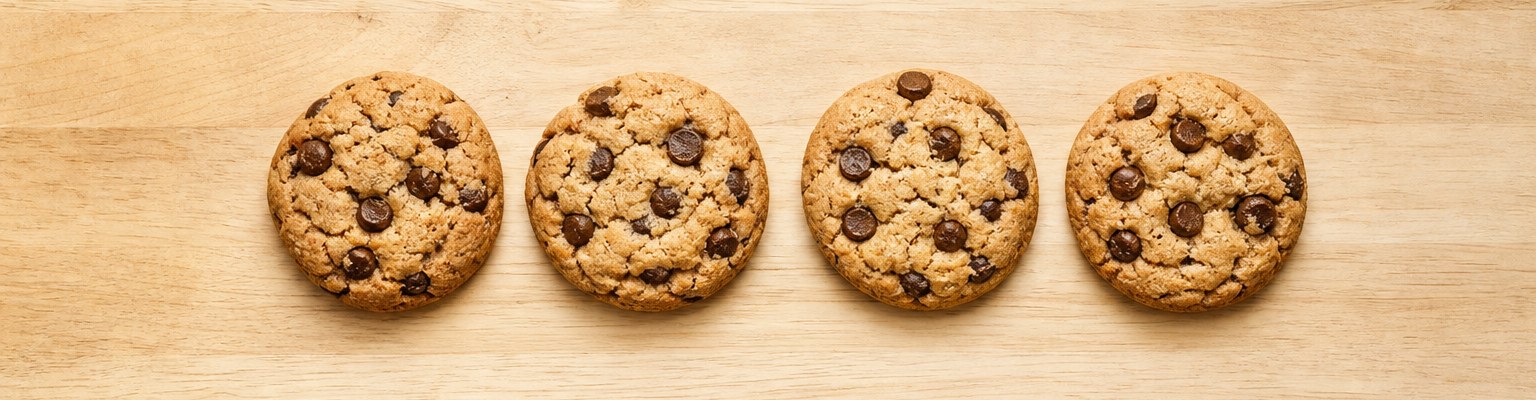
8. Brown Butter Toffee Chocolate Chip Cookies
Every plate deserves one elevated crowd-pleaser, and this is mine. Browning the butter first — cooking it until the milk solids caramelize at around 250°F — creates hundreds of new flavor compounds through the Maillard reaction. The result tastes nutty, complex, and distinctly different from a standard chocolate chip cookie. I add 1/2 cup toffee bits alongside the chocolate chips for crunch and caramel depth. These are baked at 375°F for 10–11 minutes and intentionally pulled when the centers look underbaked. Carryover cooking finishes the job on the pan.
The Recipes: All 8 Cookies, Measured Out and Ready to Bake
A blueprint isn’t much good without the actual measurements, so here is every recipe on my plate, written the way I have them scribbled on the index cards taped inside my cabinet door. I’ve given the four workhorses — the sugar cookies, the ginger molasses, the crinkles, and the brown butter toffee — the full treatment, and kept the other four compact but complete, because after 400-plus batches I’ve learned nobody wants to scroll through a novel when their butter is already softening on the counter.
Classic Butter Sugar Cookies
Yields about 36 cookies with 2 1/2-inch cutters. Prep: 20 minutes plus at least 2 hours (ideally overnight) chilling. Bake: 10–12 minutes at 350°F (175°C).
- 3 cups (360g) all-purpose flour
- 1 cup (226g) unsalted butter, softened but still cool
- 3/4 cup (150g) granulated sugar
- 1 large egg, room temperature
- 1 teaspoon pure vanilla extract
- 1/2 teaspoon fine salt
- For the royal icing: 2 cups (240g) powdered sugar, 1 1/2 tablespoons meringue powder, 3–4 tablespoons water
- Cream the butter and sugar on medium speed for 2 minutes, until light but not fluffy. Beat in the egg and vanilla.
- Whisk the flour and salt together, then mix into the butter mixture on low just until no dry streaks remain.
- Divide the dough into two flat disks, wrap, and chill at least 2 hours — overnight or two days ahead is even better.
- Roll one disk at a time to 1/4 inch on a lightly floured surface, cut shapes, and transfer to parchment-lined sheets 1 inch apart.
- Bake at 350°F (175°C) for 10–12 minutes, until the edges are set and the centers still look slightly underdone. Cool completely on the pan for 5 minutes, then on a rack.
- Whisk the meringue powder, powdered sugar, and water until the icing holds a soft ribbon, tint up to three colors, and decorate only once the cookies are fully cool.
Chewy Ginger Molasses Cookies
Yields about 24 cookies. Prep: 15 minutes plus 1 hour chilling. Bake: 9–10 minutes at 375°F (190°C).
- 2 1/4 cups (280g) all-purpose flour
- 3/4 cup (170g) unsalted butter, softened
- 1/2 cup (100g) brown sugar, packed
- 1/4 cup (50g) granulated sugar, plus about 1/3 cup more for rolling
- 1/4 cup molasses (Grandma’s Original)
- 1 large egg
- 1 tablespoon fresh-grated ginger and 2 teaspoons ground ginger
- 1 teaspoon cinnamon, 1/4 teaspoon ground cloves
- 1 teaspoon baking soda, 1/2 teaspoon fine salt
- Cream the butter with both sugars for 2–3 minutes, then beat in the egg, molasses, and fresh ginger.
- Whisk the flour, ground spices, baking soda, and salt together and mix in on low just until combined. Chill the dough 1 hour so it’s scoopable.
- Roll into 1 1/2-tablespoon balls, coat in granulated sugar, and space 2 inches apart on lined sheets.
- Bake at 375°F (190°C) for 9–10 minutes. Pull them when the tops are just crackled but still look underdone — they set up chewy as they cool on the pan.
Chocolate Crinkle Cookies
Yields about 30 cookies. Prep: 15 minutes plus a full 4 hours (minimum) chilling. Bake: 11 minutes at 350°F (175°C).
- 2 cups (250g) all-purpose flour
- 1 cup (85g) Dutch-process cocoa powder
- 1 1/2 cups (300g) granulated sugar
- 1/2 cup neutral vegetable oil
- 3 large eggs
- 2 teaspoons vanilla extract
- 2 teaspoons baking powder, 1/2 teaspoon fine salt
- For rolling: 1/2 cup (100g) granulated sugar and 3/4 cup (90g) powdered sugar, in separate bowls
- Whisk the cocoa, sugar, and oil together, then beat in the eggs one at a time, followed by the vanilla.
- Stir in the flour, baking powder, and salt just until combined — the dough will be soft and sticky.
- Cover and chill for a full 4 hours minimum. Do not shortcut this; cold dough is what makes the cracks dramatic instead of shallow.
- Roll into 1-tablespoon balls, coat each ball first in granulated sugar, then generously in powdered sugar.
- Bake at 350°F (175°C) for 11 minutes exactly, until puffed and crackled with soft centers. Rest 5 minutes on the pan before moving to a rack.
Pecan Sandies
Yields about 18 small cookies — I usually double it. Prep: 15 minutes plus 30 minutes chilling. Bake: 18–20 minutes at 325°F (165°C).
- 1 1/4 cups (150g) all-purpose flour
- 6 tablespoons (50g) powdered sugar
- 7 tablespoons (100g) cold unsalted butter, cubed
- 3/4 cup finely chopped toasted pecans
- 1 teaspoon vanilla extract and a pinch of salt
- Work the cold butter into the flour, powdered sugar, and salt with your fingertips (or pulse in a food processor) until it looks like damp sand, then add the vanilla and pecans and press into a dough.
- Roll into a log about 1 3/4 inches thick, wrap, and chill 30 minutes, then slice into 1/3-inch rounds.
- Bake at 325°F (165°C) for 18–20 minutes, until just barely golden at the edges. Don’t touch them for 15 minutes — they’re fragile while warm.
Peppermint Bark Cookies
Yields about 20 cookies. Prep: 20 minutes. Bake: 10–11 minutes at 350°F (175°C), plus drizzling time.
- 1 cup (125g) all-purpose flour and 1/4 cup (21g) Dutch-process cocoa powder
- 1/2 cup (113g) unsalted butter
- 4 ounces semisweet chocolate, chopped
- 3/4 cup (150g) granulated sugar
- 1 large egg and 1 teaspoon vanilla extract
- 1/2 teaspoon baking powder and 1/4 teaspoon fine salt
- 1/3 cup finely crushed candy canes (about 4 canes), plus 4 ounces white chocolate for drizzling
- Melt the butter and semisweet chocolate together in short microwave bursts, stir until smooth, and let cool 10 minutes.
- Whisk in the sugar, then the egg and vanilla; fold in the flour, cocoa, baking powder, and salt to make a thick, brownie-style dough.
- Scoop 1 1/2-tablespoon mounds onto lined sheets, flatten slightly, and press crushed candy canes into the tops before baking.
- Bake at 350°F (175°C) for 10–11 minutes, until the tops are set but the centers are still soft. Cool completely, then drizzle with melted white chocolate and let it set before stacking.
Lemon Almond Thumbprints
Yields about 20 cookies. Prep: 20 minutes. Bake: 12–14 minutes at 350°F (175°C). Fill just before serving.
- 1 cup (100g) almond flour and 3/4 cup plus 1 tablespoon (100g) all-purpose flour — the 50/50 blend by weight
- 1/2 cup (113g) unsalted butter, softened
- 1/3 cup (67g) granulated sugar
- 1 large egg yolk, zest of 1 lemon, 1/2 teaspoon vanilla extract, 1/4 teaspoon fine salt
- About 3/4 cup lemon curd (I whisk 2 eggs, 1/2 cup sugar, 1/3 cup fresh lemon juice, and the zest over low heat until thick, then stir in 4 tablespoons butter and chill)
- Cream the butter and sugar, beat in the yolk, zest, and vanilla, then mix in both flours and the salt to form a soft dough.
- Roll into 1-tablespoon balls, place 2 inches apart, and press a deep well into each with your thumb or the back of a 1/2-teaspoon measure.
- Bake at 350°F (175°C) for 12–14 minutes, until lightly golden at the edges, re-pressing the wells the moment they come out if they’ve puffed.
- Cool completely and spoon in the lemon curd right before serving so it stays glossy and vivid yellow.
Spritz Cookies
Yields about 5 dozen small cookies. Prep: 20 minutes, no chilling. Bake: 7–9 minutes at 375°F (190°C).
- 2 1/4 cups (280g) all-purpose flour
- 1 cup (226g) unsalted butter, softened
- 2/3 cup (133g) granulated sugar
- 1 large egg, 1 teaspoon vanilla extract, 1/2 teaspoon almond extract, 1/4 teaspoon fine salt
- Red and green gel food coloring
- Cream the butter and sugar for a full 3–4 minutes before adding the egg and extracts — that emulsion is the whole game.
- Mix in the flour and salt on low, then divide the dough in half and tint one half red and one half green with gel coloring.
- Load the cookie press and press shapes directly onto ungreased, unlined baking sheets — the dough needs bare metal to grip and release cleanly.
- Bake at 375°F (190°C) for 7–9 minutes, until just set with no browning, and cool 2 minutes on the sheet before moving.
Brown Butter Toffee Chocolate Chip Cookies
Yields about 28 cookies. Prep: 25 minutes plus 30 minutes chilling. Bake: 10–11 minutes at 375°F (190°C).
- 2 1/4 cups (280g) all-purpose flour
- 1 cup (226g) unsalted butter, browned and cooled until just warm
- 1 cup (200g) brown sugar, packed
- 1/2 cup (100g) granulated sugar
- 2 large eggs and 2 teaspoons vanilla extract
- 1 teaspoon baking soda and 3/4 teaspoon fine salt
- 1 1/2 cups semisweet chocolate chips and 1/2 cup toffee bits
- Brown the butter in a light-colored pan over medium heat, swirling until the milk solids turn deep amber and smell nutty, then pour it — solids and all — into a mixing bowl and cool 15 minutes.
- Whisk both sugars into the warm brown butter, then whisk in the eggs and vanilla until glossy.
- Stir in the flour, baking soda, and salt, then fold in the chocolate chips and toffee bits.
- Chill the dough 30 minutes so it firms back up after the warm butter, then scoop 2-tablespoon balls onto lined sheets 2 inches apart.
- Bake at 375°F (190°C) for 10–11 minutes and pull them when the centers still look underbaked — carryover cooking on the pan finishes the job.
The Boxes That Finally Made My Cookie Plate Look as Good as It Tastes
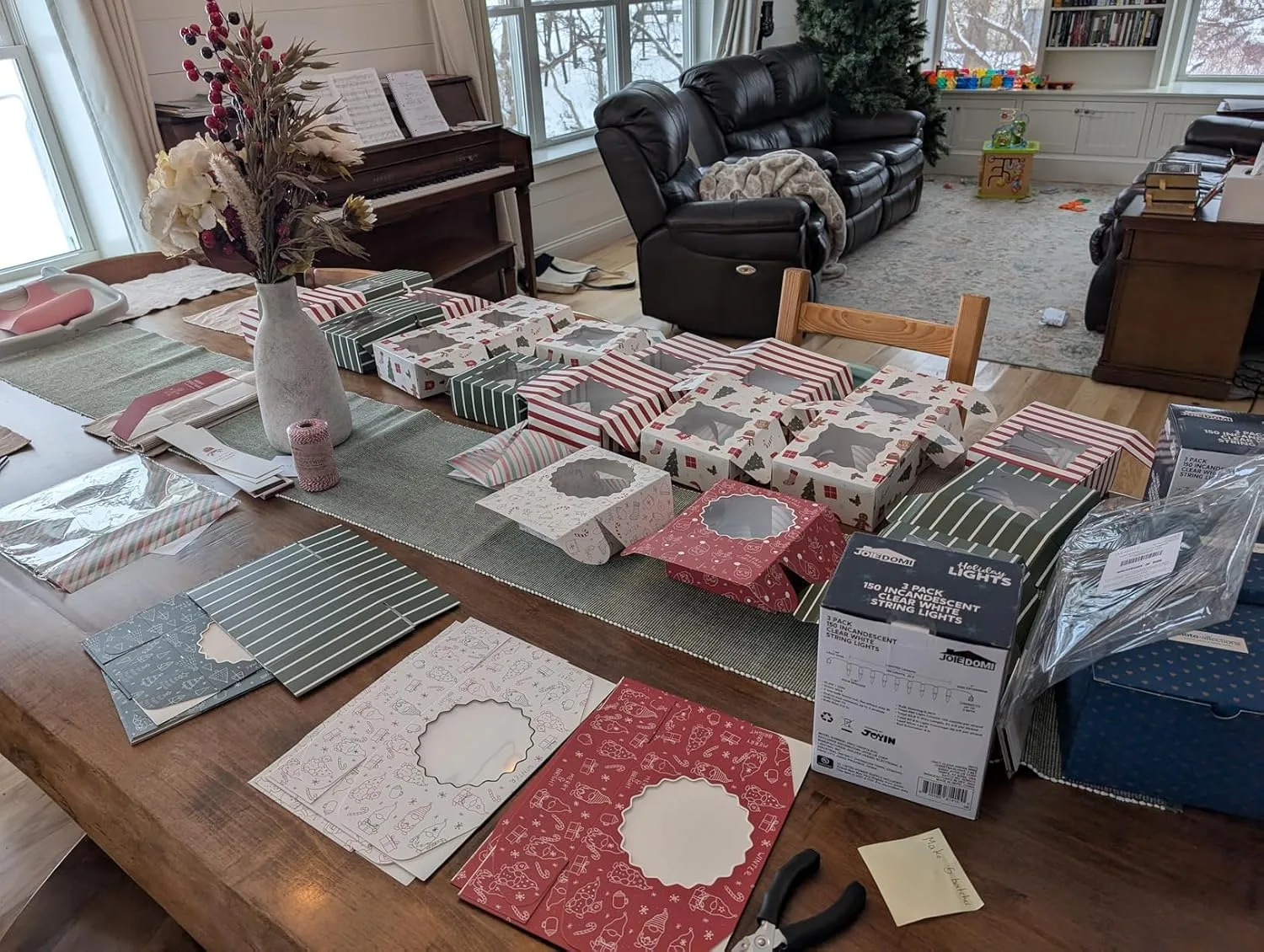
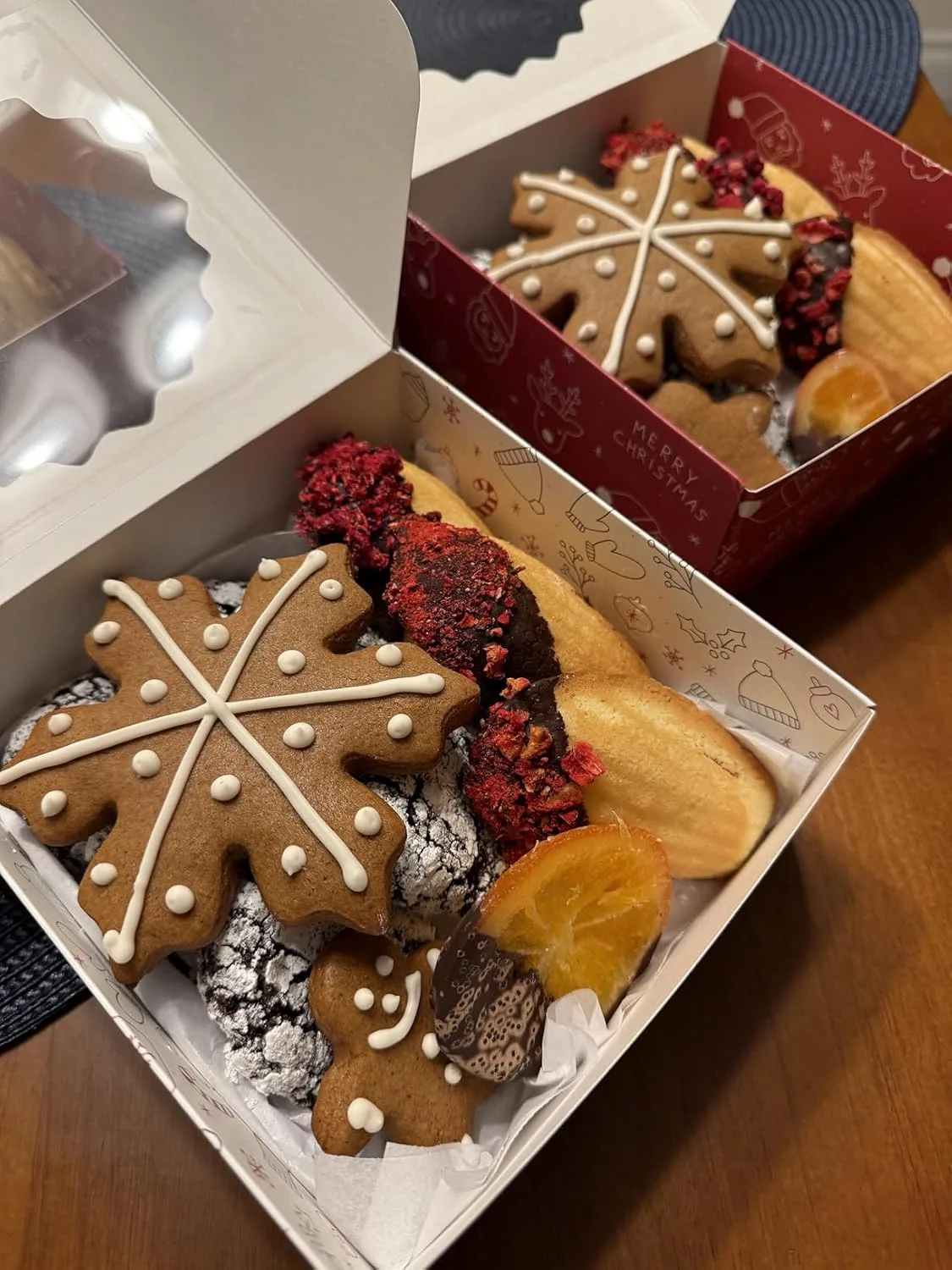
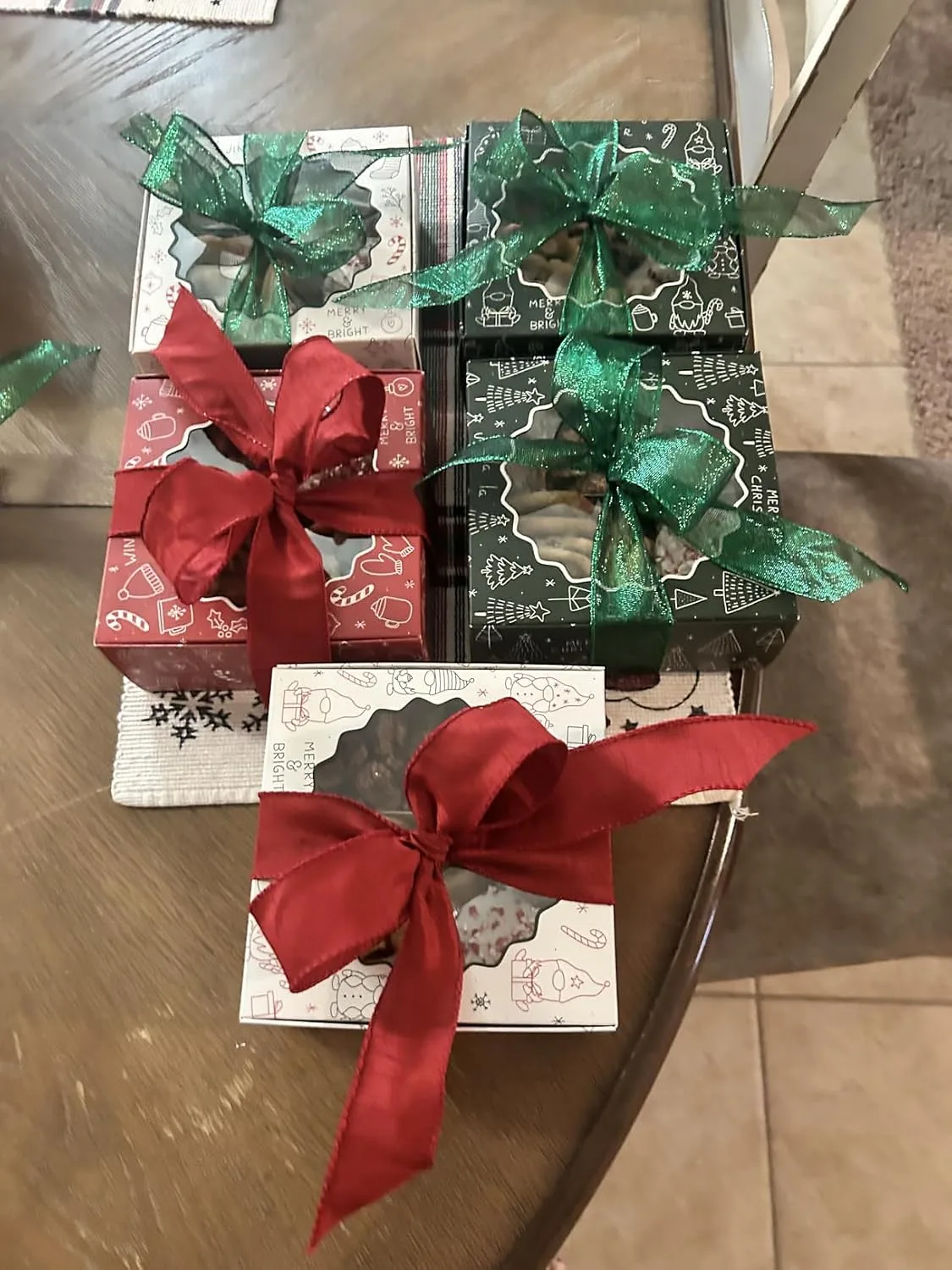
When you’ve spent three days baking eight different cookies, the last thing you want is to show up at a gathering with them piled into a random tupperware container. A proper presentation box isn’t just nice to look at — it protects each cookie’s texture and tells people this plate was made with actual thought.
What works
- The compartments actually fit standard-sized cookies without crushing them, and the dividers stay put instead of sliding around every time you move the box.
- The window on top means people can see what’s inside before they open it — which sounds small, but it makes a real difference in how your assortment gets received.
- The set of 9 means I can make multiple plates without hunting for boxes, which I actually do most years when friends or neighbors ask for their own assortments.
What doesn’t
- The bottom sections are shallower than I’d like for thicker cookies like shortbread logs, so I sometimes have to layer them sideways to make them fit.
- If you’re packing warm cookies, the window can fog up immediately, which defeats the whole purpose of being able to see inside.
I once filled these boxes while the cookies were still slightly warm and ended up with condensation that stuck the window shut for an hour, but now I always let everything cool completely before packing. If you’re ready to graduate from the “threw it in a container” era like I did, grab the Beautiful Christmas Cookie Boxes Set of 9.
About This Article

Written by Margaret Chen. Margaret Chen is a home baker and recipe developer with over 15 years of experience perfecting cookie recipes through rigorous testing and detailed experimentation. She tests every recipe multiple times, documents every variable, and applies the same rigor professional bakers use, with the warmth and accessibility of home baking. More about this site.
Scope and limits. Margaret is a home baker and recipe developer with no formal culinary training. Follow current food safety guidance for egg handling, storage, and anything you are serving to other people.
Verify this against a primary source
Specifics change, and your situation may differ from the one described here. These are the authorities worth checking directly:
- USDA FoodData Central — ingredient composition and nutrition data
- FoodSafety.gov — safe handling, storage and egg safety