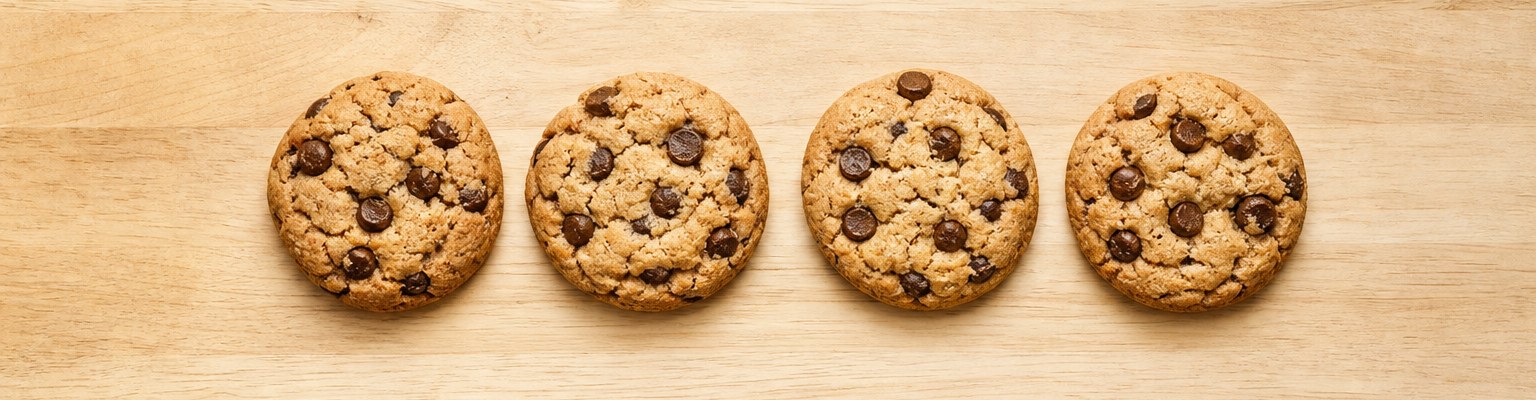
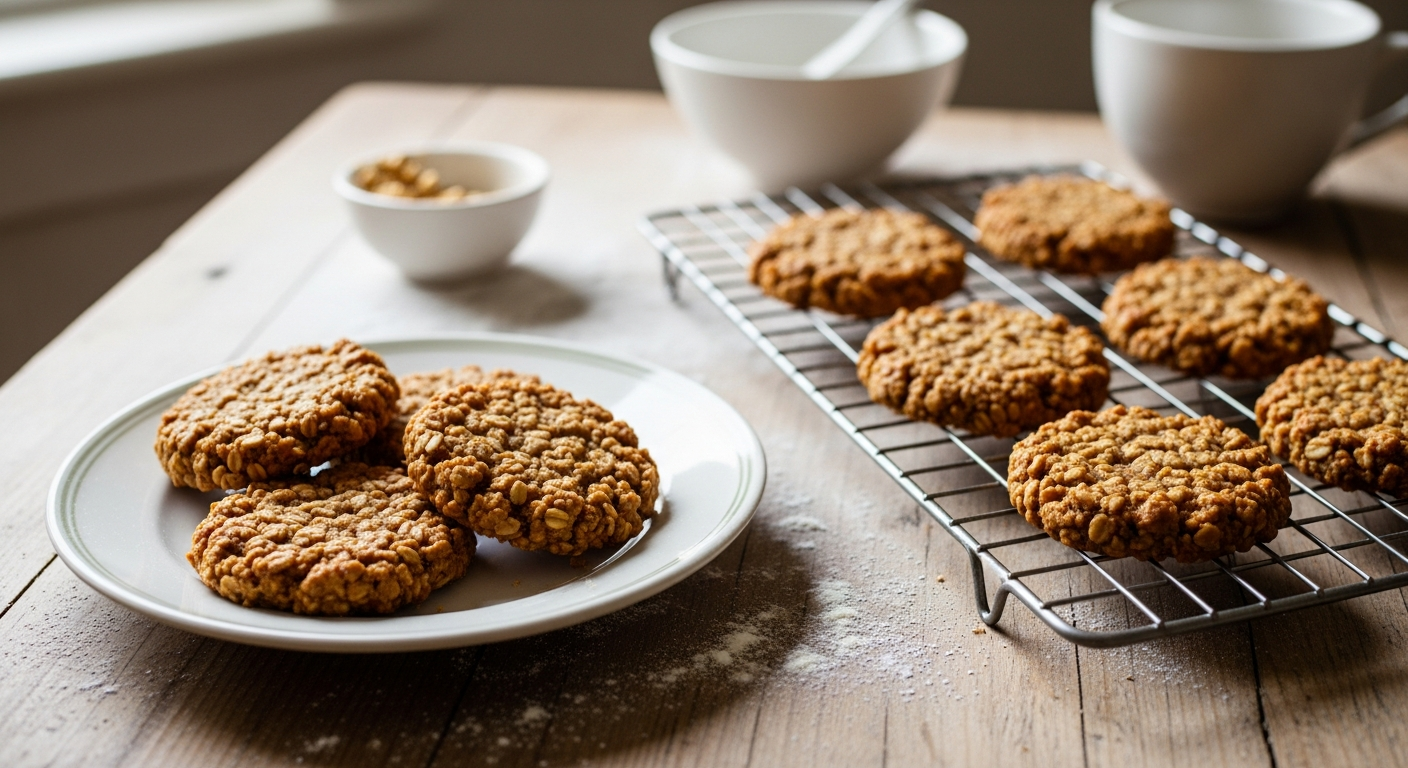

Cookies are more than just sweet treats. They are small, edible pieces of history. Many countries have a cookie they call their own. These national cookies tell stories of trade, innovation, and culture. They connect us to the past with every delicious bite. From the twice-baked Italian biscotti to the delicate French macaron, each one has a unique origin story. This journey explores how these simple recipes became cherished national symbols — and what it actually takes for a cookie to earn that status in the first place.
What Elevates a Cookie to National Status?
Not every cookie becomes a national icon. Source A treat earns this status through deep cultural roots. Often, its history stretches back centuries. The ingredients frequently tell a story about a region’s agriculture and trade. For example, cookies from the Mediterranean might feature almonds and citrus. Those from northern Europe often use butter and oats. Furthermore, national cookies are tied to specific holidays or traditions. People bake them for Christmas, weddings, or other important celebrations. This consistent presence weaves them into the fabric of a nation’s identity. Ultimately, a national cookie captures a country’s spirit in a single, sweet bite.
Food historians have a name for part of what is happening here: the historian Eric Hobsbawm called it an “invented tradition” — a custom that feels ancient and timeless but is often a much more recent, and sometimes quite deliberate, construction. A cookie doesn’t become “national” simply because it is old. It becomes national when a country, or its diaspora, starts telling a story about itself through that food. That process is now formal in some cases: in 2022, UNESCO added the “artisanal know-how and culture” of the French baguette to its Representative List of the Intangible Cultural Heritage of Humanity, following earlier additions like Neapolitan pizza-making (2017), Korean kimchi-making (2013), and washoku, traditional Japanese cuisine (2013). None of those listings are about the food tasting good — they are about a country formally arguing that a food practice is worth preserving as part of its identity. A national cookie is the informal, everyday version of that same argument, made one bite at a time rather than through a UN filing.
That is also why national status is contested rather than settled. A cookie can be claimed by more than one country, disputed by food historians, or embraced by a diaspora community long after its origin country moved on to other treats. Anzac biscuits are a useful case study precisely because their status is so unusually clear-cut: the name is legally protected in both Australia and New Zealand, and using “Anzac” commercially without permission is genuinely restricted by law — a level of official gatekeeping almost no other national cookie has. Most national cookies never get that kind of formal protection. They earn their status the slower way, through repetition at the same holiday table for a hundred years running.
Biscotti: The Traveler’s Treat from Italy
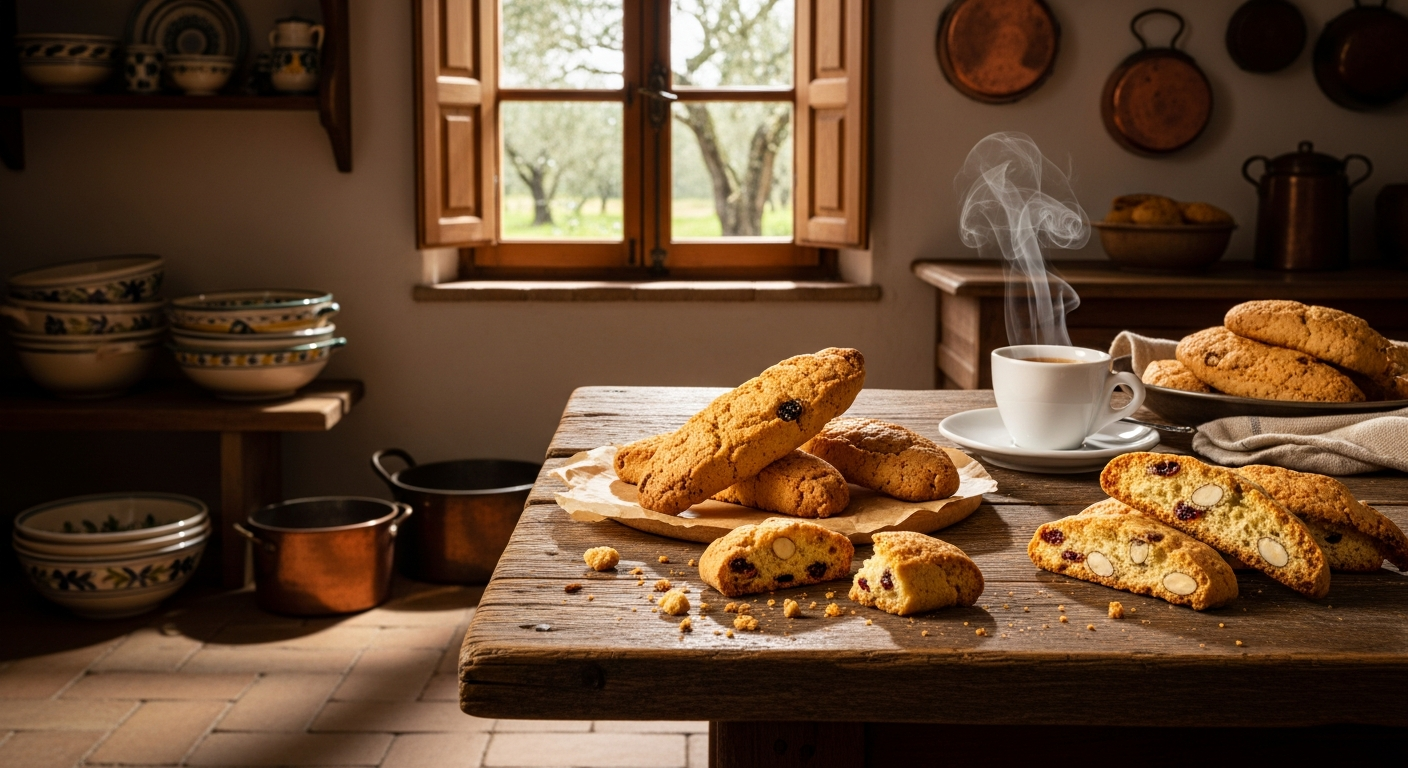
Biscotti’s story begins in ancient Rome. The name itself means “twice-cooked” or “twice-baked.” Roman legions needed food that would last on long journeys. Bakers created a durable, dry biscuit by baking loaves of bread, slicing them, and then baking them again. This process removed moisture, making them resistant to mold. Consequently, these early biscotti became a staple food for soldiers and travelers. They were practical, not sweet. The modern, sweet version we know today emerged during the Renaissance in Tuscany. Almonds, a local crop, became a key ingredient.
The Tuscan Reinvention
Prato, a city in Tuscany, is widely credited with perfecting the sweet almond biscotti. Local bakers added almonds, sugar, and spices to the ancient recipe. This transformed the functional biscuit into a delightful treat. It became the perfect companion for Vin Santo, a sweet dessert wine. Dipping the hard cookie softens it and enhances its flavor. Today, Italians enjoy biscotti with coffee or wine, continuing a tradition that is centuries old.
Classic Almond Biscotti
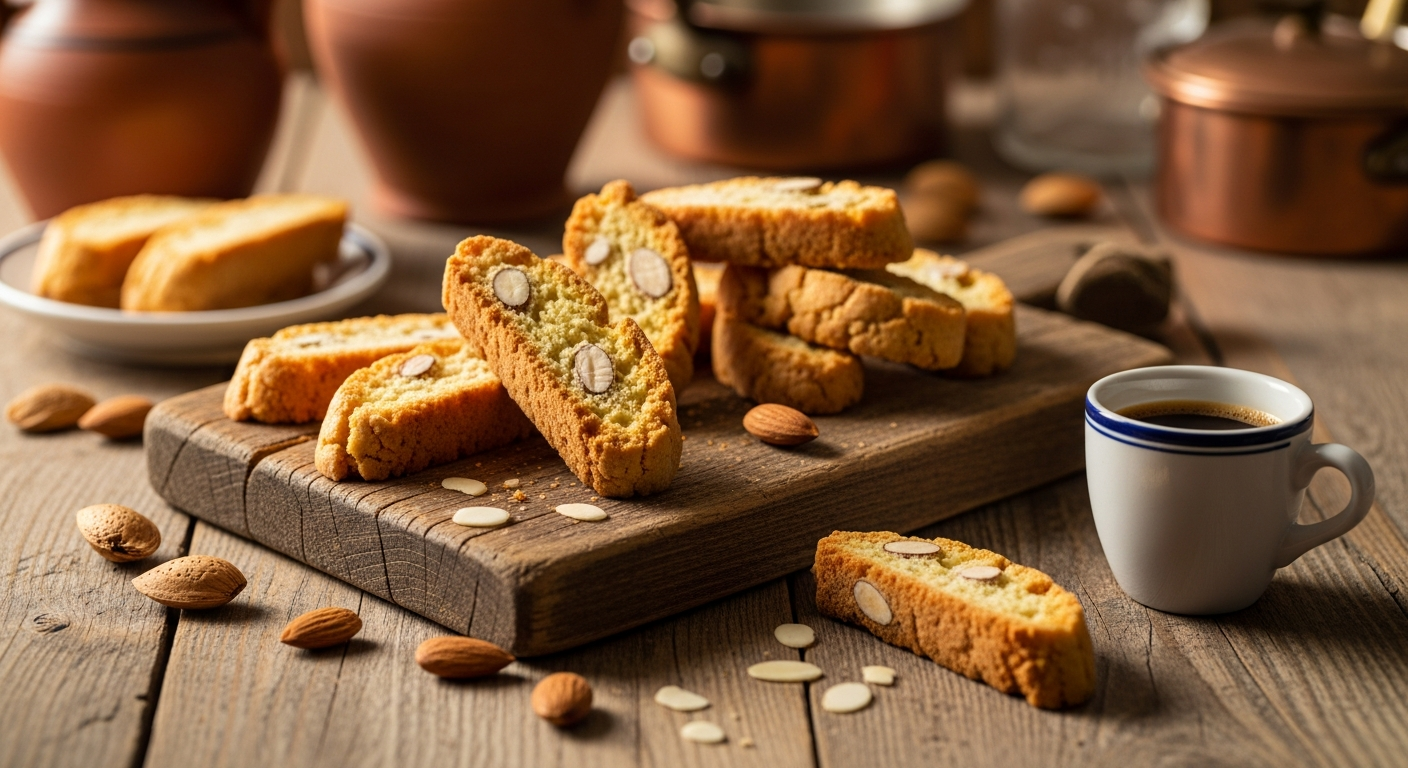
Ingredients:
- 2 cups all-purpose flour
- 1 cup granulated sugar
- 1 teaspoon baking powder
- 1/4 teaspoon salt
- 1 cup whole, unblanched almonds, toasted
- 3 large eggs
- 1 teaspoon vanilla extract
- 1/2 teaspoon almond extract
Instructions:
- Preheat your oven to 350°F (175°C). Line a baking sheet with parchment paper.
- In a large bowl, whisk together the flour, sugar, baking powder, and salt.
- Stir in the toasted almonds.
- In a separate small bowl, whisk the eggs, vanilla extract, and almond extract together.
- Pour the wet ingredients into the dry ingredients. Mix until a sticky dough forms.
- On a floured surface, divide the dough in half. Shape each half into a log about 12 inches long and 2 inches wide.
- Place the logs on the prepared baking sheet. Bake for 25-30 minutes, until firm and lightly golden.
- Remove from the oven and let the logs cool for 10 minutes. Reduce oven temperature to 325°F (165°C).
- Transfer the logs to a cutting board. Using a serrated knife, slice them diagonally into 1/2-inch thick slices.
- Arrange the slices cut-side down on the baking sheet. Bake for another 8-10 minutes on each side, until they are crisp and golden brown.
- Let them cool completely on a wire rack before serving.
Macarons: A French Icon with Italian Roots
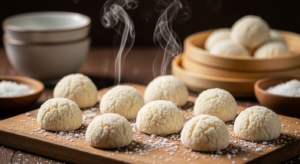
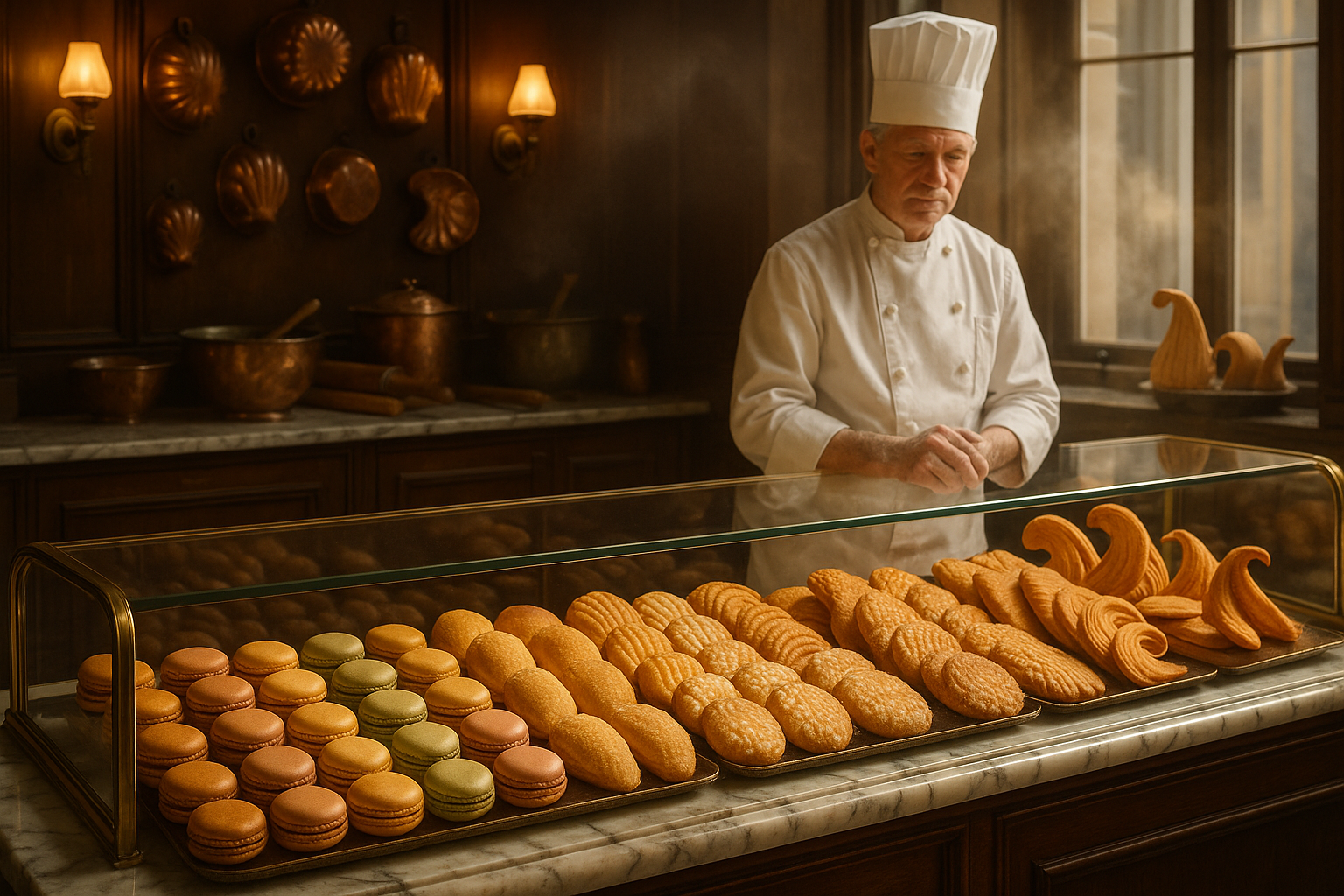
The delicate French macaron is a symbol of Parisian patisseries. Source However, its story actually begins in Italy. The first version of the macaron was a simple cookie. It was made from almond powder, sugar, and egg whites. Italian chefs introduced this treat to France in the 16th century. These early macarons were humble, single-layer cookies, not the colorful sandwiches we see today.
It wasn’t until the early 20th century that the macaron transformed. Parisian baker Pierre Desfontaines of the Pâtisserie Ladurée had a brilliant idea. He decided to take two macaron shells and join them with a creamy ganache filling. This innovation created the modern macaron. Its smooth, crisp shell, chewy interior, and luscious filling made it an instant sensation. Now, it stands as a pinnacle of French baking artistry.
French Vanilla Macarons
Ingredients:
- 1 3/4 cups almond flour
- 1 1/2 cups powdered sugar
- 4 large egg whites, at room temperature
- 1/2 cup granulated sugar
- 1 teaspoon vanilla extract
- For the Vanilla Buttercream: 1/2 cup unsalted butter (softened), 1 cup powdered sugar, 1 tsp vanilla extract, 1 tbsp milk
Instructions:
- Sift the almond flour and powdered sugar together into a large bowl. Repeat twice to ensure it is very fine.
- In a separate, clean bowl, beat the egg whites with an electric mixer until foamy. Gradually add the granulated sugar while beating until stiff, glossy peaks form.
- Add the vanilla extract and beat for one more minute.
- Gently fold the dry ingredients into the egg whites in three parts. Be careful not to overmix. The batter should flow like lava.
- Transfer the batter to a piping bag with a round tip. Pipe 1.5-inch circles onto baking sheets lined with parchment paper.
- Tap the baking sheets firmly on the counter to release air bubbles. Let the macarons rest at room temperature for 30-60 minutes, until a skin forms.
- Preheat the oven to 300°F (150°C). Bake for 15-18 minutes, until the feet are well-risen and the tops are firm.
- Let them cool completely before removing them from the parchment.
- To make the buttercream, beat the softened butter until creamy. Gradually add the powdered sugar, then the vanilla and milk. Beat until smooth.
- Pipe a small amount of buttercream onto one macaron shell and sandwich it with another.
A Sweet Legacy
Far from being mere confections, these beloved baked goods serve as profound cultural touchstones, offering a delicious lens through which to explore the intricate tapestry of human history and identity. Each national cookie isn’t just a collection of ingredients; it’s a meticulously crafted narrative, a bite-sized chronicle of a nation’s journey.
The Enduring Purpose: More Than Just a Treat
Historically, their role often transcended simple indulgence, fulfilling vital functions that shaped communities and even nations:
- Sustenance and Survival: From the utilitarian hardtack that sustained ancient armies and sailors on long voyages – designed for extreme durability rather than flavor – to the nutrient-rich biscuits carried by explorers, cookies were often engineered for endurance. Biscotti is the clearest surviving example: its entire twice-baked structure exists because Roman legions needed calories that would not spoil on a march, and only centuries later did that same structure get repurposed for flavor and pleasure.
- Morale and Connection: Moving through time, cookies evolved to become powerful symbols of comfort and connection. The thoughtful inclusion of spices or sweet elements transformed them from mere rations into morale boosters, tangible expressions of care. Imagine the profound impact of a homemade cookie, carefully packaged and sent across an ocean, bridging the vast distance with a taste of home and a reminder of loved ones.
- Celebration and Ritual: Many national cookies are deeply embedded in a country’s festive calendar or rites of passage. They mark holidays, weddings, births, and other significant events, becoming integral to the rituals that bind families and communities.
A Recipe for Reflection: Terroir, Trade, and Tradition
A country’s national cookie is an open book, revealing fascinating details about its very essence:
- Terroir & Local Bounty: The primary ingredients often speak directly to the geography and agriculture of a region. Consider the almond flour in French macarons, reflecting the availability and culinary sophistication surrounding this nut, or the almonds that define Italian biscotti thanks to Tuscany’s Renaissance-era trade in Mediterranean nuts. Cookies made with unique regional grains or fruits tell a story of local ecosystems and agricultural practices.
- Trade Routes & Global Flavors: The inclusion of exotic spices like cinnamon, nutmeg, ginger, or vanilla in many European national cookies (such as Dutch Speculaas or German Pfeffernüsse) directly illustrates the historical impact of global trade routes. These ingredients, once rare and expensive, highlight centuries of exploration, commerce, and cultural exchange, showing how distant lands influenced local palates and culinary innovation.
- Traditions & Identity: Beyond ingredients, the baking methods, shapes, and occasions for consumption are steeped in cherished national traditions. A cookie might be baked only at Christmas, during a specific harvest festival, or for a particular religious holiday, making it an edible marker of cultural identity and shared heritage passed down through generations.
When the Story Gets Complicated
Not every national-cookie story is tidy, and that friction is often the most interesting part. The macaron is the textbook case: France gets the cultural credit, but the cookie’s origin is Italian, carried across the Alps by 16th-century confectioners and only turned into the sandwiched, ganache-filled version we recognize today three centuries later, in a single Parisian shop. That means the “French” macaron is really a Franco-Italian invention with a very specific, and quite recent, French act of reinvention layered on top. Biscotti carries a similar split identity — Roman in its mechanics, but Tuscan, specifically Pratese, in the sweetened form that made it famous. A national cookie, in other words, rarely has one clean origin story. It has a functional origin, a regional reinvention, and then a much later moment when a country decided to claim it as its own.
Ultimately, these humble yet profoundly significant treats offer more than just a delicious bite; they provide a tangible, flavorful link to the global cultures that created and later claimed them, inviting us to taste history, tradition, and the very soul of a nation.
Why I Keep a Dedicated Cookie Cookbook Within Arm’s Reach When Testing National Recipes
When you’re baking cookies from a dozen different culinary traditions—each with its own ratios, techniques, and cultural nuances—a single, well-researched cookie cookbook becomes your anchor. I found myself constantly cross-referencing, questioning whether my Italian biscotti proportions matched the authentic version, or if my French macaron ratios were true to the original Ladurée style.
What works
- Gave me confidence that the recipes I was developing actually matched their cultural origins—no more second-guessing whether I was honoring the tradition correctly.
- Helped me spot technique patterns across different national cookies, so I could understand *why* biscotti gets twice-baked or why macaron shells need such a precise resting period before baking.
- Became a quick reference during testing when a batch didn’t turn out as expected—I could flip back and verify I hadn’t drifted from the foundational recipe.
What doesn’t
- It’s not a substitute for testing—some recipes still need tweaking for home ovens and local ingredients, so you can’t just follow it blindly and expect perfection.
- Takes up counter space during active baking, and flour-dusted pages are inevitable (I’ve learned to accept that as a badge of honor).
I’ll admit there was a moment when I wondered if I was overthinking it—couldn’t I just wing it and call them close enough?—but the first time a recipe aligned perfectly with its authentic counterpart, I knew I’d made the right call. Grab a cookie cookbook that resonates with you and keep it close.
About This Article

Written by Margaret Chen. Margaret Chen is a home baker and recipe developer with over 15 years of experience perfecting cookie recipes through rigorous testing and detailed experimentation. She tests every recipe multiple times, documents every variable, and applies the same rigor professional bakers use, with the warmth and accessibility of home baking. More about this site.
Scope and limits. Margaret is a home baker and recipe developer with no formal culinary training. Follow current food safety guidance for egg handling, storage, and anything you are serving to other people.
Verify this against a primary source
Specifics change, and your situation may differ from the one described here. These are the authorities worth checking directly:
- USDA FoodData Central — ingredient composition and nutrition data
- FoodSafety.gov — safe handling, storage and egg safety