I still remember standing in my kitchen at 11 p.m., staring at a baking sheet full of crumbled, lopsided shortbread rounds with caramel pooling out the sides like a slow, golden disaster. I had promised my daughter’s entire third-grade class a batch of caramel filled shortbread cookies for her birthday celebration the next morning — and I had just watched my third attempt of the evening collapse into a buttery, sticky mess. I wanted to cry. I almost called it quits and ordered store-bought cupcakes. But I didn’t. And what happened next changed the way my family thinks about cookies forever.
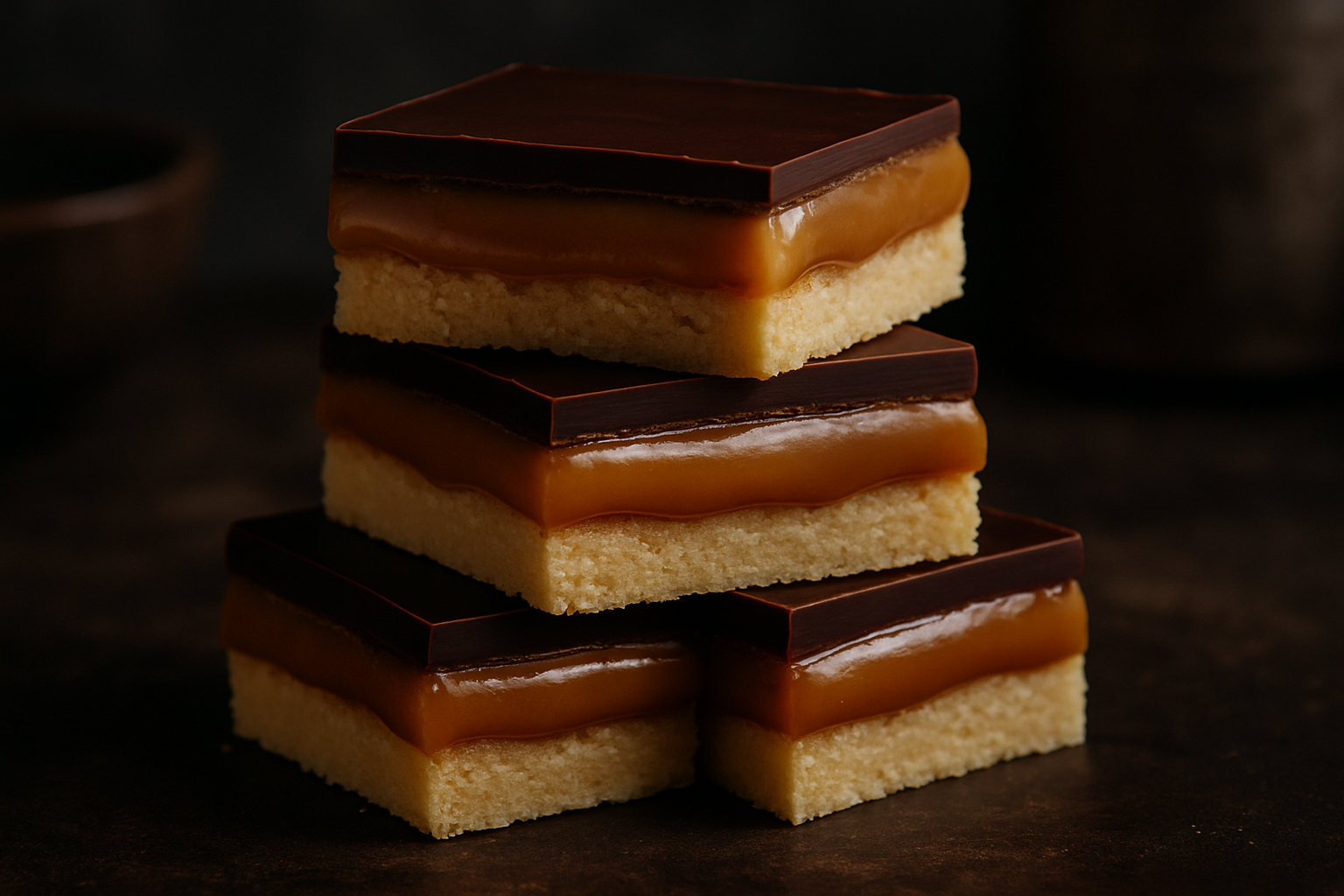
Caramel-filled shortbread — sometimes called millionaire’s shortbread or Twix-style cookies — is one of those recipes that looks deceptively simple on the surface. Buttery Scottish shortbread base, a thick layer of soft caramel, finished with a glossy chocolate top. Three components. What could go wrong? As it turns out, quite a lot, until you understand the small details that make the whole thing sing. Today I’m walking you through everything I learned the hard way so your first batch is the batch your family asks for again and again.
Why Shortbread Is the Perfect Foundation for Caramel Filling
Classic Scottish shortbread has exactly three ingredients: butter, sugar, and flour. That simplicity is precisely what makes it such a brilliant base for filled cookies. It isn’t soft and cakey, it doesn’t puff dramatically in the oven, and it won’t turn soggy the moment caramel touches it. A properly made shortbread holds its structure. It snaps cleanly. It has that characteristic sandy, melt-in-your-mouth crumb that gives you a satisfying textural contrast against the chewy, sticky caramel layer on top.
The key to achieving that texture is cold butter worked into the dry ingredients until the mixture resembles fine breadcrumbs — then barely pressed together. Overworking the dough develops gluten and turns your shortbread tough and bread-like. Handle it gently, press it rather than roll and fold it, and let it rest in the fridge for at least 30 minutes before baking. That chill firms the butter back up and helps the cookies hold their shape beautifully in the oven.
Bake your shortbread bases low and slow — around 325°F — until they are pale golden at the edges but still look slightly underdone in the center. They will firm up as they cool. Pulling them out too late means a hard, overly crisp base that will crack the moment you bite into the finished cookie.
The Caramel Layer: Where Most Bakers (Including Me) Go Wrong
Here is what I learned on that exhausting night of my third-grade birthday disaster. The caramel is not the place to cut corners, rush the process, or substitute ingredients carelessly. My first two failed batches used a homemade stovetop caramel made with white sugar, butter, and cream. It tasted wonderful straight from the pot. But when I spread it over my cooled shortbread rounds, it either ran off the edges immediately or seized into a rock-hard candy layer that cracked and shattered. Both results were equally heartbreaking.
The game-changer was switching to dulce de leche. Dulce de leche is a slow-cooked caramel made from sweetened condensed milk that has a naturally thick, spreadable consistency and a deep, complex flavor. Unlike a classic caramel sauce, it holds its body at room temperature, sets to a soft and slightly chewy texture that stays put on your shortbread base, and it does not weep or run. It is, quite simply, the ideal caramel filling for this type of cookie.
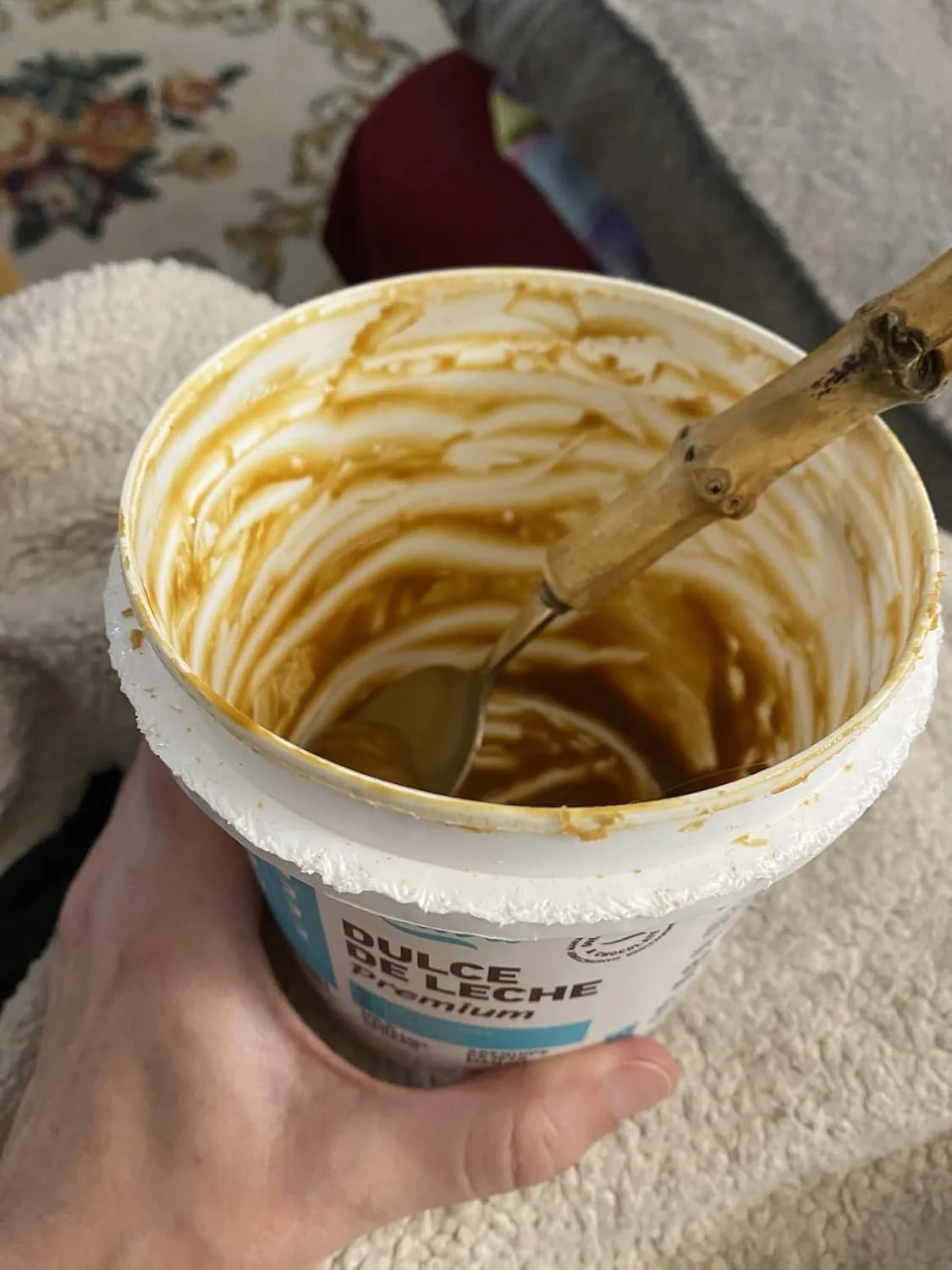
I now keep a large tub of Nuuva Foods Premium Dulce de Leche in my pantry at all times. It is authentic, silky smooth, and deeply caramel in flavor without being cloyingly sweet. The 2.5-pound size is perfect for batch baking because you will not run out mid-recipe. If you prefer a slightly thicker, more structured caramel layer — one that holds up especially well when stacking or packaging cookies as gifts — try the Nuuva Foods Dulce de Leche Repostero Pastry, which is formulated specifically for baking applications and gives you that gorgeous, firm caramel center. For a versatile option that works beautifully both as a filling and as a drizzle or swirl on top, the Nuuva Foods Multipurpose Dulce de Leche is my go-to when I want one product that does everything.
Spread your dulce de leche in an even layer — about a quarter inch thick — over your completely cooled shortbread. Warm it slightly first if it feels too stiff to spread without disturbing the base beneath. Then refrigerate the caramel-topped cookies for a full 20 to 30 minutes before adding the chocolate. That chill is what keeps your layers sharp and clean.
Why I Stopped Making Caramel From Scratch (And Started Using Dulce de Leche Instead)
After that midnight kitchen disaster, I realized my real problem wasn’t the shortbread technique—it was the caramel itself. Homemade caramel can seize, crystallize, or turn rock-hard while you’re piping it into cookies, but a ready-made dulce de leche has the exact consistency you need to fill delicate shortbread without any guesswork.
What works
- The texture stays spreadable and forgiving—it won’t harden mid-assembly or crack when you press two cookies together, which means less stress when you’re working quickly.
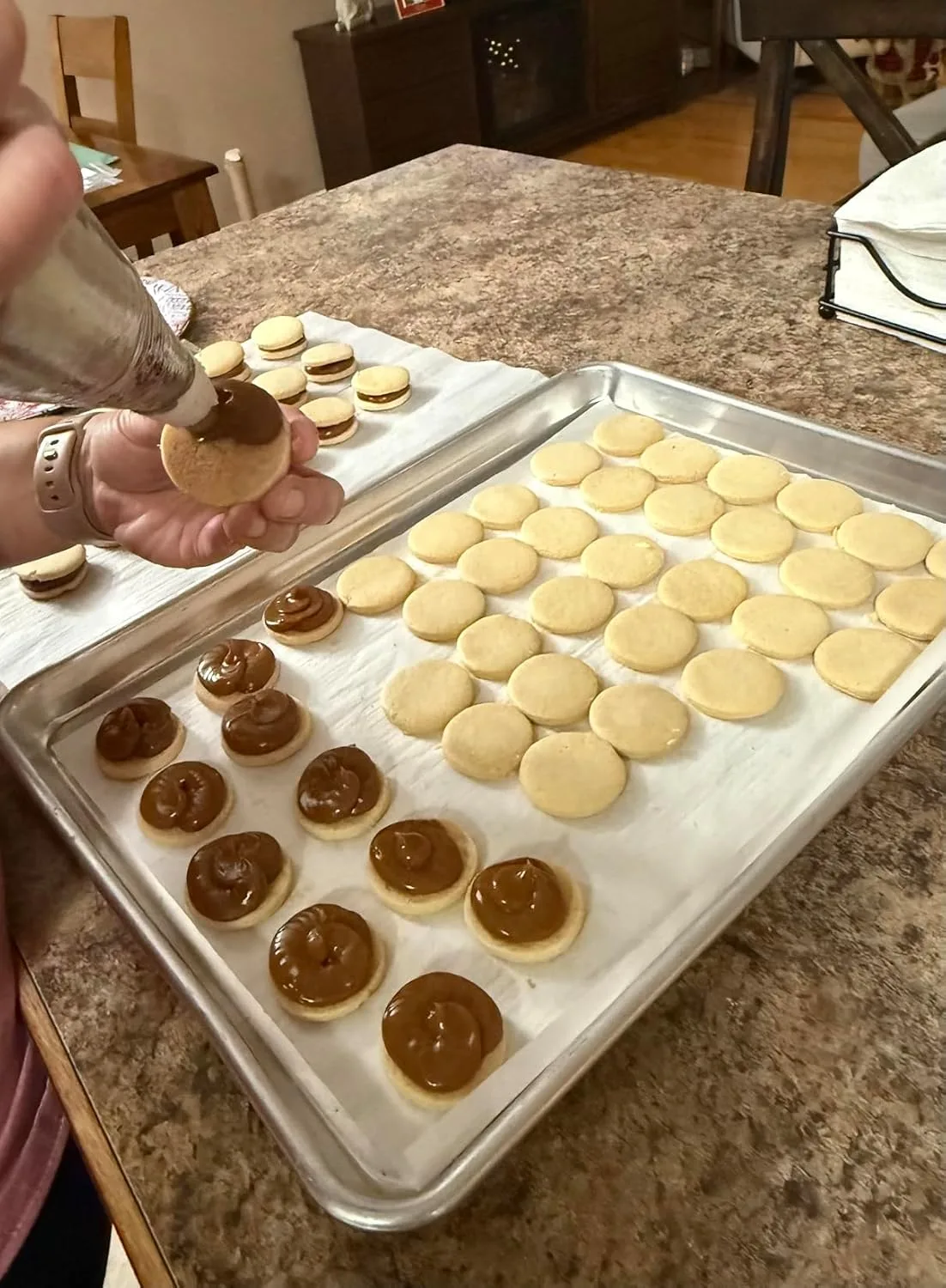
- It pipes cleanly without temperature fussing; I can fill cookies straight from the jar without heating or cooling cycles, which saved me probably 20 minutes per batch.
- The flavor is deep and caramelly without tasting one-note—there’s actual complexity there, which means the filling tastes homemade even though I didn’t spend an hour hovering over a pot.
What doesn’t
- If you overfill the cookies, the dulce de leche will absolutely squish out the sides—it’s slightly softer than homemade caramel, so portion control matters more than I initially expected.
- The jar is quite thick and dense, which means if you try to scoop it cold straight from the fridge, you’re fighting a bit; I learned to let it sit at room temperature for 15 minutes first.
I’ll admit, the first time I used it I almost second-guessed myself—was this really “good enough” for a recipe I wanted to feel homemade?—but the moment I tasted the finished cookie, I stopped wondering. Nuuva Foods Premium Dulce de Leche became the filling I reach for every single time now.
The Recipe: Caramel-Filled Shortbread
After years of tweaking and testing (and that unforgettable midnight emergency), this is the method that delivers perfect shortbread every time. The beauty of this recipe is that the shortbread base is pure simplicity, the caramel layer is foolproof when you use dulce de leche, and the whole thing comes together in under two hours start to finish.
What You’ll Need
For the Shortbread Base:
- 1 cup (227 g) unsalted butter, cold and cut into small cubes
- 1/3 cup (65 g) granulated sugar
- 2½ cups (315 g) all-purpose flour
- ¼ teaspoon sea salt
For Filling and Topping:
- 1 jar (about 13.4 oz / 380 g) dulce de leche
- 6 oz (170 g) dark or milk chocolate, chopped or melted
Time and Yield
- Prep time: 25 minutes (plus 30 minutes chilling)
- Bake time: 25–28 minutes
- Total time: About 1 hour 20 minutes
- Yield: 24–30 cookies, depending on size
How I Make Them, Step by Step
- Make the shortbread dough. In a large bowl, combine flour and salt. Add the cold butter cubes and work them into the flour using your fingertips (or a pastry cutter) until the mixture resembles fine breadcrumbs. This should take 3–5 minutes. The butter needs to stay cold, so work quickly and don’t warm it with your hands.
- Add sugar. Sprinkle the granulated sugar over the breadcrumb mixture and gently toss with a fork until the sugar is evenly distributed.
- Bring the dough together. Using your hands, very gently press the mixture together until it forms a cohesive dough. Don’t knead it—just gather it until it holds together when squeezed. It should feel slightly crumbly but hold its shape.
- Chill the dough. Press the dough into a parchment-lined 9×13-inch baking pan, smoothing the top gently with the back of your hand or an offset spatula. Refrigerate for at least 30 minutes (or up to 2 hours). This step is crucial—it keeps the shortbread from spreading and helps it bake evenly.
- Preheat and bake. Heat your oven to 325°F (160°C). Bake the shortbread for 25–28 minutes, until the edges are pale golden and the center still looks very slightly underdone (it should look like it needs another minute, but trust me—it doesn’t). The shortbread will continue to firm up as it cools.
- Cool completely. Remove the pan from the oven and set it on a wire rack. Let the shortbread cool in the pan for at least 15 minutes, then turn it out onto the rack to cool completely. This usually takes about 30–40 minutes. Do not skip this step—the base must be completely cool before you add the caramel.
- Add the caramel layer. Once the shortbread is cool, spread the dulce de leche in an even layer—about a quarter inch thick—across the entire surface. If the dulce de leche is quite stiff, let it sit at room temperature for about 15 minutes to soften slightly, which makes spreading much easier. Use an offset spatula or butter knife to create an even coat.
- Chill the caramel layer. Place the shortbread in the refrigerator for 20–30 minutes. This chill keeps the caramel layer from shifting when you add the chocolate on top.
- Melt and add the chocolate. While the caramel is chilling, melt the chocolate (you can do this in the microwave in 30-second bursts, stirring between each, or over a double boiler). Once melted and smooth, spread it in an even layer over the chilled caramel. Work quickly but gently to avoid disturbing the layers beneath.
- Set the chocolate. Refrigerate the finished shortbread for another 15–20 minutes until the chocolate is completely set and firm. Then cut into squares—I typically cut mine into 24–30 pieces depending on how large or decadent I want each bite to be.
- Store. Keep the finished cookies in an airtight container in a cool place (the fridge works perfectly). They stay fresh for up to 5 days, though they rarely last that long in my house.
Chef’s notes: The key to success is patience—don’t rush the chilling steps, and don’t overbake the shortbread base. The moment you see those golden edges, pull it out. The texture difference between perfectly baked shortbread and overbaked shortbread is the difference between something your family requests and something they politely decline. Also, portion your caramel filling carefully—a quarter inch is the sweet spot (pun intended). Overfilling is the easiest way to have the dulce de leche squish out the sides when you press the layers together.
This post contains affiliate links. As an Amazon Associate, I earn from qualifying purchases at no extra cost to you.