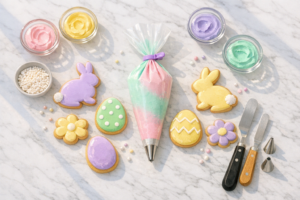

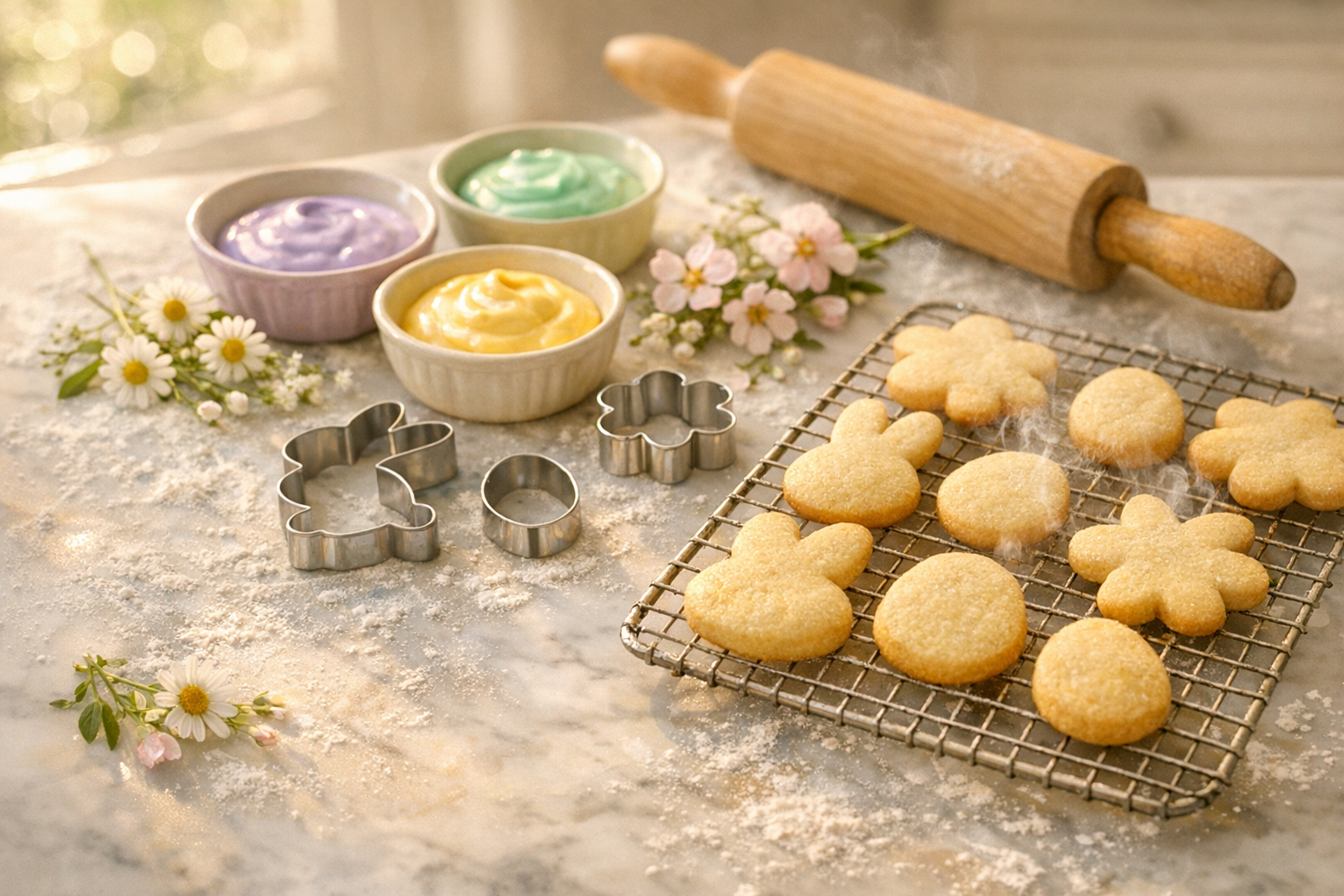
Spring baking has two stages, and most guides only cover the first one: mixing the dough and cutting the shapes. The second stage — what happens after your Easter cookies are baked, cooled, and iced — is where a plain cutout actually turns into something people photograph before they eat.
Mastering the Last Step of Easter Cookie Art
Most home bakers nail the dough and get the base coat of icing looking clean, then run out of steam right before the step that actually makes a cookie look finished. It isn’t about having more artistic talent — it’s about knowing what to reach for once that first layer of icing has set. This guide covers the last stretch of the process: the sprinkles, glitter, and presentation choices that separate a nice-looking cookie from one people ask you to make again next year.
Sprinkles: More Than an Afterthought
Timing matters more than variety here. Sprinkles, nonpareils, and sanding sugar need to go on while your icing is still wet — flooded icing that hasn’t started to skin over — so they actually set into the surface instead of rolling off the second the cookie is picked up. If your icing has already crusted, you’ll need a dab of piping gel or a light brush of corn syrup as glue before anything will stick.
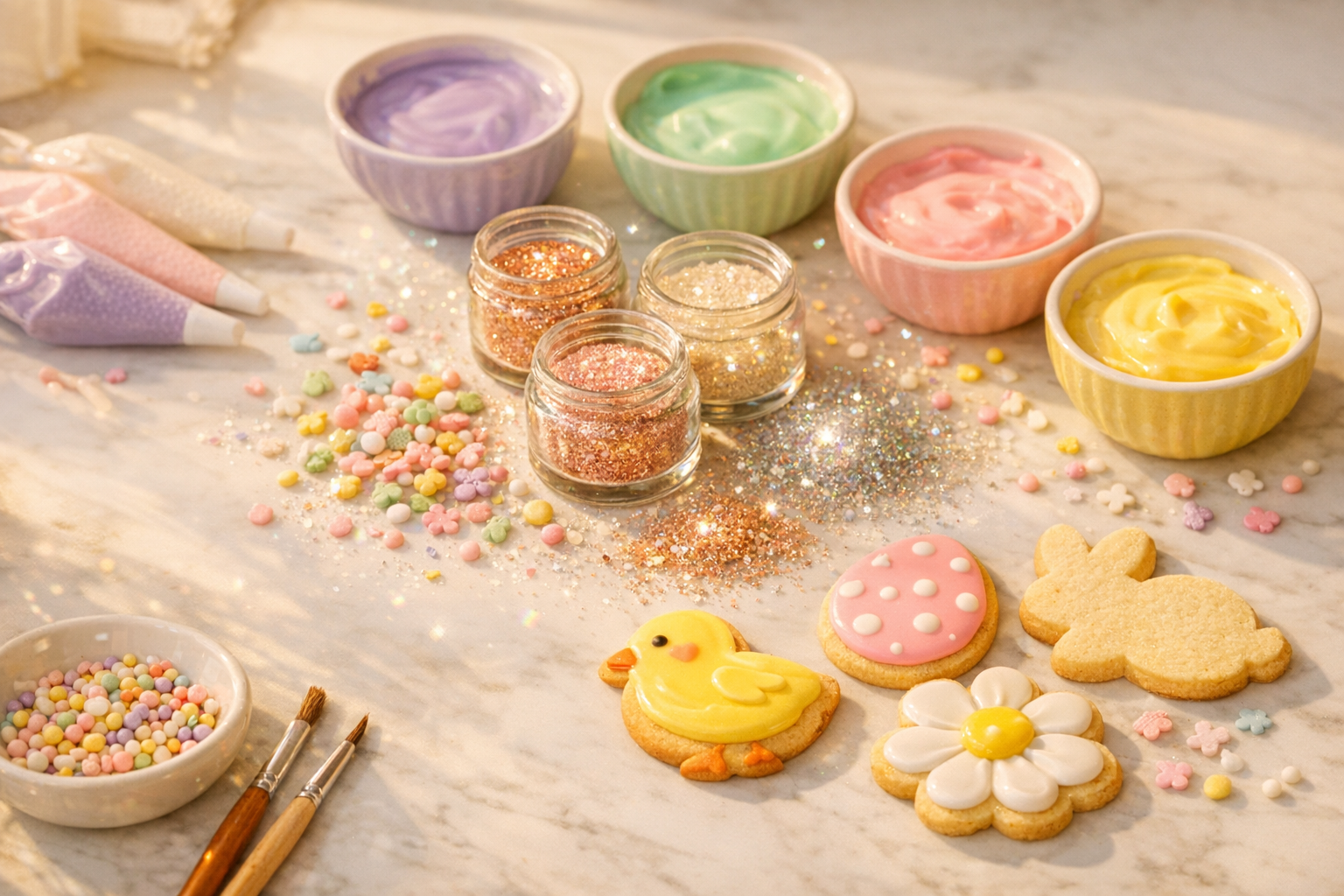
For Easter specifically, I layer texture and color rather than dumping one jar over everything. A base of pastel sanding sugar gives the whole cookie a soft shimmer and a little crunch. Nonpareils in spring colors add pops of contrast where you want the eye to land — the center of a flower, the middle of an egg. Shaped quins (tiny egg, chick, and flower confetti) work best sprinkled sparingly near the edges, since a cookie covered edge-to-edge in shapes reads as busy rather than festive.
Edible Glitter: Getting the Sparkle Right (and Safely)
Before you buy anything labeled “glitter” for a cookie, check the packaging for the word “edible” specifically. Food safety authorities have flagged this repeatedly: a lot of craft and cake glitter is labeled “non-toxic,” which only means it won’t poison you in a small accidental amount — it is not the same as being approved for people to actually eat. Non-toxic glitter is frequently plastic or metallic film with no food-grade ingredients at all. True edible glitter is made from things like sugar, cornstarch, gum arabic, or approved mica-based color additives, and the label should say so plainly. When in doubt, skip it.
Once you have the real thing, application is simple: dust it lightly over icing that’s still slightly tacky so it has something to cling to, or mix a small pinch with a few drops of clear alcohol or lemon extract to make a paintable shimmer wash for detail work. It reads best on shapes with flat, light-colored surfaces — eggs and flowers catch the light far better than a dark chocolate cookie ever will.
Presentation: Making Easter Cookies Look Gift-Ready
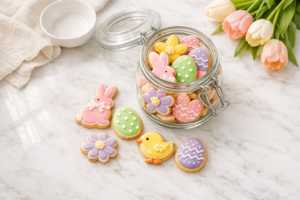
You don’t need elaborate packaging to make finished Easter cookies look intentional — a few small, season-appropriate touches do most of the work. Pastel cellophane bags cinched with curling ribbon dress up an individual cookie in under a minute. For a platter or centerpiece, nest the finished cookies in a shallow basket lined with shredded paper “grass,” or set them on a scalloped paper doily under a cake stand — both read as spring without requiring any special supplies. Save the full gift-box treatment for when you’re actually shipping or hand-delivering a batch; for the table, simple is more Easter-appropriate anyway.
Put together, the order of operations is: bake and cool completely, flood or outline with icing and let it set until just tacky, apply sanding sugar and nonpareils while that surface is still receptive, let everything fully harden, then finish with any edible glitter and a light dusting of confidence. That’s really the whole trick — the decorating stage rewards patience more than it rewards a specific tool.