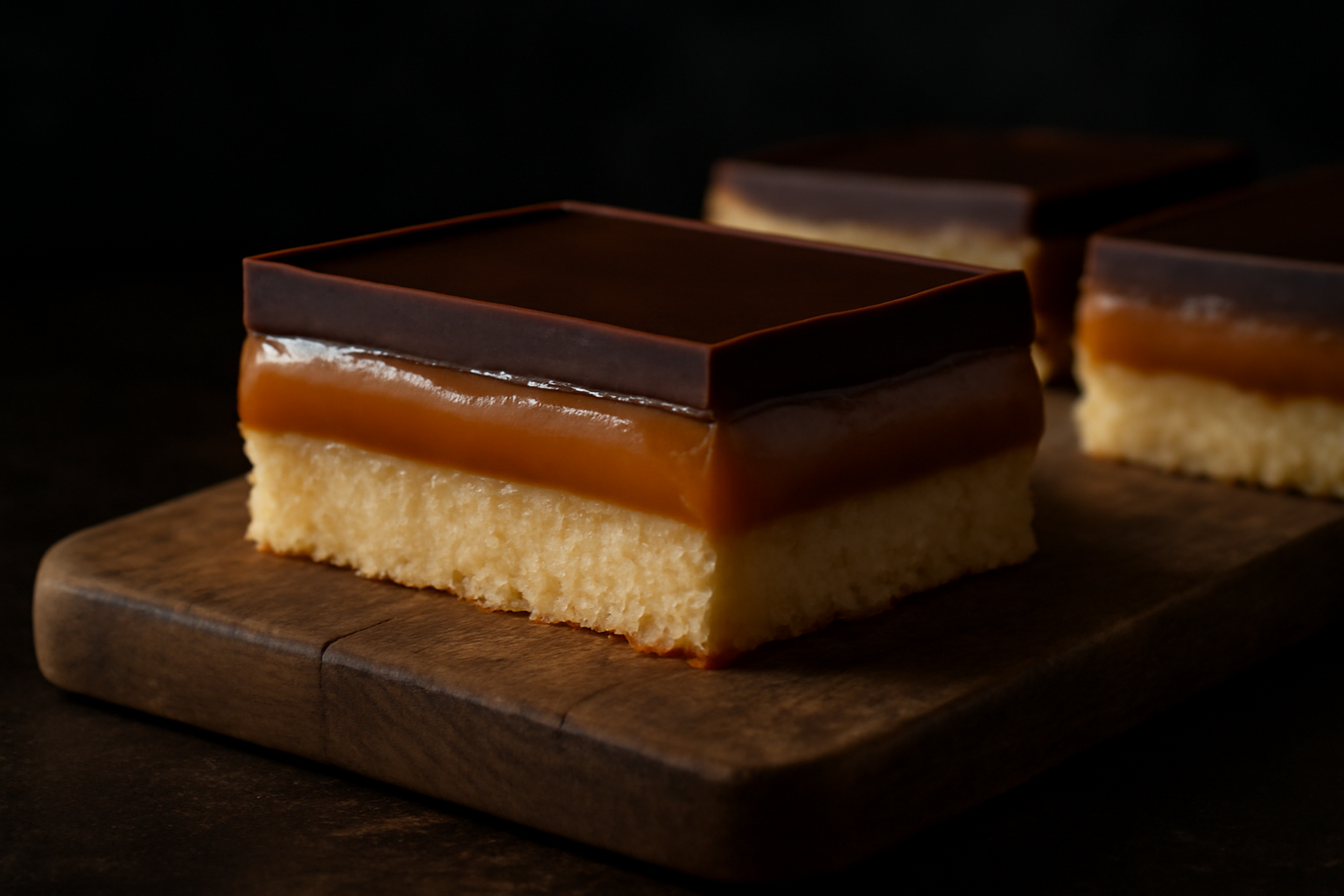
Millionaire shortbread is one of my favorite cookies to make, but I’ll be honest: that caramel layer is where most home bakers run into trouble. The chocolate is forgiving, the shortbread base is straightforward, but the caramel? That’s where crystallization happens, and suddenly you’ve got a grainy, separated mess instead of smooth, glossy perfection.
After years of troubleshooting this exact problem, I’ve landed on techniques that work reliably. Let me walk you through how to make caramel that stays silky every single time.
The Recipe: Three-Layer Millionaire Shortbread
What You’ll Need
For the Shortbread Base:
- 1 cup (226g) unsalted butter, softened
- 1/3 cup (70g) granulated sugar
- 1/3 cup (70g) light brown sugar, packed
- 2 cups (240g) all-purpose flour
- 1 egg yolk
- 1 tsp vanilla extract
- Pinch of sea salt
For the Caramel Layer:
- 100g (7 tablespoons) unsalted butter
- 200g (1 cup, packed) light brown sugar
- 397g (1 can, 14 oz) sweetened condensed milk
- Pinch of sea salt
For the Chocolate Top:
- 8 ounces (227g) semi-sweet or dark chocolate, finely chopped
Pan & Equipment: One 9×13-inch (22×33 cm) baking pan, parchment paper, heavy-bottomed saucepan, candy thermometer, pastry brush
Yield: 24 bars | Prep Time: 20 minutes | Bake Time (shortbread): 18-22 minutes | Total Time: About 1 hour plus cooling
How I Make Them, Step by Step
- Make the shortbread base. Preheat your oven to 350°F (180°C). In a large bowl, cream the softened butter with both sugars until light and fluffy, about 2-3 minutes. Add the egg yolk and vanilla extract, mixing until just combined. In another bowl, whisk together the flour and salt. Fold the dry ingredients into the wet ingredients until the dough just comes together. Press the dough evenly into your prepared 9×13-inch pan. Bake for 18-22 minutes, until the edges are lightly golden and the center is set. Remove from the oven and let cool completely—this is essential before adding the caramel layer.
- Prepare for caramel (the non-negotiable step). While the shortbread cools, wash your saucepan with hot soapy water and dry it thoroughly. This step prevents crystallization. Have your butter cut into pieces, your condensed milk measured, your salt at hand, a wooden spoon ready, a pastry brush, and a small cup of water nearby. Temperature control matters, so set up your candy thermometer where you can read it easily.
- Make the caramel. Place your butter, brown sugar, and condensed milk directly into your clean, heavy-bottomed saucepan. Turn the heat to medium and stir gently and continuously. The mixture will go from thick and gritty-looking to smooth and glossy in about 10-15 minutes. As you cook, use the pastry brush dipped in water to brush down the sides of the pan every 2-3 minutes, dissolving any sugar crystals that cling to the walls. Watch the temperature on your candy thermometer—you’re aiming for 113-118°C (235-245°F), the soft-ball stage. The moment you hit that temperature, pull the pan off heat. This is the secret to silky caramel that won’t separate or crystallize.
- Finish and set the caramel. Once removed from heat, add a pinch of sea salt and stir gently for 30 seconds. Pour immediately onto your cooled shortbread base, spreading it into an even layer with a spatula. Work quickly but without rushing—you want coverage before it sets, but panicked spreading can introduce air bubbles. Let the caramel set completely at room temperature, about 30 minutes. Do not refrigerate at this stage; temperature shocks can cause the caramel to separate from the shortbread.
- Add the chocolate top. Melt your chopped chocolate either in a microwave (at 50% power, stirring every 15 seconds) or in a double boiler over simmering water, stirring frequently. Once smooth and melted, pour the chocolate over your set caramel layer, spreading it evenly with a spatula. Let it set at room temperature for another 30 minutes, or refrigerate for faster setting, about 15 minutes. Once set, cut into 24 bars using a sharp knife (wiping the blade between cuts helps keep edges clean).
Why Caramel Crystallizes (And Why It Matters)
Caramel crystallization happens when sugar molecules revert to their solid crystal form instead of staying dissolved in the liquid. This usually occurs when you have sugar crystals in your pan that act as “seed” crystals, triggering the rest of your caramel to follow suit. Once it starts, it’s nearly impossible to fix.
For millionaire shortbread specifically, we’re making a cooked caramel (not the boiled-cream condensed milk version), which is more susceptible to crystallization than some other candy techniques. The good news? A few specific precautions eliminate this problem almost entirely.
The Setup: Preparation Is Everything
Before you heat a single drop, prepare your workspace. This is non-negotiable.
Use an absolutely clean pan. Wash it with hot soapy water and dry it thoroughly. Even microscopic sugar residue from previous baking can seed crystallization. I often wipe my pan with a damp cloth after washing, then dry it over low heat.
Gather all ingredients and equipment before starting. Once your caramel is cooking, you cannot stop to hunt for things. Have your butter cut into pieces, your condensed milk measured, your salt ready, and a wooden spoon at hand. I also keep a pastry brush and a small cup of water nearby—you’ll understand why in a moment.
Use a heavy-bottomed saucepan. Light pans create hot spots that can cause localized crystallization. A thick pan distributes heat evenly and gives you better control over temperature.
The Technique: Preventing Crystals from Forming
Here’s my method, refined through trial and error:
Combine Your Ingredients Correctly
Place your butter (typically 100g), brown sugar (200g), and sweetened condensed milk (1 can, about 397g) directly into your pan. Do not add granulated white sugar separately—the brown sugar is your sweetener. Starting with wet ingredients helps prevent crystallization because the sugar is already partially dissolved.
Melt Over Medium Heat
Turn the heat to medium and stir gently and continuously. Yes, continuously. This serves two purposes: it dissolves the sugar evenly and prevents it from settling in spots where it might crystallize. As the mixture heats, it will go from thick and gritty-looking to smooth and glossy. This takes about 10-15 minutes.
Use the Pastry Brush Trick
Once you see sugar crystals clinging to the sides of the pan (and they will appear), take a pastry brush dipped in water and brush down the sides of the pan. This dissolves any crystals that have stuck to the walls, preventing them from falling back into your caramel. Do this every 2-3 minutes during cooking. Alternatively, some bakers add a small pinch of cream of tartar or lemon juice at the beginning, which inhibits crystallization naturally.
Watch the Temperature, Not the Time
Don’t rely on a timer. Use a thermometer. Caramel should reach between 113-118°C (235-245°F)—the soft-ball stage. This is crucial for millionaire shortbread because you want caramel that’s thick enough to set properly on the shortbread but still soft enough to bite through.
Pull the pan off heat the moment you hit your target temperature. Overcooking hardens the caramel; undercooking leaves it too soft and sticky.
The Finish: Cooling and Setting
Once removed from heat, add a pinch of sea salt and stir gently for 30 seconds. Pour immediately onto your cooled shortbread base, spreading it into an even layer with a spatula. Work quickly but without rushing—you want coverage before it sets, but panicked spreading can introduce air bubbles.
Let the caramel set completely at room temperature (about 30 minutes) before adding your chocolate layer. Don’t refrigerate yet; temperature shocks can cause the caramel to separate from the shortbread.
Troubleshooting
If your caramel does crystallize mid-cook, it’s over. Don’t waste time—start again with a clean pan. Trying to salvage grainy caramel by adding cream or butter rarely works.
If your finished millionaire shortbread feels grainy when you bite it, the caramel likely overcooked. Next time, pull it at exactly 113°C.
That smooth, glossy caramel layer is absolutely achievable. Stick to these steps, stay attentive, and you’ll nail it every time.