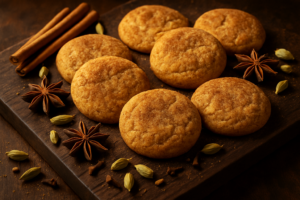
My mother-in-law has never once complimented my baking. Not once in seven years. So when she took a bite of my mexican hot chocolate snickerdoodle cookies at Christmas dinner last year, set down her fork, and said, “These are actually incredible” — I nearly fell off my chair.
But let me back up, because the road to that moment was not pretty. It involved two failed batches, a smoke alarm, flour on my ceiling (still not sure how), and a very humbling trip back to my mixing bowl at 10 PM the night before Christmas Eve. If you have ever poured your heart into a cookie only to pull out a flat, greasy, burnt disaster, this story is absolutely for you.
Why I Fell Head Over Heels for Mexican Hot Chocolate Snickerdoodles
I have always been a snickerdoodle loyalist. There is something about that crinkled, cinnamon-sugared surface and that perfectly soft, tangy center that I find completely irresistible. But last holiday season I wanted to bring something to my in-laws’ Christmas dinner that would actually turn heads — something familiar enough to be comforting but exciting enough to spark conversation.
Mexican hot chocolate was the inspiration. That rich, slightly spicy, deeply chocolatey drink that wraps you in warmth from the inside out. I thought: what if I could bottle that feeling into a snickerdoodle? Dark cocoa in the dough, cinnamon and a whisper of cayenne in the rolling sugar, and that signature soft, chewy snickerdoodle texture underneath it all.
The concept was perfect. My first two attempts, however, were absolutely not.
The Baking Disaster That Almost Broke Me (And What I Learned)
Batch one was overconfident. I swapped in a cheap, low-fat cocoa powder I had in the back of my pantry, skipped chilling the dough because I was impatient, and overbaked by just two minutes. The result was flat, dry cookies with zero depth of flavor. They tasted like chocolate-flavored cardboard dusted with cinnamon. Into the trash they went.
Batch two was overcorrected. I chilled the dough (good), used better cocoa (better), but I got heavy-handed with the cayenne in the rolling sugar because I wanted people to really feel the heat. My husband tried one, blinked twice, and poured himself a glass of milk without saying a word. Too much heat, not enough balance.
That night I sat down with my notebook and thought through every variable. And batch three? Batch three was magic. Here is everything I figured out so you can skip straight to the magic.
Use the Right Cocoa Powder — It Matters Enormously
This was my biggest lesson from batch one. Dutch-process cocoa, and ideally a dark or black Dutch-process cocoa, is non-negotiable for this cookie. It gives you that deep, almost midnight-colored dough and a rich, complex chocolate flavor that regular natural cocoa simply cannot deliver. Natural cocoa is too bright and acidic here — it fights with the spices instead of harmonizing with them.
Chill the Dough — No Shortcuts
Snickerdoodle dough is already softer than most cookie doughs because of the cream of tartar and the higher fat content. Add cocoa powder and it gets even softer. If you skip the chill, your cookies will spread into sad, lacy puddles. I refrigerate my dough for a minimum of one hour, but overnight is genuinely better. The flavor deepens and the texture becomes that perfect balance of soft center with just a hint of chew at the edges.
Balance Is Everything in the Spiced Rolling Sugar
The rolling sugar is where the Mexican hot chocolate magic lives, and it requires a light touch with the cayenne. My final ratio is two teaspoons of cinnamon to one quarter teaspoon of cayenne per quarter cup of granulated sugar. You want warmth that builds slowly at the back of your throat — not heat that announces itself immediately and overwhelms the chocolate. Roll each ball generously so every bite has that spiced, sparkly crust.
Pull Them Early
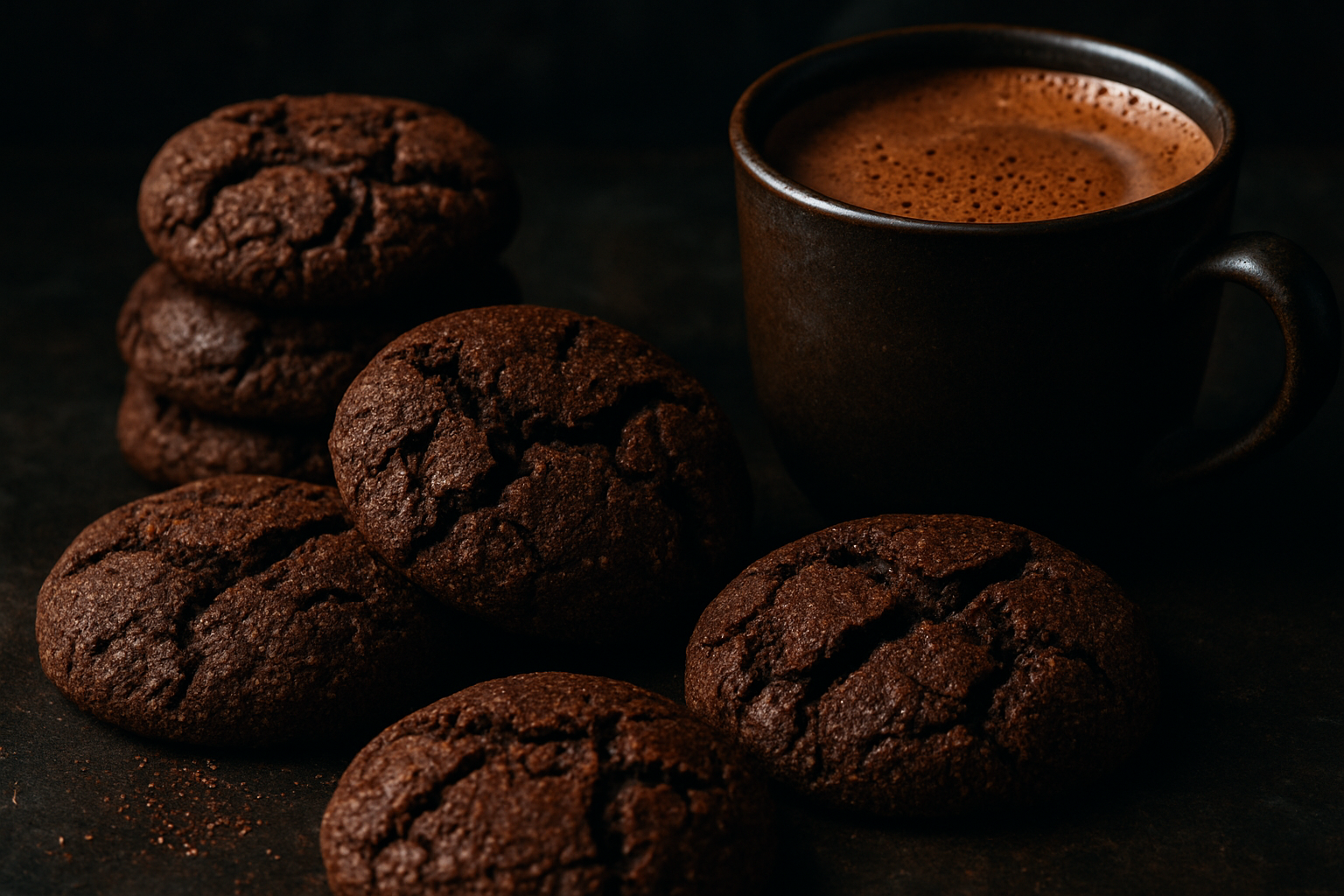
These cookies will look underdone when they are actually perfect. The edges should be just set and the centers should still look slightly soft and matte — not glossy and raw, but definitely not firm. They will continue to cook on the hot pan for another two to three minutes after you pull them from the oven. Trust the process. Ten to eleven minutes at 375°F is your sweet spot.
The Recipe: Mexican Hot Chocolate Snickerdoodles
Now for the complete formula that finally silenced my biggest critic. This makes about two dozen cookies with that perfect soft, chewy center and crispy cinnamon-sugar crust.
What You’ll Need
For the Cookie Dough:
- 1 cup (2 sticks / 226 g) unsalted butter, room temperature
- 1 cup (200 g) light brown sugar, packed
- 1/2 cup (100 g) granulated sugar
- 2 large eggs, room temperature
- 1 teaspoon (5 ml) pure vanilla extract
- 2 cups (240 g) all-purpose flour
- 2/3 cup (57 g) Dutch-process cocoa powder (dark or black)
- 2 teaspoons (8 g) cream of tartar
- 1 teaspoon (5 g) baking soda
- 1/2 teaspoon (3 g) fine sea salt
- 3/4 teaspoon (1.5 g) ground cinnamon
For the Cinnamon-Cayenne Rolling Sugar:
- 1/4 cup (50 g) granulated sugar
- 2 teaspoons (4 g) ground cinnamon
- 1/4 teaspoon (0.5 g) cayenne pepper
How I Make Them, Step by Step
- Prep the rolling sugar. In a small bowl, whisk together the granulated sugar, cinnamon, and cayenne. Set aside on a flat plate or shallow dish.
- Make the dough. In a stand mixer (or with a hand mixer), cream the butter, brown sugar, and granulated sugar together for 2 to 3 minutes on medium-high speed until light, fluffy, and pale. This takes longer than you think — don’t skip it.
- Add eggs and vanilla. Beat in the eggs one at a time, making sure each is fully incorporated before adding the next. Beat in the vanilla extract until combined.
- Combine dry ingredients. In a separate medium bowl, whisk together the flour, cocoa powder, cream of tartar, baking soda, salt, and cinnamon. Make sure there are no lumps of cocoa powder hiding in the corners.
- Bring it together. Add the dry ingredients to the wet ingredients on low speed, mixing just until the dough comes together. Do not overmix — overmixed dough will make tough cookies.
- Chill. Cover the dough and refrigerate for at least 1 hour, preferably overnight. This is non-negotiable. The dough firms up, the flavors meld, and you avoid flat, sad cookies.
- Preheat and shape. When ready to bake, preheat your oven to 375°F (190°C). Line two large baking sheets with parchment paper. Using a medium ice cream scoop or tablespoon, scoop the dough into balls about the size of walnuts. Roll each ball generously in the cinnamon-cayenne sugar until completely coated.
- Space and bake. Place the cookies on the prepared baking sheets about 2 inches apart. Bake for 10 to 11 minutes at 375°F (190°C). The edges should be set and the centers should still look slightly soft and matte. Do not wait for them to look fully cooked — they will continue cooking on the hot pan.
- Cool. Let the cookies rest on the baking sheet for 2 to 3 minutes, then transfer them to a cooling rack. They will firm up slightly as they cool.
- Enjoy. Serve warm with coffee or hot chocolate, or store in an airtight container for up to 5 days — though they rarely last that long.
Yield: About 24 cookies | Prep Time: 15 minutes (plus 1 hour chill minimum) | Bake Time: 10-11 minutes per batch
The Cocoa Powder That Finally Gave Me That Deep Mexican Chocolate Flavor Without Bitterness
When you’re chasing that authentic Mexican hot chocolate taste in a cookie, regular cocoa powder just won’t cut it—you need something with real depth and richness that won’t turn your snickerdoodles harsh or one-dimensional. After my first two batches fell flat (and tasted weirdly astringent), I realized the cocoa I’d been grabbing from the baking aisle was my biggest problem.
What works
- The Dutch processing actually mellows the cocoa’s natural bitterness, so the cinnamon-sugar coating and cayenne heat shine instead of getting buried under sharp cocoa notes.
- It dissolves into the dough almost invisibly—no gritty texture, no clumps hiding in the corners of my mixer bowl like cheaper cocoa powders leave behind.
- The color is noticeably darker and more sophisticated, which actually matters when you’re plating these for company or photographing them—these cookies photograph like a bakery made them, not like I threw them together at midnight.
What doesn’t
- It costs more than the supermarket staple I used to buy, and there’s that guilty moment when you’re paying $8-10 for cocoa powder and wondering if you’re just being precious.
- If you don’t sift it into your dry ingredients, you can end up with those tiny dark specks that feel slightly gritty on your tongue—it demands a little more care than I wanted to admit at first.
I almost gave up and swapped back to my old cocoa during batch three when the dough still tasted slightly off, but then I realized I’d skipped sifting and was using old baking soda—the cocoa wasn’t the culprit. Now I keep King Arthur Black Cocoa Dutch Processed Cocoa Powder stocked at all times.
This post contains affiliate links. As an Amazon Associate, I earn from qualifying purchases at no extra cost to you.